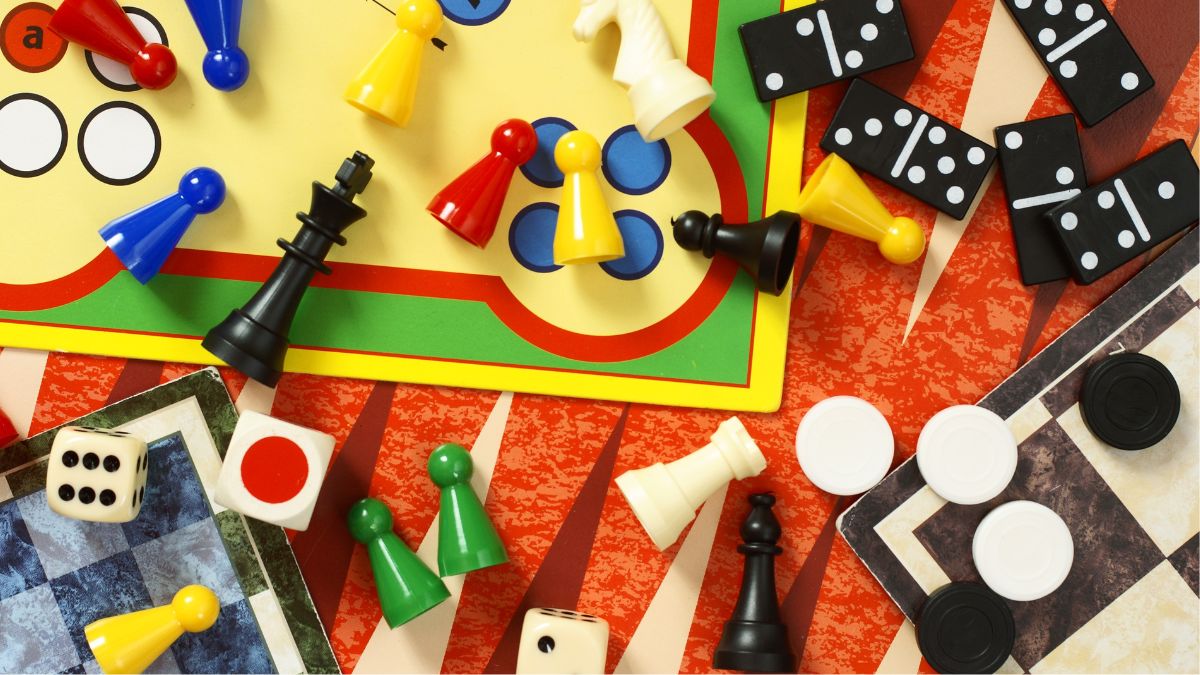
Board games have always been more than simple entertainment, quietly shaping the way families communicate, compete, and connect around the table. Beneath the colorful boards and familiar rulebooks lie carefully engineered psychological mechanisms that influence mood, relationships, and group behavior in ways most players never consciously notice. Game designers have long understood human psychology, weaving principles of behavioral science directly into gameplay to create tension, cooperation, and emotional investment. Recognizing these hidden dynamics can change the way families approach game night and even improve how they relate to one another in everyday life. The following games reveal just how deeply psychology is embedded into the world of family play.
Monopoly

Monopoly is engineered to simulate economic inequality in a way that triggers real emotional responses among players. The game gradually shifts power toward wealthier players, creating a structural disadvantage that mirrors real-world frustration and resentment. Players in losing positions often become disengaged or emotionally withdrawn, while those gaining wealth may exhibit subtle dominance behaviors without realizing it. This dynamic can expose underlying family tensions around fairness, money, and control in a surprisingly revealing way. Research in game psychology suggests that how a family handles Monopoly’s inequality often reflects how they navigate conflict outside the game.
Clue

Clue is built on a foundation of controlled information and strategic deception, which encourages players to mask their true knowledge from those they trust most. The game trains players to read subtle behavioral cues such as hesitation and overconfidence as signals of hidden information. Family members who struggle with social anxiety often find Clue surprisingly stressful because it demands sustained attention to the behavior of others. The game also rewards patience and analytical thinking, quietly reinforcing these traits in younger players over repeated sessions. Its psychological effect is a heightened awareness of how people behave when they have something to conceal.
The Game of Life

The Game of Life frames major milestones as mandatory stops on a fixed path, subtly reinforcing the idea that success follows a single predetermined route. Players who deviate from conventional choices within the game often feel a mild sense of failure even when the rules technically permit those decisions. This structure can spark meaningful family conversations about real expectations around education, career, and family planning. Psychologists who study play behavior note that games mirroring societal scripts can both reflect and reinforce the values a family holds without anyone saying so directly. The game’s cheerful presentation masks a surprisingly rigid worldview that many families absorb unconsciously.
Risk

Risk is a masterclass in alliance psychology, designed to encourage temporary cooperation before inevitable betrayal. The game forces players to build trust with others they fully intend to eventually eliminate, creating a controlled environment for exploring loyalty and self-interest. Family members often discover previously unknown competitive sides of one another during extended Risk sessions, which can feel both entertaining and disorienting. The emotional aftermath of a calculated betrayal between siblings or spouses can linger well past the end of the game. Designers of Risk understood that the most memorable gameplay moments would always center on the moment trust is broken.
Pandemic

Pandemic is one of the few widely played family games built entirely on cooperative psychology, removing individual competition in favor of shared survival. The game creates genuine group pressure by forcing players to communicate constantly, distribute responsibilities, and sacrifice personal advantage for collective benefit. Families with dominant personalities often find that Pandemic exposes who tends to take over decision-making and who defers under pressure. The stress of watching a collective plan unravel can generate real anxiety, making victories feel emotionally significant in a way that competitive games rarely achieve. Its design is deliberately calibrated to make players feel the weight of collective responsibility.
Settlers of Catan
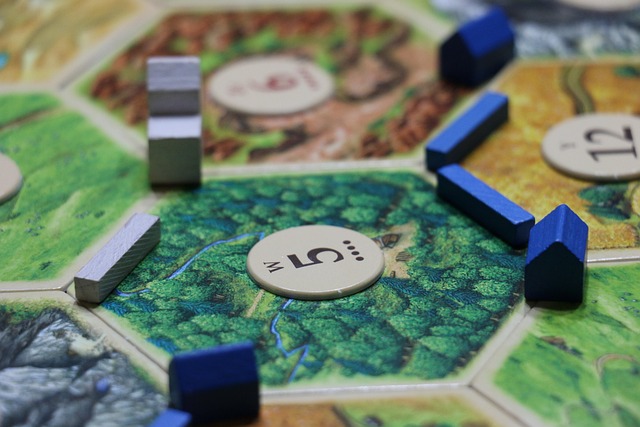
Settlers of Catan introduces negotiation and resource scarcity as central mechanics, making every trade a psychological transaction loaded with social meaning. Players must persuade, flatter, and sometimes mislead others to acquire what they need, turning conversation itself into a competitive tool. The game subtly rewards social intelligence over raw strategic skill, which can shift the typical family power dynamic in unexpected ways. Quieter family members often discover an advantage in Catan that they lack in more aggressive competitive games, which can be quietly empowering. The trading mechanic also reveals how family members respond to perceived unfairness and whether they prioritize relationships or outcomes.
Scrabble
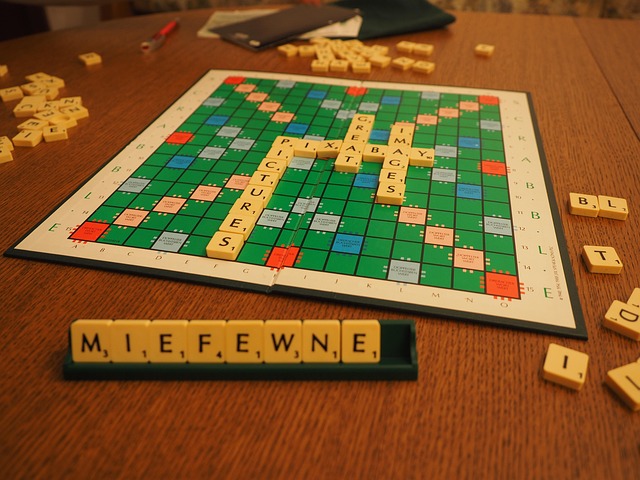
Scrabble operates as a quiet status game, with vocabulary functioning as a proxy for intelligence and education within the family group. Players who feel less verbally confident often experience measurable anxiety during Scrabble sessions, while stronger readers may unconsciously use the game to assert intellectual dominance. The game’s scoring system amplifies small advantages into large point gaps, creating a psychological distance between high and low scorers that can feel personal rather than strategic. Studies in educational psychology have found that repeated exposure to word games like Scrabble improves not just vocabulary but also a child’s tolerance for cognitive challenge. How a family handles losing at Scrabble often reveals deeper attitudes about intellectual self-worth.
Taboo

Taboo is engineered to create communication pressure by restricting the most natural language pathways between players. The ticking clock and the physical presence of the buzzer activate a mild stress response that researchers associate with reduced verbal inhibition, causing players to say things they might otherwise carefully filter. This loss of social editing can lead to surprisingly candid moments between family members who normally communicate in more guarded ways. The game also rewards deep knowledge of a partner’s thinking style, which tends to strengthen bonds between players who spend significant time together. Taboo has been studied as an indirect tool for improving interpersonal communication precisely because it strips away the usual formality of conversation.
Guess Who

Guess Who teaches players to categorize people by visible characteristics, embedding a subtle lesson about assumption and bias into its core mechanics. Children playing the game naturally gravitate toward questions about physical appearance, making it one of the earliest game environments where unconscious categorization habits form. Family conversations that arise organically during Guess Who can open surprisingly rich discussions about perception, fairness, and the limits of surface-level judgment. Psychologists who study child development note that the game’s structure mirrors the broader cognitive shortcuts humans use throughout life. Used thoughtfully, Guess Who can become an unexpected starting point for families to discuss how they form first impressions.
Pictionary

Pictionary exploits the psychological gap between what people think they are communicating and what others actually perceive, creating a reliable source of comedic frustration. The game reveals how differently family members process and encode visual information, which can be both humbling and illuminating. Players under time pressure tend to default to the most literal visual representation of a concept, exposing how creatively flexible or rigid their thinking is in stressful moments. The team structure also creates a form of social accountability where individual performance affects the group, generating mild pressure that mirrors real collaborative work environments. Pictionary has been used in organizational psychology settings to study how teams communicate under constraint.
Apples to Apples

Apples to Apples is fundamentally a game about understanding the subjective preferences of whoever holds the judging card, training players to model the minds of others rather than argue for objective correctness. This mechanic rewards empathy and social attunement over factual knowledge, quietly valuing emotional intelligence in a way most family games do not. Players often reveal unexpected associations and personal values through their card selections, generating genuine surprise among family members who thought they knew each other well. The game’s humor frequently emerges from deliberate mismatches, which can lower social defenses and encourage sillier and more honest self-expression. Apples to Apples is widely used in classroom settings precisely because its psychological design fosters perspective-taking skills.
Jenga

Jenga creates a physiological stress response through its accumulating tension mechanic, with each turn raising the physical and psychological stakes for every player at the table. The game exploits loss aversion, a well-documented psychological principle, by making players acutely aware that one wrong move destroys what everyone has collectively built. Under pressure, family members tend to project emotion onto the tower itself, experiencing its wobble as a personal threat rather than a mechanical event. The moment of collapse triggers a disproportionate emotional release relative to the stakes involved, which psychologists attribute to the buildup of sustained anticipatory anxiety. Jenga is frequently used in therapeutic play settings because it creates a safe container for processing tension and relief.
Dixit
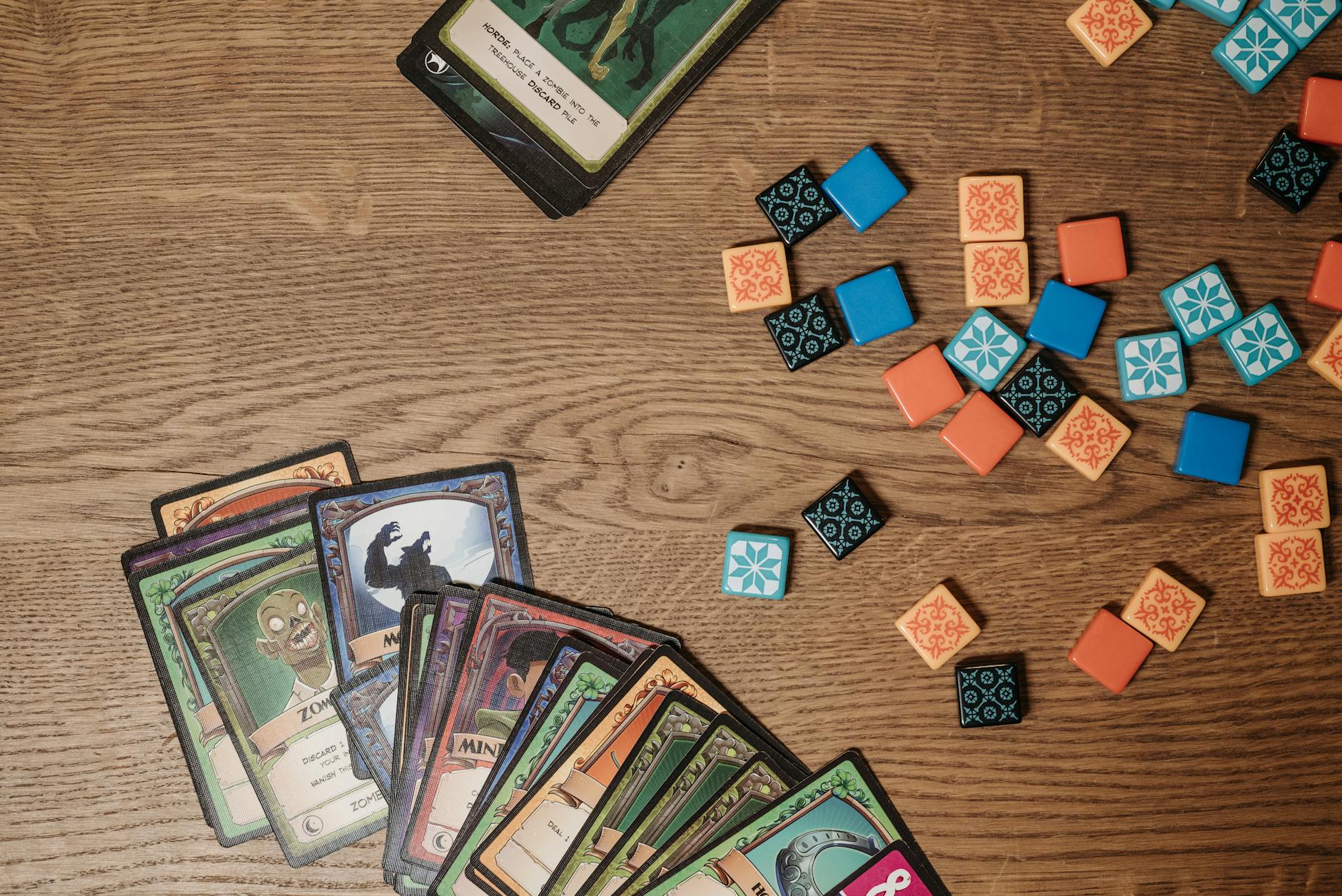
Dixit is built on the deliberate embrace of ambiguity, requiring players to craft clues that are neither too obvious nor too obscure to be guessed correctly. This calibration demands that players hold two minds simultaneously, their own subjective reality and the likely perceptions of everyone else at the table. The game rewards imaginative thinking and rewards family members who can navigate between clarity and mystery with confidence. Because Dixit’s clues are often drawn from personal association and emotion, the game frequently surfaces unexpected glimpses into how different family members privately experience the world. Its dreamlike artwork and open-ended structure make it one of the few family games designed to generate genuine wonder rather than competition.
Sorry

Sorry is psychologically unique in that it openly licenses aggression through its rules, giving players explicit permission to set back opponents while hiding behind the cheerful name of the game itself. This design allows family members to act on competitive impulses they might normally suppress, creating a socially sanctioned outlet for mild interpersonal rivalry. Children who play Sorry in family settings are exposed early to the concept of structured conflict with defined limits, which developmental psychologists consider an important social learning experience. The game’s frequent reversals of fortune also teach emotional regulation by repeatedly asking players to recover from sudden setbacks without leaving the table. How a family reacts to being sent back to start reveals a great deal about their collective relationship with fairness and frustration.
Battleship

Battleship simulates the psychology of hidden information warfare, requiring players to form mental models of an opponent’s strategy based on incomplete feedback. The game’s grid-based structure trains systematic thinking while simultaneously cultivating the ability to tolerate uncertainty across an extended period of play. Because Battleship is played without any visible social interaction between opponents, it creates an unusual form of psychological isolation that heightens focus and imagination. Players often develop superstitious habits around ship placement, a behavior rooted in the human tendency to perceive patterns in random information. The game quietly teaches families that persistence and methodical reasoning are more reliable than intuition when facing an unknown opponent.
Cranium

Cranium is unusual among family games because it deliberately distributes different types of intelligence across its four activity categories, ensuring that no single player archetype dominates consistently. By rotating between drawing, sculpting, wordplay, and performance, the game continuously shifts which kind of intelligence is valued at any given moment. This rotation has a measurable equalizing effect on family dynamics, giving quieter or less traditionally academic players moments of genuine competence and recognition. Psychologists studying multiple intelligences theory have noted that Cranium’s structure closely mirrors the idea that capability is plural and context-dependent. The game is considered particularly healthy for family play because it systemically prevents any one person from becoming the permanent winner.
Uno

Uno is deceptively simple on its surface but contains a layered social psychology that becomes apparent once players start targeting specific opponents with action cards. The choice of whom to block, skip, or reverse reveals alliance structures and personal grievances that players often don’t consciously acknowledge before the game begins. Children playing Uno with adults quickly learn to read emotional reactions and adjust their targeting behavior accordingly, developing rudimentary political intuition at the table. The escalating tension of the draw pile and the drama of the final card create a sustained emotional arc that keeps players engaged well beyond what the simple rules would suggest. Uno’s enduring popularity across generations is in large part a product of how naturally it channels social dynamics that already exist within a family group.
Trivial Pursuit
Trivial Pursuit is as much a game about social identity as it is about factual knowledge, with correct answers functioning as public demonstrations of a player’s expertise and generational experience. The categories inevitably favor different players based on age, education, and cultural exposure, creating a built-in tension between generations that can feel both playful and quietly charged. Older players often experience a confidence boost from questions that align with their era, while younger players may feel underrepresented by the content, producing a mild but real sense of exclusion. The game’s format invites the kind of declarative certainty that can trigger competitive posturing between family members who define themselves partly through what they know. Trivial Pursuit has been studied as a social artifact because the topics a family debates most fiercely during play often reveal what that family collectively values.
Connect Four

Connect Four introduces strategic pattern recognition within a compact two-player format, making it one of the most psychologically direct games in the family game canon. The vertical board creates a shared visual field where both players can observe the emerging pattern simultaneously, heightening the cognitive pressure of each decision. Children playing Connect Four against adults experience a useful form of strategic defeat that teaches them to analyze failure and adjust approach rather than simply repeat losing moves. The game’s brevity means emotional cycles of winning and losing occur in rapid succession, giving families repeated low-stakes practice at processing competitive outcomes gracefully. Behavioral researchers have used Connect Four to study decision-making under observation precisely because its rules are simple enough to isolate strategic thinking from other variables.
Balderdash

Balderdash is built on the deliberate manufacture of believable deception, asking players to invent false definitions, names, and facts convincing enough to fool the people who know them best. The game rewards players who understand how others think and what kinds of information those people find plausible, making it a direct test of social modeling ability. Family members who excel at Balderdash are often those with high verbal creativity and an intuitive grasp of how authority and credibility are performed through language. The game frequently produces laughter at the moment of reveal, a psychological release that comes from recognizing how successfully one person managed to construct a false reality another person accepted as true. Balderdash is considered by some play therapists to be one of the most revealing social games available because it shows exactly how different family members use language to persuade.
Share your thoughts on these psychological dynamics and which games have shaped your own family’s interactions in the comments.