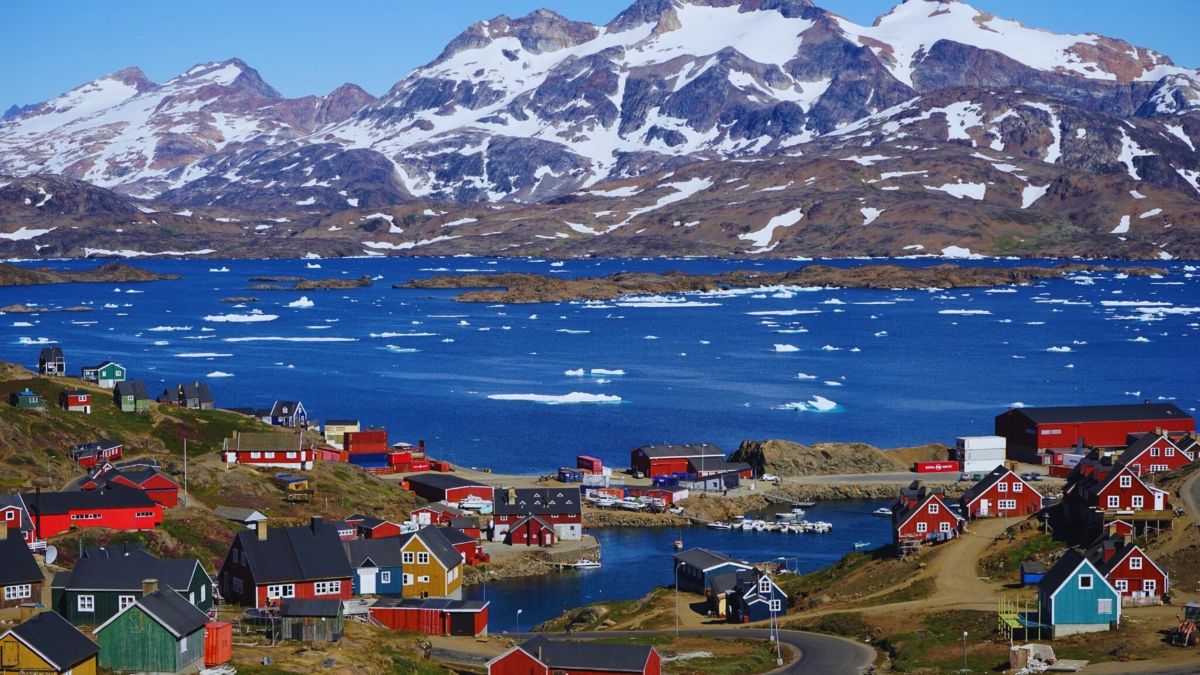
Long before Donald Trump started making headlines with his repeated ambitions to acquire Greenland, the remote Arctic island was already quietly gaining ground as a travel destination worth watching. Demand for this far-flung territory had been growing steadily in recent years, and tourism forecasts for the near future look stronger than ever. What Trump’s persistent geopolitical fixation did, however, was pour rocket fuel on an already smoldering fire, putting Greenland on the radar of travelers who had never given it a second thought.
One of the biggest obstacles for visitors had historically been simply getting there. For years, the extremely limited number of direct international flights made Greenland feel practically unreachable for most tourists. That began to change in late 2024, when a long-awaited international airport finally opened in Nuuk, the island’s capital. Two additional airports are expected to follow, with one set to open in April in Qaqortoq in the south, and another in the fall in Ilulissat, which is widely considered the island’s most popular tourist hub.
The impact of the new Nuuk airport was felt almost immediately by local business owners and city officials alike. Avaaraq Olsen, the mayor of Nuuk, spoke to StarTribune about the shift, saying “Before we mostly had Danish or Scandinavian tourists, now they come from all over the world.” She added that even small local entrepreneurs had noticed the change, noting that “even owners of very small businesses, like artists who make bone souvenirs, told me they’re now selling more than ever before.” The transformation of Nuuk from a regional stopover into a genuine international destination is well underway.
Part of what is drawing new visitors ties into a broader global travel trend known as “coolcationing,” which refers to the growing desire to escape increasingly intense heat waves by vacationing somewhere genuinely cold. According to data from Inghams Walking, online searches for the term “coolcation” surged by a staggering 3,500 percent from the start of 2024. Out of more than 200 cold-weather destinations analyzed, Nuuk ranked at the very top of the list, recording a nearly 48.39 percent jump in search interest over the past year. Whale watching, northern lights tours, hiking, and kayaking are just some of the experiences drawing travelers to the city, which has quietly evolved into an Arctic hotspot and refuge from summer temperatures.
@arendsenordbo Beautiful Nuuk🤍 #travel #winter #greenland #nuuk #snow #traveltiktok #travelinspo #wintervacation #iceland #nature ♬ original sound – Arendse🎀
Then came Trump. His persistent and very public desire to purchase Greenland, an autonomous territory of Denmark home to roughly 58,000 people, proved to be an unexpected tourism advertisement. As The Globe and Mail reported, the steady drumbeat of attention from the American president brought an unforeseen side effect, with tourists flooding in from around the world simply to see the place everyone was talking about. Lars Anker-Moller, owner of the travel company Arctic Dream, told The Globe and Mail: “I’ve never experienced anything like this.” He went on to say that “now the whole world knows where Greenland is, before many had no idea. We got huge free advertising,” capturing the feeling shared by many in the local tourism industry.
@beccamillss The world is a beautiful place. Nuuk, Greenland🇬🇱🌊🤍 #fyp #travel #fjords #beauty #foryoupage #greenland ♬ Coastline – Hollow Coves
Amid all the political noise, some American travelers began wondering whether they would still be welcomed on the island. VisitDenmark, the Danish tourism organization, moved quickly to clear up any confusion, sending a message to around 6,000 American travel agencies and travelers that read: “While some American travelers were wondering if they were still welcome, the answer is clear: yes.” The reassurance appeared to land well, as bookings from American visitors have continued to climb. Greenland’s own tourism board also seized on the moment by launching a clever campaign called “Shhhhhh,” leaning into the island’s reputation for silence, stillness, and total disconnection from the noise of the modern world, including the endless flood of political statements and social media posts.
@wilderness_addict Probably my new favorite country 🇬🇱 #greenland #bucketlist #tiktoktravel #icebergs #adventurevibes #nomadgreenland #glamping #greenlandic ♬ Luminary – Joel Sunny
Greenland is the world’s largest island, covering roughly 836,000 square miles, about 80 percent of which is permanently covered by an ice sheet. It sits between the Arctic and Atlantic Oceans, northeast of Canada, and has been an autonomous territory within the Kingdom of Denmark since 1979. The population is predominantly Inuit and lives mostly along the western coastline, where the climate is slightly more hospitable. The island’s unique geography makes it one of the few places on Earth where travelers can witness the midnight sun in summer, the dramatic northern lights in winter, and enormous glaciers calving into fjords year-round. Ilulissat Icefjord, a UNESCO World Heritage Site, is among its most visited natural wonders and draws scientists and adventurers from across the globe. Despite its size, Greenland has historically had very limited infrastructure for mass tourism, which is precisely why the new wave of airport development marks such a significant turning point for the island’s economic future.
If Greenland is on your travel bucket list or you have thoughts on the “coolcation” trend, share them in the comments.