There is something quietly humbling about watching a child move through the world. Kids seem to instinctively understand things that take adults years of therapy, self-help books, and hard-won experience to even begin to grasp. Research has even shown that children can influence the values of the adults around them, not just the other way around. So what exactly are the lessons that children are modeling for us every single day?
One of the most obvious is the power of imagination. Growing older is inevitable, but letting go of a sense of wonder is a choice, even if it rarely feels like one. Children use their imagination freely and without apology, while adults tend to dismiss it as impractical. Educator Wendy Conklin put it simply: “Wake the child within you.” She added that “one of the best ways to rediscover creativity is to learn something new,” because being a beginner forces a person to see things differently, which in turn sparks the imagination and builds confidence. The invitation is straightforward: when an opportunity presents itself to try something unfamiliar, take it.
Another lesson children teach without even trying is that money matters far less than adults tend to believe. A child will laugh just as hard in a modest home as in a mansion, and the sound is exactly the same either way. Laughter, it turns out, is one of the most powerful tools available to anyone regardless of income. Psychologist Dr. Alicia H. Clark explained that “laughter boosts the immune system and lowers cortisol,” the stress hormone that weakens the body when chronically elevated. It can also help lower blood pressure and activate the body’s natural defense mechanisms. As Dr. Clark put it, “laughter is truly one of the best medicines.”
Children also have an uncanny ability to stop when they need to, something adults have almost entirely forgotten how to do. Life moves fast, and the pressure to remain constantly productive has never been greater. Kids have not yet absorbed that pressure, which is precisely why they have so much to teach. Life coach Heather Moulder offered a pointed observation: “We live in a world that rewards constant busyness.” She noted that there is always another email, another task, another goal waiting to be checked off, but that many people have lost sight of the fact that “happiness is something you live and nurture.” Sometimes, she suggested, more joy is found not by doing more but by slowing down and actually living.
Play is another area where children hold all the cards. There is something genuinely liberating about imaginative play, the ability to travel the world without leaving a room, as long as a person allows themselves to believe. Spiritual coach Kristine Carlson drew an interesting connection between childhood pretend play and what adults now call manifestation. Her view is that thoughts alone accomplish nothing without action to follow them, but they serve a purpose: “Thoughts help us try out ideas in our minds before turning them into reality.” Children understand this intuitively every time they pick up a stick and decide it is a sword.
Respect is another lesson that children learn by observation, and it turns out they are watching closely. Expecting respect without extending it first simply does not work, and kids pick up on that inconsistency quickly. Life coach Moira Hutchison posed a question worth sitting with: “If people treat you without respect, how do you respond?” She noted that people tend to treat others the way they are allowed to, and that setting a calm, clear boundary does not require confrontation. Sometimes it is enough to say, “I don’t like the way you’re talking to me.”
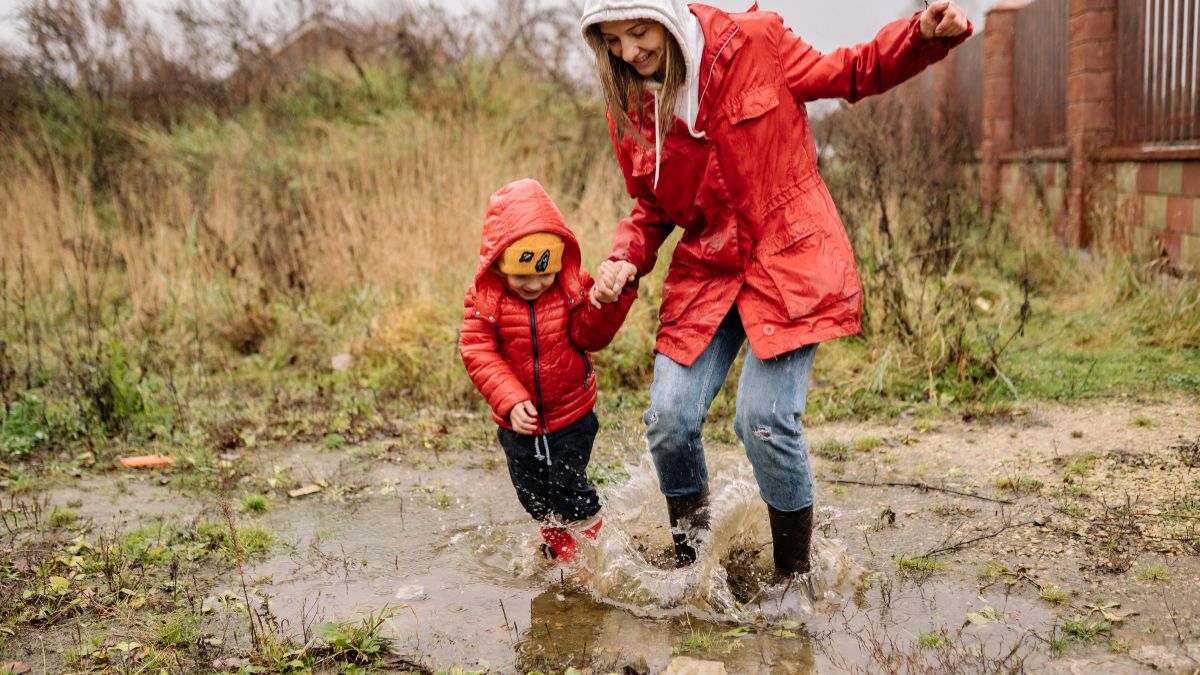
Perhaps the simplest and most overlooked lesson children offer is the healing power of being outside. Running, climbing, swimming, feeling the grass or sand underfoot — kids call this play, while adults increasingly call it therapy. Health coach Ingrid DeHart put it plainly, explaining that time spent outdoors can help people feel calmer and more grounded, and that spending time in nature “makes a big difference for mental and physical health.” The fear of wet socks or muddy hands is, in this context, a very adult problem.
Children are born with the understanding that rest is not laziness, that laughter does not require wealth, and that the present moment is worth full attention. Research has found that children as young as two years old display a natural sense of fairness and empathy, suggesting that many of the values adults spend a lifetime trying to cultivate are already present from the very beginning. Studies have also shown that engaging in play throughout adulthood is linked to greater resilience, better problem-solving ability, and even stronger romantic relationships. The word “school” actually comes from the ancient Greek word “skholē,” which originally meant leisure — the idea being that true learning happens when the mind is free, relaxed, and curious.
What lesson from a child in your life has stuck with you the most? Share your thoughts in the comments.