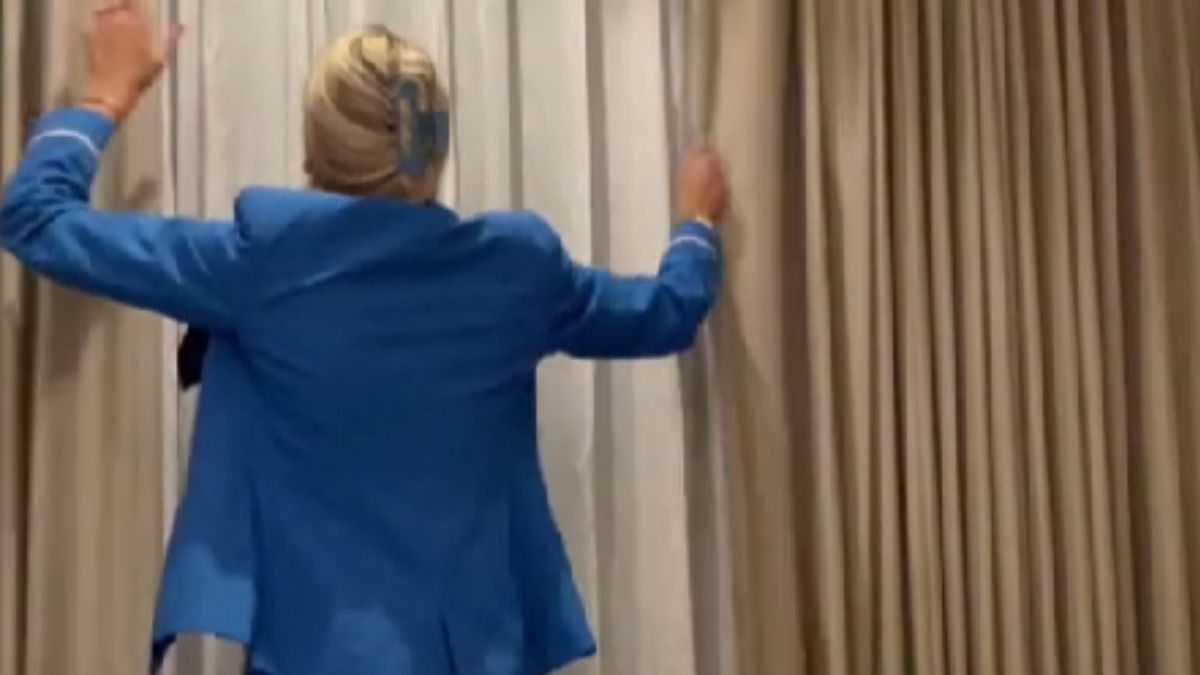
Body image conversations tend to run in one direction in popular culture, which is perhaps why Maya Jama’s TikTok video this week cut through in the way it did. The 31-year-old British TV presenter posted a candid gym clip in which she revealed she had lost more weight than she wanted to after a bout of food poisoning in South Africa, and that she was now actively working to put it back on. The caption she added said it all: “Food poisoning in South Africa did not help, lol.”
In the video, Jama spoke openly about being naturally slender and about how that description does not always feel like the compliment people assume it to be. “Some of us are naturally thin and we don’t want to be,” she said. “We love being curvier, but it’s difficult to achieve, so keep that in mind.” She also addressed a growing frustration she has with the way weight and body size are discussed online, specifically calling out the way the diabetes medication Ozempic, which has become widely associated with weight loss, has changed the assumptions people make about thin women. “I don’t like that since Ozempic has come out, every thin person gets called Ozempic, Ozempic. Some of us are naturally thin and don’t want to be,” she said.
Perhaps the most unguarded moment in the video came when she acknowledged the social reality that surrounds thinner body types. “I know there’s no sympathy for thinner people, but… it can be hard for us sometimes too,” she said. It was a comment that landed differently than much of the usual body image content on social media, partly because of its matter-of-fact tone and partly because it touched on something that does not get addressed as often: the experience of people who struggle to gain weight and feel unseen in conversations that are primarily structured around the opposite challenge.
On the practical side, Jama shared the approach she plans to take to regain the weight she lost. Weight training was her primary recommendation for anyone in a similar situation. “My advice to girls trying to gain weight is lifting weights. I’ve put on weight that way before and I will again,” she said. She also mentioned eating later in the evening as something she has found helpful personally, though she added a caveat with characteristic lightness: “I don’t know if that’s the right advice, but I eat late at night and it seems to stay on my body, so we’ll see.”
@mayajama Food poisoning in South af didn’t help lol
♬ original sound – Maya Jama
Earlier in the year, Jama had shared her regular workout approach with Women’s Health, naming squats, push-ups, and weighted kickbacks as the three exercises that have made the most difference to her strength and fitness. “Squats really hit the glutes, which is a must,” she explained. “Push-ups do wonders for my core. I love kickbacks because they’re great for toning up.” She works with personal trainer Warren Whitely and incorporates reformer Pilates into her routine, along with what she describes as an active everyday lifestyle that includes taking stairs instead of elevators and dancing around the house.
The Ozempic connection Jama raised touches on a broader cultural shift that has been noted by fitness professionals and health commentators alike. The widespread visibility of GLP-1 medications for weight loss has, as she suggests, created a new layer of assumption around thinness that did not exist a few years ago, adding an unexpected wrinkle to conversations about body image that were already complicated enough. While gaining weight is not discussed with the same frequency or seriousness as losing it in mainstream wellness content, research consistently shows that being underweight carries its own set of health risks, and that people who struggle with it often find those challenges minimized or dismissed.
Can you relate to Maya Jama’s experience? Share your thoughts in the comments.