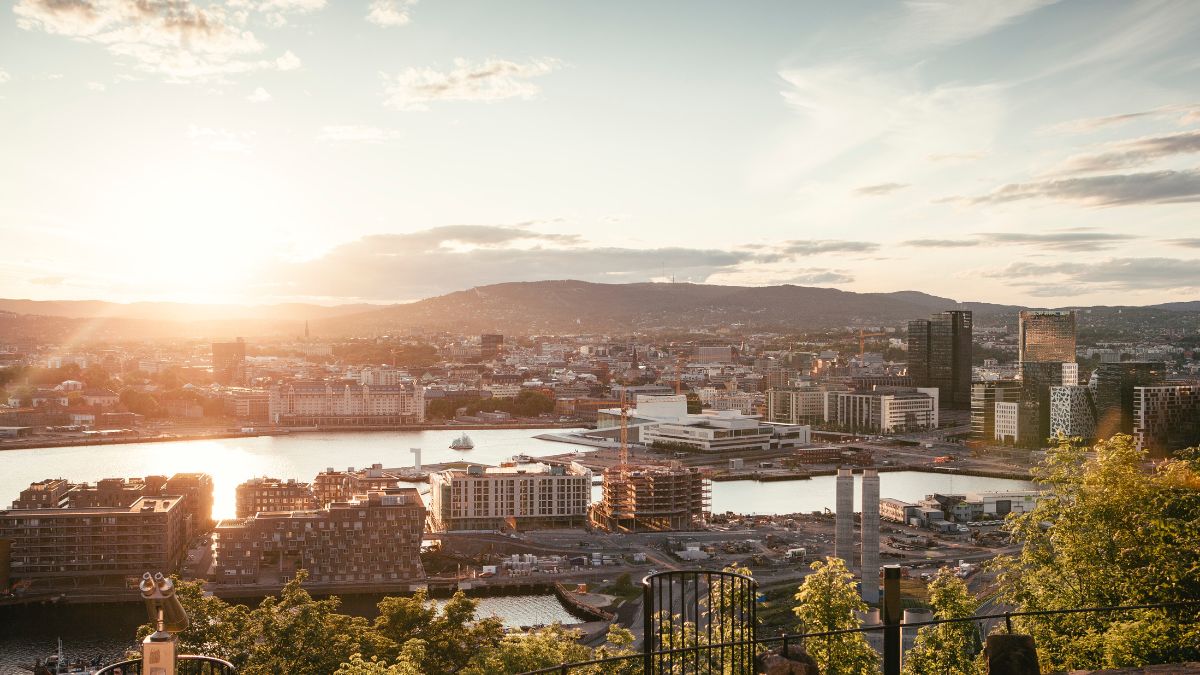
A newly released Green Cities Index has put the world’s most livable urban environments under the microscope, evaluating them on factors such as air quality, the proportion of green space available to residents, and how easily people can actually access those spaces. The results were striking, revealing a clear leader far ahead of the competition. According to the research conducted by the company Igloo, Oslo, the capital of Norway, claimed the top spot with an impressive score of 77.3 out of 100 points. It is a ranking that reflects years of deliberate, ambitious urban planning with sustainability at its heart.
One of the most remarkable statistics behind Oslo’s number one ranking is just how embedded green space is in everyday life there. Igloo’s research found that a full 95 percent of the city’s more than 724,000 residents live within roughly 985 feet of a park or another green area. That kind of access is nearly unheard of in major world capitals, and it speaks to how thoroughly the city has woven nature into its urban fabric. For context, most city planners consider a 10-minute walk to green space a reasonable benchmark, yet Oslo has gone far beyond that standard for nearly its entire population.
Beyond raw access to parks, Oslo has become famous for one of its more unusual ecological initiatives: a dedicated “bee highway” that was launched back in 2015. The project was created specifically to support struggling bee populations by establishing connected routes filled with flowers and green rooftop gardens throughout the city. Bees, which are critical pollinators responsible for a significant portion of the world’s food supply, have faced serious population declines in many parts of the world. Oslo decided to take a hands-on approach by essentially building a corridor of habitat that allows bees to travel safely across the urban landscape.
The city has also championed the concept of so-called pocket parks, which are small green oases carved out of spaces that were once used as parking lots. These miniature parks might seem like a minor detail, but they collectively add up to a meaningful network of breathing room in a dense city environment. They offer residents a nearby escape from concrete and traffic, contribute to biodiversity, and even help manage stormwater runoff. Oslo’s commitment to repurposing underutilized urban land for green purposes is a blueprint that many other cities have started to study closely.
Coming in at second place was Vilnius, the capital of Lithuania, which earned a score of 72.3 points. Vilnius had already received recognition as the European Green Capital for 2025, largely due to its significant expansion of eco-friendly public transportation options and investment in outdoor public spaces. Helsinki in Finland took third, with Vienna in Austria and Canberra in Australia rounding out the top five. The remaining spots in the top ten went to Sydney, Stockholm, Singapore, Reading in England, and Munich in Germany.
Elsewhere in Europe, the city of Heilbronn in southwestern Germany was recently named the European Green Capital for 2027. The announcement was made during a ceremony in Vilnius, adding to the momentum of that city’s own green legacy. Heilbronn earned the distinction by posting high marks across several categories, including air quality, water quality, climate change adaptation, and circular economy practices. The city demonstrated its commitment through formal planning documents including its “Landscape Plan 2030” and a dedicated “Mobility Concept.” Additionally, the European Green Leaf awards, which recognize smaller cities making outstanding environmental strides, were handed to Assen in the Netherlands and Siena in Italy.
For readers less familiar with these frameworks, the European Green Capital Award is an initiative launched by the European Commission in 2008 to recognize cities that have consistently set high environmental standards and are committed to ongoing improvement. Cities with a population of at least 100,000 residents are eligible to apply, and the award covers a broad range of sustainability criteria from biodiversity to noise management to waste reduction. The European Green Leaf Award, introduced in 2014, extends similar recognition to smaller cities and towns typically with populations between 10,000 and 99,999. Both programs are designed to inspire other municipalities to raise their own environmental ambitions and share best practices across borders.
Urban green spaces more broadly have been shown in numerous studies to benefit residents in ways that go well beyond aesthetics. Access to parks and trees has been linked to lower rates of stress, anxiety, and depression, as well as better physical health outcomes due to increased opportunities for outdoor exercise. Green corridors in cities also help reduce the so-called urban heat island effect, where dense concentrations of buildings and pavement trap heat and raise local temperatures significantly above surrounding rural areas. As climate pressures intensify globally, the choices cities make about green infrastructure today will have a lasting impact on how habitable and resilient those cities are in the decades ahead.
If you have thoughts on urban green spaces, bee highways, or which city you think deserves recognition as the world’s most livable, share them in the comments.