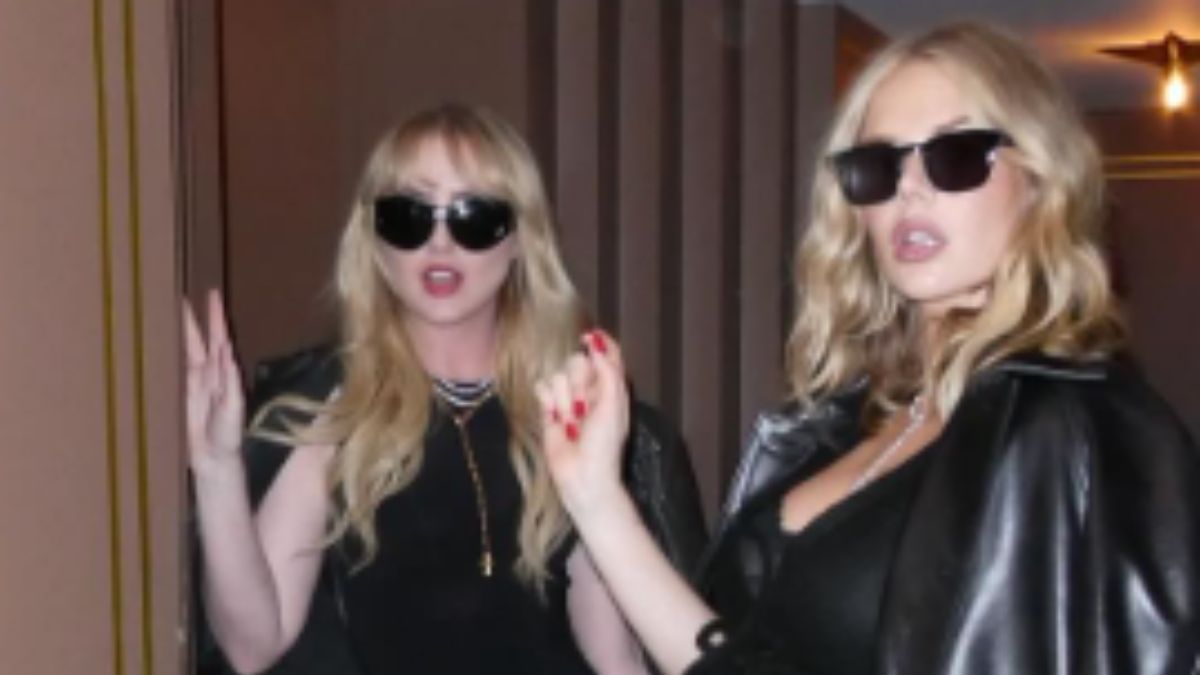
A TikTok “model” named Nia Noir has racked up huge attention online, pulling in millions of followers and views while looking, at first glance, like a real person. The twist is that she is not real at all, and her entire appearance is generated with artificial intelligence. The account has been widely shared and treated like an ordinary creator page, which shows how convincing generative AI has become. In recent months, the tech has improved enough that older giveaways, like obviously mangled hands and fingers, are less common.
Nia Noir’s TikTok presence is massive, with roughly 2.7 million followers, and one of her videos reaching nearly 199 million views. That kind of reach normally signals a breakout influencer, which is exactly why so many people accepted the content at face value. But users began pointing out strange details that did not add up, especially when watching the clips more closely. The biggest red flags were not just about her face or body, but about how the videos seemed to borrow from real creators.
Viewers noticed that some of the dances, and sometimes even the outfits, matched what real content creators had posted. That raised concerns that the AI account was copying existing human-made videos and re-skinning them with a synthetic character. Another oddity was the environment around her, which often appeared frozen and lifeless even in scenes that were supposed to be outdoors. When the subject moves but the background behaves like a static layer, people naturally start asking whether what they are seeing is stitched together.
A key voice commenting on how to spot AI-generated material was Konstantin Levinzon, a co-founder of Planet VPN. He explained that even as generative AI improves, there are still recurring patterns that can give it away if you know what to look for. “AI often struggles with limbs and joints, and another red flag is the person’s skin,” he said. “In real photos you can usually see micro-details, even with heavy makeup or editing.”
@nianoir.xo ♬ som original – Caio
Levinzon also described a certain “too perfect” quality that can appear in synthetic visuals. “The image can look carved rather than photographed,” he said. “Facial symmetry is not perfect, especially around the eyes, and the eyes can have a glassy, artificial shine.” Those are subtle traits that might not register during a quick scroll, but they become more obvious when you pause and examine a frame.
Beyond the face, he emphasized that backgrounds are often where the illusion breaks. “In AI-generated images there is often a mismatch between the background and the subject,” Levinzon said. Applied to this case, he argued that the setting and the character do not share the same visual logic. “In Nia’s image, the background looks like a flat, low-resolution texture, while the person is hyper-polished,” he said.
One of the most unsettling parts of the Nia Noir story is that no one knows who is behind the account. It is also unclear whether the character is based on a specific person or built from a blend of images of different women. That uncertainty is part of what makes AI-driven influencer accounts so slippery, because there may be no clear identity, location, or accountability. Even with visible tells, the content was still persuasive enough to attract enormous engagement.
The bigger takeaway is not just that one account fooled a lot of people, but that the conditions are perfect for this to keep happening. Short-form video rewards fast reactions and repeat views, not careful inspection. AI accounts can also post constantly without the limits of sleep, travel, or real-world logistics. When you combine that with algorithms that push what performs, a synthetic persona can scale faster than a human creator, especially if it borrows trending dances and visual styles.
Generative AI is a broad term for systems that create new content such as images, audio, and video from patterns learned during training. In plain terms, it predicts what pixels or frames should come next based on what it has “seen” before, which is why it can imitate familiar aesthetics so well. AI-generated influencers fit into the same general category as deepfakes, although deepfakes often refer to swapping a real person’s face or voice into a different context. As these tools get better, the best defense is a mix of skepticism and simple verification habits, like checking whether the environment behaves naturally, whether reflections and shadows make sense, and whether motion looks consistent across the whole frame.
If you have seen AI-made influencer content that fooled you at first glance, share what tipped you off in the comments.