The post office occupies a unique position in the landscape of public shared spaces, functioning as one of the last environments where people of every background, age, and technological comfort level are funneled into the same slow-moving queue to conduct transactions that range from the genuinely complex to the bewilderingly simple. It is a place where the patience of strangers is tested not by dramatic events but by the accumulation of small, avoidable, entirely self-inflicted delays that ripple backward through a line of people who arrived with reasonable expectations of a functional transaction. The particular frustration of post office queue disruption is that almost every delay is preventable, caused not by systemic failure but by individual choices made in full view of everyone whose time is being consumed by them. The social contract of the queue is one of the most universally understood arrangements in civic life, and its violation through petty, avoidable behavior generates a specific and justified irritation that experienced postal workers observe with weary recognition every single day. Here are 25 petty things people do at the post office that hold up the entire line.
Unprepared Address

Arriving at the counter without the recipient’s address written, printed, or retrievable in any organized form is perhaps the most fundamental preparation failure a post office customer can commit, representing a decision to complete at the counter a task that could have been accomplished entirely before leaving home. The customer who reaches the front of a queue and begins scrolling through their phone contacts, dictating numbers while the postal worker types, asking for the spelling of street names, or discovering that they do not actually know the postcode of the address they intended to send mail to has treated the counter as a research station rather than a transaction point. The time consumed by address retrieval at the counter is not a fixed quantity but an expandable one, as the customer who cannot find the address in their phone will often then attempt to call the recipient, leave a voicemail, and wait at the counter for a return call that everyone in the line understands will not come quickly enough to matter. A postal worker who has processed thousands of these interactions knows within seconds of the first hesitation that the address is not ready and that the transaction has entered a timeline entirely outside their control. Writing the full address including postcode on the package before joining the queue is a preparation step so basic that its absence communicates something specific about how the customer values the time of everyone behind them.
Mystery Package Contents

Responding to the standard customs declaration or prohibited items question with genuine uncertainty about what is inside a package being sent creates a delay that compounds rapidly as the postal worker attempts to extract the information needed to legally process the item. A customer who answers the question about package contents with a prolonged pause, a description so vague as to be procedurally useless, or a statement indicating that the package was prepared by someone else and the contents are therefore unknown has transferred the administrative burden of their lack of preparation onto the counter staff and everyone waiting behind them. Customs declaration requirements for international mail are publicly documented, mandatory, and not a surprise to anyone who has used postal services to send items abroad previously, making the confusion of repeat customers particularly difficult for the line to absorb with patience. The postal worker who must then walk the customer through the declaration form line by line, prompting each field with a question that should have been answered before the customer reached the counter, is performing a preparation service that the queue has not consented to fund with its collective time. Knowing what you are sending, its approximate value, and whether it contains any restricted categories of item before joining the line is the minimum informational standard that international postal transactions require from the person initiating them.
Incorrect Packaging
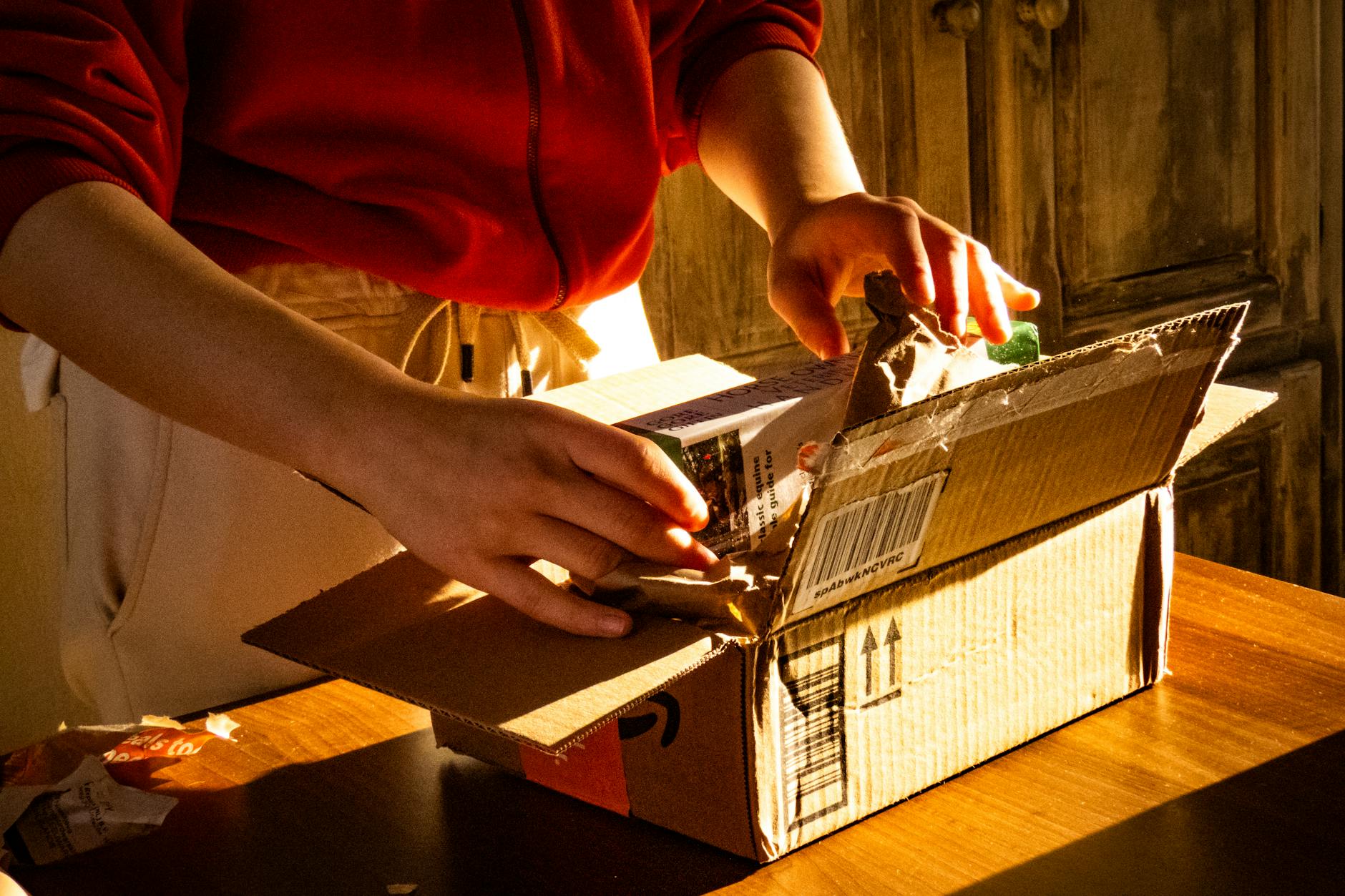
Presenting a package at the counter in packaging that does not meet postal service specifications requires a conversation, a negotiation, and sometimes a complete repackaging exercise that transforms a simple acceptance transaction into a minor logistical project conducted at full counter speed in front of an increasingly impatient queue. Packages taped with the wrong type of adhesive, sealed with string that interferes with automated sorting, addressed in pencil that smudges under standard postal conditions, or packaged in repurposed boxes with old barcodes and labels still visible all require intervention before they can be accepted into the mail stream. A customer who has wrapped a fragile item in a single layer of tissue paper inside a box that flexes visibly under light pressure and then declared it as fragile during intake creates a discussion about additional packaging that the counter is not equipped to resolve efficiently in the middle of a busy service period. The postal worker who must explain that a package cannot be accepted in its current state and suggest corrective measures is doing so while the customer’s expression cycles through surprise, defensiveness, and reluctant compliance in a sequence that the entire line observes without the benefit of being able to speed it along. Checking packaging specifications on the postal service’s website before sealing and addressing a package is a preparatory step that takes minutes at home and saves everyone in the queue the cost of those minutes at the counter.
Exact Change Obsession
The customer who insists on paying with exact change and then discovers that achieving exact change requires excavating the entire contents of a large bag, multiple coat pockets, and a coin purse that has not been opened since the previous government is a figure so familiar to post office queues that their presence is recognized and silently mourned the moment the bag begins to open. The decision to pay with exact change is not inherently problematic, but the decision to begin searching for that exact change only after the total has been announced, rather than during the preceding minutes of queue time, is a choice that transfers the preparation burden entirely onto the waiting line. Some customers achieve a level of exact change commitment that involves counting out coins one at a time onto the counter, recounting when the total seems wrong, discovering that one coin is from a currency that has not been legal tender for fifteen years, and ultimately arriving at a sum that is still not quite correct before beginning the process of converting the remainder into larger denominations. The postal worker who maintains a pleasant expression through this process is exercising a professional discipline that deserves specific recognition, as the internal experience of watching available card payment technology being ignored in favor of a five-minute coin archaeology project is not one that maps naturally onto a pleasant emotional state. Having payment ready before reaching the counter, in any form that the postal service accepts, is a courtesy to the queue that costs the payer nothing and returns significant time to everyone behind them.
Excessive Questioning
Using the post office counter as a general information service for every postal question that has accumulated since the last visit, regardless of the complexity or relevance of those questions to the transaction being conducted, is a behavior that experienced postal workers recognize from the first non-transactional question and that the queue feels from the second. A customer conducting a simple parcel drop who then asks about the relative merits of different tracked delivery services for a future shipment, the current status of a delivery they were expecting last week, the correct procedure for sending a registered letter to a country they are considering sending something to, and whether the postal service has changed its policy on package size limits since the last time they sent something large has converted a thirty-second interaction into a consultation session. The answers to most of these questions are available on the postal service’s website, at the information leaflets available in the post office lobby, or through a customer service phone line specifically provided for extended inquiries, none of which involves a queue of people waiting for their own transactions to be processed. Postal workers are trained and willing to answer questions relevant to the transaction at hand, but the extension of that willingness to cover every postal query the customer has ever had is not a service that the queue has any mechanism to opt out of once it has begun. Saving general postal questions for the customer service line, the website, or a visit during a quieter period is a consideration for the queue that costs the questioner nothing except the minor inconvenience of asking in a different venue.
Forgotten ID
Arriving at the counter to collect a package, send a registered item, or conduct any transaction that requires identity verification without bringing the required identification document initiates a delay whose resolution options are all worse than the original problem. The customer who reaches into their wallet at the counter and discovers that the required identification is in a different wallet, at home on the kitchen counter, in the car in the car park, or in a bag they decided not to bring today has created a situation with no good outcome for anyone currently in the building. The subsequent conversation explores whether alternative forms of identification are acceptable, whether the transaction can be completed with a different document, whether the postal worker can make an exception given that the customer has a very good reason for not having their identification, and whether the postal worker’s supervisor has a different view of the acceptability of a library card as proof of identity for the collection of a registered international parcel. Identification requirements for post office transactions are not a surprise, as they are communicated in the collection notification received before the visit, on the postal service’s website, and through the general cultural awareness that government-related services typically require proof of identity for certain transaction types. Checking identification requirements before leaving for the post office and bringing the correct document is a preparation step that takes thirty seconds and prevents a counter interaction that can easily consume five minutes of everyone else’s time.
Argument About Rates
Initiating a dispute at the counter about the cost of a postal service after the rate has been calculated, presented, and found to be higher than the customer expected or believed it should be converts the final stage of what should be a straightforward transaction into a negotiation whose outcome is predetermined but whose duration is entirely within the customer’s control. Postal rates are set by the postal service, published publicly, and not subject to counter-level adjustment based on customer preference, personal history with the organization, or the sincerity with which the customer believes the rate is too high. A customer who responds to a quoted rate with an expression of outrage, a recollection of a different rate paid on a previous visit, a theory about why the service should cost less, or a request to speak to someone with the authority to reduce the price is beginning a conversation whose endpoint was determined before it started but whose duration depends entirely on how long it takes them to accept this. The postal worker who explains that rates are fixed, that no adjustment is possible, and that the service costs what it costs is doing so while everyone behind the customer in the queue adjusts their mental estimate of when they will reach the counter. Checking current postal rates on the postal service’s website before visiting, and bringing sufficient payment to cover the actual cost of the service intended, eliminates the rate dispute before it has the opportunity to develop into a counter event.
Phone Call During Service

Accepting or initiating a phone call during a counter transaction at the post office is a behavior that simultaneously insults the postal worker, delays every person in the queue, and communicates a specific hierarchy of priorities that places the incoming call above every other person present in the building. The customer who holds up a finger to pause the postal worker mid-transaction and begins a phone conversation that has no observable urgency has made a unilateral decision that their call is more important than the collective time of everyone waiting, a decision they have made without consulting any of the parties whose time they are consuming. The postal worker who must wait, maintaining counter availability, while the customer discusses weekend plans, argues with a family member, or takes a work call that could have been returned in five minutes from outside the building occupies a professional limbo that their job description does not prepare them for and that their natural patience is tested by with particular intensity. Calls that are genuinely urgent can be handled by stepping out of the line rather than the queue, allowing the customer to return when the call is complete and the transaction can proceed without interruption, an option that is available to everyone but exercised by almost nobody who takes a call at the counter. The phone call at the counter is one of the post office queue’s most universally condemned behaviors precisely because it is so completely avoidable and so clearly communicates the caller’s assessment of everyone else’s time relative to their own.
Returning to Add Items
Completing a transaction, stepping away from the counter, and then returning immediately to conduct an additional transaction that was apparently not considered during the preceding interaction requires the customer to either rejoin the queue or to return to the counter in a way that creates a social and procedural ambiguity that everyone present must navigate simultaneously. A customer who posts one item, takes two steps toward the door, and then turns back to the counter to send another item that they had in their bag the entire time has created a situation whose correct resolution varies by post office, postal worker, and the mood of the person at the front of the queue who was preparing to step forward. The question of whether the returning customer is entitled to immediate counter access for the forgotten transaction or whether they rejoin the queue like any new customer is one that post offices resolve inconsistently, generating the specific low-grade social conflict that queue ambiguity always produces. The additional transaction is almost always one that could have been included in the original visit with minimal planning, making the return a direct consequence of a preparation failure that now requires the collective patience of the queue to resolve. Consolidating all intended postal transactions before joining the queue, conducting a mental checklist of everything to be sent, collected, or inquired about, and completing all business in a single counter interaction is the preparation discipline that prevents the two-step return from occurring.
Indecisive Service Selection

Standing at the counter unable to decide between available delivery service options after the postal worker has explained them represents the transfer of a decision that should have been made during queue time onto the counter interaction itself, with everyone behind paying the temporal cost of the deliberation. The choice between standard and tracked delivery, between first and second class, between signed-for and standard, between various insurance levels and delivery speed options is presented in full on the postal service’s website, in leaflets available throughout the post office lobby, and on the menu boards visible from the queue, providing ample opportunity for the decision to be made before the customer reaches the counter. A customer who has stood in a queue for fifteen minutes without using that time to consider which service they require and who then requires the postal worker to repeat, explain, compare, and re-explain each option before reaching a decision that then immediately generates a follow-up question has treated the queue time as a passive waiting experience rather than a preparation opportunity. The postal worker who patiently repeats the difference between tracked and standard delivery for the third time while the customer weighs up a price difference of less than one currency unit is performing a service that their training prepared them for but that the queue’s patience has a finite capacity to absorb. Reviewing available service options and deciding on the appropriate one before joining the queue is a preparation step that takes thirty seconds on a smartphone and saves the counter interaction from becoming a consultation.
Overstuffed Forms

Bringing a partially completed form to the counter and expecting the postal worker to assist with completion of the remaining fields during the transaction is a behavior that converts a document submission into a form-filling tutorial conducted at counter speed in front of an audience that did not volunteer for the experience. Customs declaration forms, registered mail application forms, and postal redirection request forms are available in the post office lobby before the queue begins, providing the opportunity to complete all fields before reaching the counter without any time pressure or queue behind you. A customer who has filled in three of eight required fields and left the remainder blank because the instructions seemed complicated, the handwriting space seemed small, or the form required information they did not have with them has ensured that their counter interaction will include a form-completion phase that doubles or triples its normal duration. The postal worker who must read the form, identify the incomplete sections, explain what information is required for each, wait while the customer attempts to retrieve that information, and then check the completed form for accuracy is performing a service that falls outside the standard counter transaction in terms of both time and complexity. Completing all required forms in their entirety before joining the queue, using the lobby seating and pen provision that most post offices make available for exactly this purpose, is the preparation discipline that prevents the form-completion counter event from occurring.
Wrong Queue Choice
Joining the wrong queue for the intended transaction and discovering this error only upon reaching the counter, at which point the postal worker must redirect the customer to the correct service point, wastes both the customer’s own queue time and the queue position of everyone who waited behind them for a counter interaction that cannot be completed at that station. Post offices that operate separate queues for different service types typically signpost these divisions clearly, with counter designations, overhead signage, and in many cases staff specifically positioned to direct customers to the appropriate queue before they join the wrong one. A customer who has stood in the express parcel drop queue for twenty minutes to collect a registered item that requires a different counter, or who has queued at the main service counter to use a self-service machine that has its own separate and shorter queue, has misallocated their own time and the structural capacity of the service around them. The redirection conversation at the counter, in which the postal worker explains that this service is not available at this station and describes where the correct service point is, is brief but generates a specific frustration in the queue behind because the position consumed was consumed unproductively from the queue’s collective perspective. Reading the queue signage upon entering the post office, observing which counters are serving which transaction types, and joining the correct queue for the intended service is a navigation task that takes thirty seconds and prevents the wrong-queue discovery event at the counter.
Unannounced Bulk Posting

Arriving at the counter with a large volume of individual items to be posted separately without any indication of the volume before the transaction begins is a queue management event that everyone in the line experiences as a slow-motion disaster unfolding one item at a time. The customer who places a single envelope on the counter to be weighed and priced, receives the service, pays, and then produces a second envelope from a bag that is now visibly full of further envelopes has created a situation that the queue adjusts to with a collective recalibration of expected waiting time that no one welcomes. Each individual item in a bulk posting requires its own weighing, pricing, service selection, and processing cycle, meaning a customer posting twenty individual items has effectively occupied the counter for the equivalent of twenty separate transactions that the queue had no warning were coming when the customer reached the front. Business customers who regularly post large volumes of individual items have access to account services, bulk posting arrangements, and scheduled collection services specifically designed to prevent this volume from entering the retail counter queue. Informing the postal worker at the beginning of the transaction that multiple items will be posted allows them to manage the interaction efficiently and advise on the fastest processing method, a thirty-second disclosure that prevents the progressive queue despair of the one-at-a-time reveal.
Demanding Supervisor

Requesting to speak with a supervisor in response to a counter outcome that falls within standard postal policy and represents no error on the part of the postal worker is a behavior that pauses the counter, creates an administrative event, and delivers no different outcome than the original interaction while consuming the time of everyone present. The postal service policies that generate customer dissatisfaction at the counter, including rate structures, size and weight restrictions, prohibited item categories, and identification requirements, are not created by the postal worker delivering them and are not within the supervisor’s authority to override on a case-by-case basis at the customer’s request. A supervisor called to the counter to address a customer complaint about the cost of international tracked delivery, the requirement to declare package contents, or the refusal to accept a parcel in non-compliant packaging will deliver the same information the postal worker provided, in different words, after a delay caused by their retrieval from whatever they were doing when called. The queue behind the supervisor-requesting customer undergoes a specific and particularly intense form of collective patience testing, as the wait for the supervisor to arrive adds an indeterminate delay to the existing transaction delay in pursuit of an outcome that experienced queue members recognize will not differ from the original. Accepting that postal counter staff are accurately representing the policies of their organization, and directing substantive policy complaints to the customer service channels provided for that purpose, prevents the supervisor-request counter event and returns the queue to its normal processing pace.
Excessive Tape Requests

Requesting postal tape, scissors, packaging assistance, or other counter resources for the purpose of completing package preparation that should have been finished before arriving at the post office is a behavior that occupies counter space, staff attention, and queue time for a task that belongs in the preparation phase rather than the transaction phase of the postal visit. A customer who arrives with a box that needs taping, an envelope that needs sealing, a label that needs trimming, or a package that needs reinforcing has decided that the post office counter is an appropriate location to complete these tasks, a decision that the queue experiences as an unexpected and unwelcome extension of the counter interaction. The post office provides packaging materials for purchase and counter assistance for transaction-related needs, but the provision of these resources was not designed to substitute for the home preparation that prevents packages from arriving at the counter in an incomplete state. Counter staff who assist with packaging at the customer’s request are doing so as a courtesy that their training and their employer’s commitment to service motivate, but each packaging assistance event at the counter consumes time that the queue can observe being consumed without the ability to expedite it. Completing all package preparation including sealing, taping, labeling, and addressing before leaving for the post office is the preparation standard that keeps the counter interaction focused on the transaction itself rather than the preparation tasks that precede it.
Currency Confusion

Attempting to pay for postal services with foreign currency, discontinued currency, or non-legal tender at the post office counter is a transaction failure that generates a conversation, a refusal, and a payment method substitution that together consume considerably more counter time than a straightforward payment would have required. The post office accepts payment in the legal currency of the country in which it operates, a requirement that is not flexible at the counter level regardless of the exchange rate the customer proposes, the proximity of the currency’s country of origin, or the sincerity with which the customer believes the foreign notes should be acceptable. A customer who presents payment in a currency that has not been legal tender since a previous decade, whether through genuine error or a hopeful attempt to find a use for notes that no other institution will accept, generates a counter event that involves explanation, refusal, and the customer’s subsequent discovery of whether they have any alternative payment method available. The time spent explaining why a particular form of payment cannot be accepted, waiting while the customer searches for an alternative, and then processing the alternative payment method is time that the queue observes being consumed by a situation that a moment’s thought before leaving home would have prevented entirely. Confirming that available payment methods include the forms accepted by the postal service before leaving for the post office is a preparation step whose simplicity is inversely proportional to the counter chaos that its absence can generate.
Lost Receipt Disputes
Disputing the non-delivery or loss of a previously posted item without bringing the receipt, tracking number, or any documentary evidence of the original transaction to support the claim creates a counter event that the postal worker cannot resolve and that the queue must absorb while the impossibility of resolution is established through conversation. A postal service claim for a lost or delayed item requires, at minimum, the tracking number assigned at the time of posting, which is printed on the receipt provided at the end of every counter transaction specifically because it will be needed if the item does not arrive as expected. A customer who presents at the counter to report a lost item with no receipt, no tracking number, no recollection of the approximate date of posting, and no description of the item more specific than a general category has provided no actionable information that the postal worker can use to initiate an investigation or verify that an item was posted through their service at all. The conversation that follows, in which the postal worker explains what information is required and the customer attempts to reconstruct it from memory, is a research exercise that cannot be successfully completed at the counter and that everyone in the queue is obliged to wait through. Bringing the original receipt or noting the tracking number before attending the post office to report a missing item is the preparation standard that makes a loss claim a brief and processable counter interaction rather than an unresolvable conversation conducted at queue expense.
Chatting With Clerk

Engaging the postal worker in extended personal conversation during or after the transaction has been completed, while a queue waits, is a behavior that reveals an unawareness of the social environment of the post office that is difficult to attribute to anything other than a fundamental disregard for the shared nature of the space. The postal worker who is being engaged in conversation about the weather, local events, a shared acquaintance, or the clerk’s personal circumstances is in a professional position that makes ending the conversation difficult, as the service norms of their role require a level of responsiveness to customer interaction that does not naturally accommodate the abrupt termination of a conversation a customer has initiated. A customer who has completed their transaction and continues to occupy the counter position while chatting has effectively removed that counter from queue service for the duration of the conversation without any of the parties affected by that removal having been consulted about or consenting to it. Regular customers at smaller post offices develop genuine relationships with counter staff that create a natural social dynamic during quieter periods, but the same conversational behavior during a busy period with a visible queue is a social awareness failure rather than a relationship expression. Completing the transaction, exchanging the brief pleasantries that basic courtesy suggests, and stepping away from the counter to allow the next person forward is the queue-aware behavior that post office social norms require from every customer regardless of their relationship with the staff.
Repackaging at Counter

Discovering at the counter that a package needs to be repackaged and proceeding to repackage it at the counter rather than stepping aside to do so at the lobby table is a behavior that occupies prime counter real estate for a task that neither requires nor benefits from counter-level access. The lobby of most post offices contains a table, a shelf, or at minimum a flat surface specifically provided for package preparation activities including repackaging, addressing, and taping, surfaces that exist precisely to prevent these activities from occurring at the counter during service hours. A customer who unpacks, repackages, re-tapes, and re-addresses a parcel at the counter while the postal worker waits and the queue extends has converted a counter position into a packaging workspace without considering that the counter is a shared resource whose availability to the queue is being directly consumed by the repackaging activity. The postal worker who suggests that the customer might find it easier to use the lobby table and return to the queue when ready is making an entirely reasonable process suggestion that some customers receive as a personal affront rather than the queue-management courtesy it represents. Assessing package compliance before joining the queue, and completing any necessary repackaging at the lobby preparation surface before reaching the counter, keeps the counter interaction focused on the postal transaction rather than the preparation activities that precede it.
Bringing Entire Family

Arriving at the post office with the full family group in tow and conducting the counter interaction as a collective family exercise, with input from multiple family members, introduces a decision-making complexity into the transaction that extends its duration well beyond what a single customer would require. The family post office visit in which a parent defers to a partner standing three meters away for a decision about which service to select, a child asks questions unrelated to the transaction, a second child requires physical intervention at a display stand, and a third family member has a separate question they would like to ask while the counter is occupied by the primary transaction is a multi-threaded customer service event that the postal worker was not staffed or trained to manage simultaneously. The counter interaction that should take two minutes extends to five or more as the family decision-making process operates at its natural pace without regard for the queue’s experience of that pace from behind. Postal transactions conducted on behalf of the family unit can be completed by a single family member who has been briefed on all relevant details before entering the building, with the remainder of the family waiting outside or in the lobby away from the counter area. The presence of the full family at the counter adds logistical complexity, social noise, and decision-making delay to an interaction that single-person execution would have resolved efficiently and without incident.
Complaint Monologue
Using the counter interaction as an opportunity to deliver a comprehensive complaint about the postal service’s recent performance, policy changes, price increases, or specific delivery failures is a behavior that redirects the counter from a transaction processing function to a complaint reception function for which it is neither staffed nor designed. The postal counter worker who receives a complaint monologue is in a professional position that requires them to listen, acknowledge, and respond sympathetically to feedback that they have no authority to act on, no mechanism to escalate in the manner the customer desires, and no ability to resolve during the counter interaction. A complaint about a missed delivery, a damaged parcel, a price increase, or a policy change delivered at the counter during a busy service period will be heard, acknowledged, and redirected to the appropriate complaints channel without any of the substantive outcomes the customer is seeking, while everyone in the queue waits for this predetermined endpoint to be reached. The postal service provides dedicated complaints channels including phone lines, online forms, and written correspondence options specifically designed to receive, record, and respond to customer feedback in a way that the counter interaction structurally cannot. Directing substantive complaints to these channels rather than the counter ensures that the complaint is received by someone with the authority and tools to respond to it, while simultaneously returning the counter to its intended function at a pace the queue can sustain.
Forgotten Payment
Reaching the point of payment in a counter transaction and discovering that the intended payment method is unavailable, whether through a forgotten wallet, a declined card, insufficient cash, or a payment app that requires a password the customer cannot immediately recall, is a preparation failure that generates one of the most time-consuming possible counter delays. The customer who pats their pockets, opens their bag, checks their phone, tries a card that is declined, tries a second card that is also declined, looks for cash they are not certain they brought, and asks whether the postal service accepts a payment method that it does not is conducting a financial situation assessment at the counter while everyone behind them recalibrates their plans for the remainder of their day. The postal worker who must maintain the counter interaction in a state of suspended incompletion while the customer’s payment situation resolves itself is occupying a professional position that their training did not fully prepare them for and that their natural patience is tested by more than almost any other counter event. Confirming before leaving for the post office that available payment includes a method accepted by the postal service, and ensuring that method is accessible and functional before joining the queue, is the preparation discipline that prevents the payment discovery event from becoming a counter crisis. Carrying a backup payment method for post office transactions is a simple contingency that costs nothing and eliminates the possibility of reaching the payment stage of a counter transaction without the means to complete it.
Passive Aggressive Sighing

Expressing dissatisfaction with wait times, counter policies, or the pace of the transaction through audible sighing, visible eye-rolling, pointed comments about the time, or other passive expressions of impatience while still occupying the counter is a behavior that creates a hostile microenvironment around the transaction without contributing any information that would help resolve whatever is causing the dissatisfaction. The postal worker who receives a sigh in response to a stated rate, an eye-roll in response to an explained policy, or a muttered comment about the slowness of the system while a required process is being completed is being asked to absorb a social communication that has no constructive content and that their professional role requires them to respond to with continued courtesy. The queue behind a passive aggressive counter customer observes the behavior with a mixture of secondary embarrassment and irritation, as the sighing and commentary add emotional texture to an already extended interaction without moving it toward resolution. The time consumed by the passive aggressive communication event is rarely significant in isolation, but the effect on the postal worker’s pace and the atmosphere of the counter interaction makes the subsequent processing measurably slower in the way that any hostile social environment affects the performance of the person operating within it. Accepting that post office counter interactions sometimes involve rates, policies, and processing requirements that differ from personal preference, and managing any resulting dissatisfaction through the appropriate feedback channels rather than the counter atmosphere, is the civic patience that the shared space of the post office queue requires from every participant.
Self-Service Machine Refusal
Refusing to use available self-service machines for transactions that are entirely within the self-service system’s capability and instead joining the staffed counter queue for a transaction that would take thirty seconds at the machine adds waiting time to every person in the staffed queue for a reason that is entirely within the refusing customer’s control. Self-service machines at modern post offices handle the majority of standard parcel and letter transactions including weighing, labeling, service selection, and payment processing without requiring counter staff involvement, and their availability during busy periods is specifically intended to redistribute queue pressure away from the staffed counters. A customer who walks past three available self-service machines to join a fifteen-person staffed counter queue for a standard parcel drop has made a choice whose consequences are experienced by everyone behind them in the queue they have joined unnecessarily. The reluctance to use self-service machines is understandable for customers who are unfamiliar with the technology, have accessibility requirements that make the machines impractical, or have a transaction that genuinely requires staff assistance, but the customer who is capable of using the machine and chooses not to out of preference for human service during a peak period is exercising that preference at the queue’s collective expense. Attempting the self-service machine for standard transactions during busy periods, and reserving the staffed counter for transactions that genuinely require human assistance, is the queue-aware behavior that the self-service infrastructure was installed to encourage and that the queue benefits from when customers choose to practice it.
If the post office queue has ever pushed your patience to its absolute limit, share your most memorable waiting experience in the comments.