If you were following men’s tennis in the early 2000s, you almost certainly had an opinion about Marat Safin. The Russian powerhouse was impossible to ignore — a player whose thunderous groundstrokes and fiery on-court temperament made every match feel like an event. He had a magnetism that extended well beyond the sport itself, earning a devoted following among fans who admired both his game and his undeniable charisma. Now 46 years old, Safin has resurfaced at Indian Wells, and those who spot him in the stands are doing a double take.
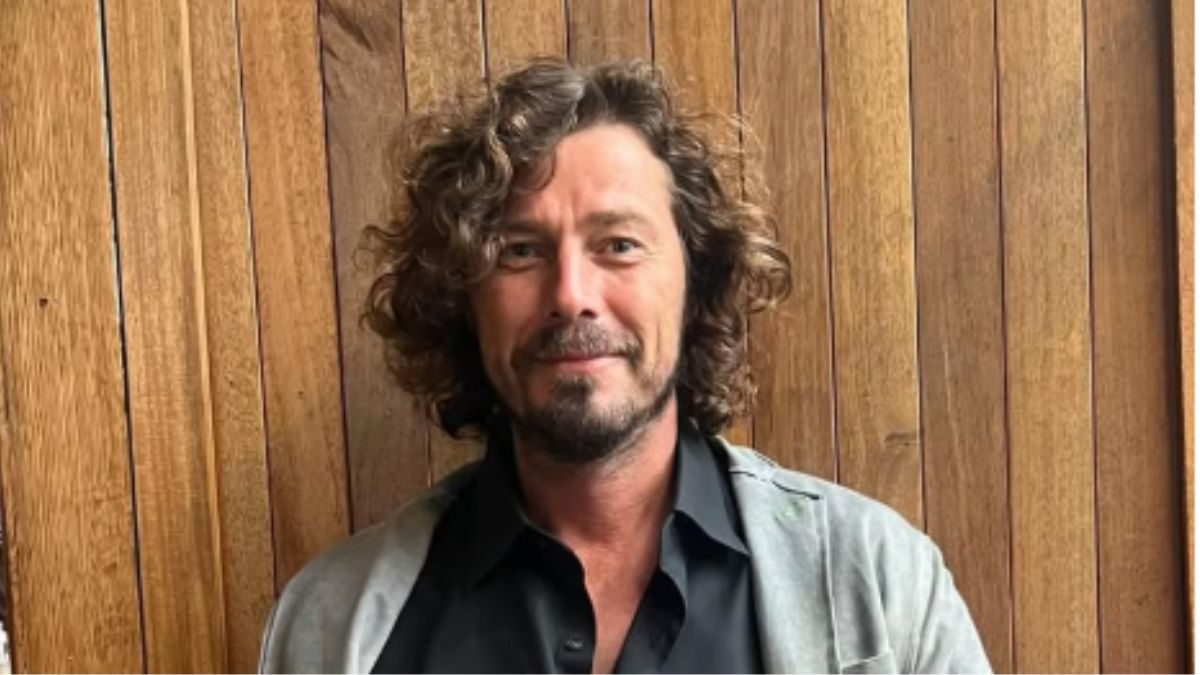
The former world No. 1 has undergone a striking transformation in appearance. Gone is the close-cropped hairstyle that fans remember from his playing days, replaced by long hair and a full, thick beard that make him genuinely difficult to recognize at first glance. His new look is worlds away from the clean-cut image he carried through his professional career, and photos of him circulating from Indian Wells have generated considerable buzz online. It is one of those rare moments where a once-ubiquitous public figure returns and leaves people genuinely surprised.
Safin is in California in a professional capacity, having taken on a coaching role with fellow Russian player Andrey Rublev. The two began their working relationship during last year’s clay court season, an interesting pairing given that Safin himself was famously volatile during his own career. Now he finds himself in the position of helping Rublev manage the very kind of emotional intensity that once defined Safin’s own matches. Whether he is the ideal mentor for that particular challenge is a question tennis fans have been asking with some amusement.
His Grand Slam record gives him real credibility in that coaching chair. Safin claimed two major titles during his career, first breaking through at the 2000 US Open, where he defeated the legendary Pete Sampras in the final. He followed that with a second title at the 2005 Australian Open, cementing his status as one of the most talented players of his generation. At his peak he held the top ranking on the ATP Tour, and after retiring from professional play in 2009, he was inducted into the Tennis Hall of Fame, the sport’s ultimate recognition of a career well lived.
Despite stepping away from competition, Safin has never fully disappeared from the tennis world. He has participated in legends exhibitions that bring retired stars back onto the court in a more relaxed setting. At last year’s US Open he teamed up with Bethanie Mattek-Sands to face Pat Rafter and Kim Clijsters in a mixed doubles exhibition match. Earlier this year at the Australian Open, he played alongside Lleyton Hewitt against Roger Federer and Pat Rafter in another legends contest. These appearances have kept him connected to the sport and visible to newer generations of fans who may only know him by reputation.
What makes Safin’s story compelling is how fully he leaned into life after tennis rather than clinging to his former image. Many retired athletes spend years chasing their peak, but Safin seems genuinely at ease with who he is now, long hair, beard, and all. His return to the tour environment as a coach suggests he still has something to offer the game that shaped him, even if the person standing courtside looks remarkably different from the young man who was once impossible to miss on any Grand Slam draw.
Marat Safin won 15 ATP singles titles over the course of his career, but he is perhaps just as remembered for the 48 rackets he reportedly smashed in a single season, a record that became something of a running joke among commentators. Tennis historians love pointing out that Safin’s US Open victory over Pete Sampras in 2000 came when Sampras was the reigning champion and considered nearly unbeatable on that surface, making the straight-sets demolition one of the more stunning upsets of the era. The Hall of Fame induction process requires a five-year waiting period after retirement, meaning Safin had to wait until 2014 before receiving the honor, despite being one of the most talented players of his generation the moment he put down his racket.
What do you think of Marat Safin’s transformation and his new chapter as a coach — share your thoughts in the comments!