
The moment a customer sits down at the finance and insurance desk of a car dealership, the negotiation enters its most sophisticated and consequential phase. Everything that happened on the showroom floor, the test drive, the initial price discussion, was a warm-up for a process designed by professionals who close deals for a living and who have studied consumer psychology with the same dedication that a surgeon studies anatomy. Consumer protection agencies, automotive journalists, and former dealership employees have documented these tactics extensively, and the pattern is consistent across brands, regions, and price points. Understanding what is about to happen before it happens is the only reliable protection a buyer has against a system that is built, optimized, and continuously refined to extract maximum revenue from the least informed participant in the room.
Four-Square Worksheet

The four-square worksheet is a single sheet of paper divided into four quadrants covering the vehicle price, trade-in value, monthly payment, and down payment, and it is one of the most deliberately confusing documents in retail commerce. Its design allows the salesperson to make concessions in one quadrant while quietly recovering that money in another, creating the impression of negotiation while the total cost of the transaction remains unchanged or increases. A buyer who successfully negotiates the monthly payment down may not notice that the loan term has been extended, that the trade-in value has been reduced, or that the vehicle price has crept back up to compensate. Consumer advocacy organizations have described the four-square as a tool specifically engineered to prevent the buyer from tracking the actual total cost of the deal. The only protection against it is to negotiate each element separately and sequentially, never allowing multiple variables to move simultaneously within the same conversation.
Payment Packing

Payment packing is the practice of quoting a monthly payment figure that silently includes the cost of add-on products and extended warranties that were never discussed or agreed upon. The buyer hears a monthly figure that sounds acceptable, agrees to it in principle, and only discovers the additional products when reviewing the contract in detail at the signing table. By that point the buyer has already mentally committed to the payment amount, has likely told friends and family they are buying the car, and faces significant social and psychological pressure to complete the transaction. The additional products embedded in the payment are often presented as already included or as standard features of the financing package rather than as optional purchases. Consumer protection complaints involving payment packing are among the most common in automotive retail and the practice has resulted in regulatory action against dealerships in multiple jurisdictions.
Spot Delivery

Spot delivery involves allowing a buyer to take possession of a vehicle before financing has been formally approved by a lender, creating a situation where the buyer has already emotionally and practically committed to ownership before the terms of the financing are confirmed. Days or weeks after driving the new car home, the buyer receives a call informing them that the original financing terms could not be secured and that they must return to the dealership to sign a new contract at a higher interest rate or with different terms. This practice is sometimes called the yo-yo scam in consumer protection literature, and it exploits the psychological reality that a buyer who has already driven a car home, shown it to neighbors, and transferred their belongings into it is far less likely to return it than to accept the revised terms. Some states and countries have enacted specific legislation against spot delivery practices, but enforcement is inconsistent and the practice continues in markets where regulatory oversight is limited. Buyers who take delivery of a vehicle should ensure that the financing approval is confirmed in writing before leaving the lot.
Dealer Markup Confusion

Manufacturer suggested retail price is presented by dealerships as a fixed and authoritative number from which any discount represents a genuine saving, when in reality it is a starting point for negotiation that many vehicles sell below, at, or above depending on demand and dealer strategy. A dealer who presents a modest discount from MSRP as a significant concession is using the suggested price as an anchor that has been set at a level designed to create the impression of generosity when a standard market price is offered. Market adjusted pricing, a term used to describe markups above MSRP applied to high-demand vehicles, uses similar language to normalize prices that are substantially above what the vehicle will sell for once supply stabilizes. Understanding the actual transaction prices being achieved for a specific vehicle in the current market, which is publicly available through automotive pricing databases, removes the MSRP anchor entirely from the negotiation. A buyer who knows what other buyers are paying for the same vehicle in the same market is negotiating from a position of genuine information rather than manufactured reference points.
Trade-In Timing

The sequence in which trade-in value is introduced into a vehicle purchase negotiation is a deliberate strategic choice that experienced dealership staff manage carefully to maximize their margin on both transactions. Disclosing the trade-in early allows the salesperson to bundle its value into the overall deal in ways that obscure whether either the purchase price or the trade-in value represents a fair outcome in isolation. Keeping the trade-in separate until the purchase price of the new vehicle has been fully negotiated is a standard consumer protection recommendation that most dealerships actively try to circumvent by asking for trade-in details as early as possible in the process. A buyer who has received an independent appraisal of their trade-in vehicle from a third party before entering the dealership has a concrete reference point that cannot be reframed by a salesperson who controls the only valuation being offered. The difference between what a dealer offers for a trade-in and what a private sale or third-party buyer would pay is frequently substantial and represents a significant hidden cost of the overall transaction.
The Bump

The bump is a technique used after a price agreement has been reached in which the finance manager or a senior salesperson returns to the negotiating table with a revised figure that is modestly higher than the agreed price, accompanied by an explanation that sounds procedural and unavoidable. The explanation might reference a lender requirement, a documentation fee, a processing charge, or a market adjustment that was supposedly overlooked in the earlier discussion. At the point of the bump, the buyer has already invested significant time, has emotionally committed to the vehicle, and is being asked to accept a small additional charge that feels minor relative to the total transaction value. Consumer psychology research on the topic of deal commitment consistently shows that buyers who have reached an agreement are far more likely to accept small upward revisions than they would be to agree to the same total price if it had been quoted at the outset. Recognizing the bump as a tactic rather than a genuine administrative adjustment allows the buyer to decline it without feeling that they are disrupting a legitimate process.
Interest Rate Markup

Dealerships that arrange financing through their own finance and insurance departments act as intermediaries between the buyer and the lender, and in most markets they are permitted to mark up the interest rate above what the lender actually requires, retaining the difference as profit. A buyer who qualifies for a six percent interest rate from the lending institution may be offered eight percent by the dealership, with the two percent spread generating thousands of dollars in additional revenue over the life of the loan without any disclosure to the buyer. This practice, known as dealer reserve in industry terminology, is legal in most jurisdictions and is not disclosed on standard loan documentation in a way that makes it visible to the buyer. Securing pre-approved financing from a bank or credit union before visiting the dealership establishes a concrete interest rate benchmark that the dealer must beat or match rather than set unilaterally. Buyers who arrive with pre-approval documentation remove the dealer’s ability to control the interest rate conversation and force the financing discussion onto factual rather than manipulative ground.
The Lowball

Quoting an artificially low price early in the sales process to secure a buyer’s commitment, and then adjusting that price upward at the point of contract signing, is a practice that persists in automotive retail because the investment of time and emotion that occurs between the initial quote and the signing table is sufficient to prevent most buyers from walking away. The adjustment is typically explained as a calculation error, a misquoted trim level, a change in available incentives, or a lender requirement that affects the overall deal structure. By the time the corrected price appears in the contract documents, the buyer has test driven the vehicle, discussed it with their family, potentially arranged insurance, and committed psychologically to ownership in a way that makes the prospect of starting over at a different dealership feel disproportionately costly. Consumer protection agencies classify the lowball as a form of bait-and-switch and it is technically illegal in most jurisdictions, but enforcement requires the buyer to have documented the original quote in a form that can be produced as evidence. Obtaining any price quote in writing before leaving the dealership is the documentation practice that makes the lowball both visible and actionable.
Finance Office Delay

The deliberate extension of waiting time between the sales floor agreement and the finance office appointment is a psychological technique that uses fatigue, boredom, and the passage of time to weaken a buyer’s negotiating resolve at the most critical point in the process. A buyer who has already spent several hours at the dealership, who is hungry, tired, or distracted by children or other commitments, and who is then asked to wait an additional forty-five minutes before signing is in a significantly compromised decision-making state relative to when they arrived. The finance manager who greets this buyer is fresh, prepared, and working from a script that has been refined through thousands of transactions. Consumer behavior research consistently shows that decision quality deteriorates with fatigue and that people in tired states are more likely to accept presented options rather than generating alternatives. Scheduling a dealership visit with the explicit intention of leaving before signing if the finance appointment is substantially delayed is a protective practice that preserves decision-making quality for the most consequential part of the transaction.
Warranty Inflation

Extended warranty products sold through dealership finance offices are frequently priced at multiples of their actual cost, presented with urgency language that implies they are only available at the point of sale, and described in terms that obscure the significant limitations written into the coverage terms. A buyer who is told that a comprehensive extended warranty is available for this transaction only, at a price that represents a special discount from the standard rate, is receiving a pressure tactic rather than a factual description of availability and pricing. Extended warranties from most manufacturers and many independent providers are available for purchase after the sale, sometimes at substantially lower prices, and often with coverage terms that are comparable or superior to the dealership product. The finance manager who presents the warranty is typically working on a commission structure that rewards warranty sales specifically, creating a strong personal financial incentive to close the warranty sale regardless of whether it represents value for the buyer. Reading the full warranty contract, including the exclusions list, before agreeing to any extended coverage is the verification step that most dealerships discourage through time pressure and complexity.
VIN Etching

VIN etching is the process of engraving the vehicle identification number onto the windows of a car as a theft deterrent, a process that takes approximately fifteen minutes and costs the dealership a negligible amount to perform. Dealerships charge prices for this service that range from a few hundred to over a thousand dollars, present it as an already-performed modification on vehicles where it has been pre-applied, and sometimes include it in the contract as a line item without explicitly drawing the buyer’s attention to it. The theft deterrent value of VIN etching is modest and the service is available from third-party providers at a fraction of the dealership price for buyers who want it. Consumer protection organizations have specifically identified pre-applied dealer add-ons as a category of charge that buyers have the right to refuse regardless of whether the modification has already been made to the vehicle. Reviewing the contract for any pre-installed add-on charges before signing and asking for each one to be removed or explained is a standard protective practice that can eliminate hundreds of dollars from the transaction cost.
Monthly Payment Focus

Steering the entire negotiation toward a monthly payment figure rather than a total vehicle cost is a technique that allows the salesperson to extend the loan term, increase the interest rate, or add product costs while keeping the monthly number within a range the buyer has identified as acceptable. A buyer who states that they want to stay under a specific monthly payment has provided the salesperson with both a ceiling and a structural opportunity, because almost any total cost can be made to fit almost any monthly payment target by adjusting the loan term. The total cost of a seventy-two month loan versus a forty-eight month loan for the same vehicle can differ by thousands of dollars, a difference that is invisible when the conversation is conducted entirely in monthly payment terms. Consumer advocacy resources on automotive purchasing consistently advise buyers to negotiate the out-the-door price of the vehicle as a total figure and to treat the financing structure as a separate subsequent decision. Refusing to discuss monthly payments until the total purchase price, including all fees and add-ons, has been agreed and documented is the negotiating posture that prevents payment-focused manipulation.
Confusing Lease Terms
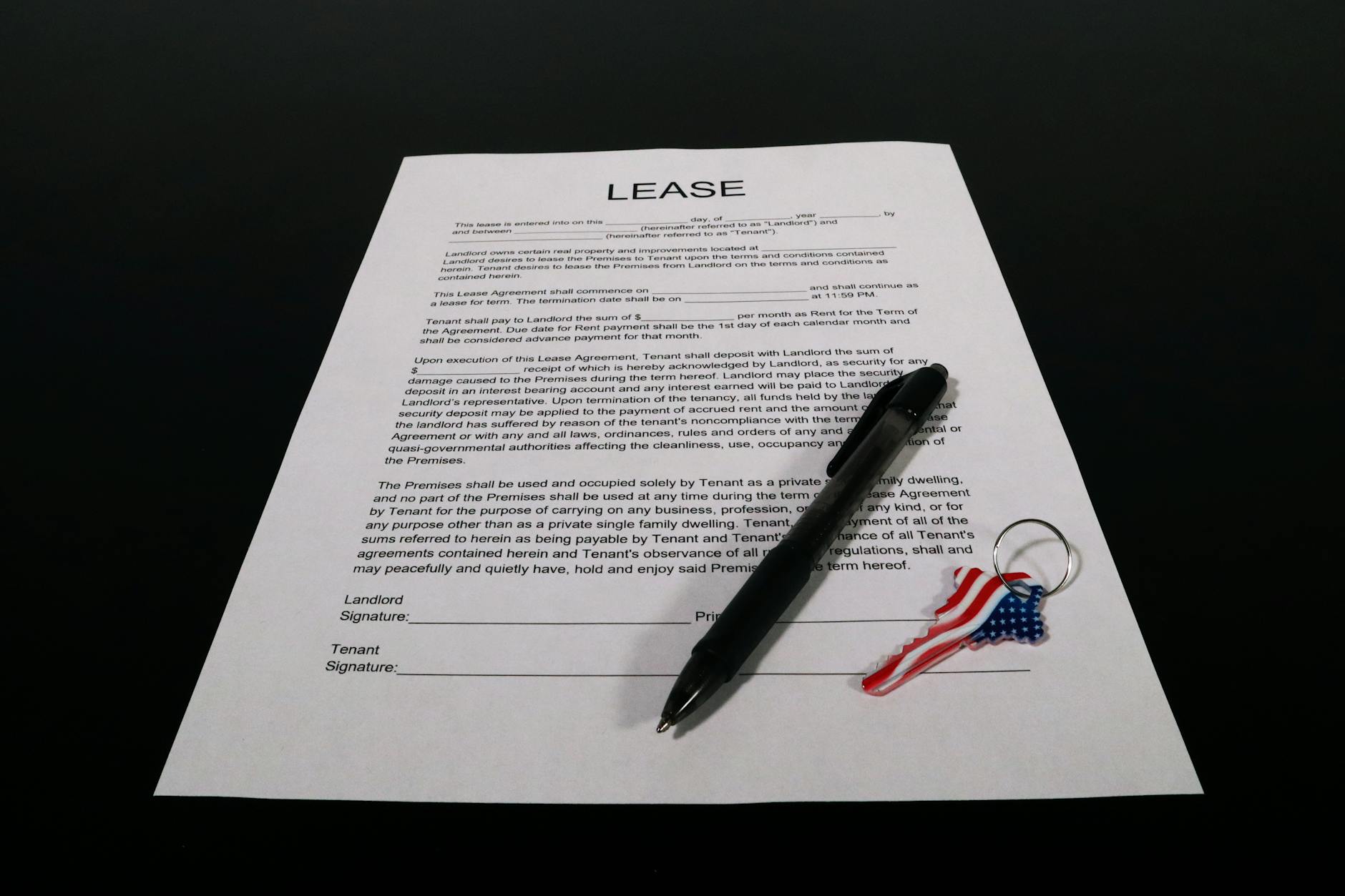
Lease agreements are substantially more complex than purchase financing and involve residual values, money factors, capitalized costs, acquisition fees, and disposition fees that are not part of standard purchase vocabulary and are rarely explained in plain language during the signing process. A money factor, which is the lease equivalent of an interest rate expressed as a decimal that must be multiplied by 2400 to convert to an approximate annual percentage rate, is almost never disclosed in those terms by a finance manager presenting a lease. Residual values, which determine how much of the vehicle’s cost the buyer is financing through the lease, are set by the manufacturer’s captive finance arm and are fixed, but the capitalized cost on which those payments are based is fully negotiable and is the primary lever through which dealer profit is extracted from a lease transaction. Buyers who enter a lease negotiation without understanding these terms are evaluating an agreement on the basis of a monthly payment figure that has been constructed from variables they cannot verify. Researching current lease terms including money factor and residual value through automotive enthusiast forums that track manufacturer lease programs before visiting the dealership provides the reference information needed to evaluate whether the presented terms are fair.
Add-On Avalanche

Presenting a series of add-on products in rapid succession during the finance office appointment creates a decision fatigue environment in which the buyer loses the ability to evaluate each item individually and begins either accepting or declining on a reflexive basis rather than an analytical one. Each individual add-on, a paint protection package, a fabric treatment, a tire and wheel protection plan, a key replacement program, is presented with a brief explanation and a monthly cost figure that sounds negligible in isolation. The cumulative cost of several accepted add-ons can add thousands of dollars to the total transaction, but the presentation format is specifically designed to prevent that cumulative calculation from occurring naturally during the meeting. Consumer protection specialists describe the add-on avalanche as one of the most effective revenue-generation techniques in the finance office because it exploits both decision fatigue and the sunk cost psychology of a buyer who is already committed to completing the purchase. Requesting a complete list of all available add-ons with their individual prices before the finance office presentation begins allows the buyer to evaluate the full menu rather than responding to a sequenced pitch.
Fake Deadline Pressure

Creating the impression that a specific price, incentive, financing rate, or vehicle availability is contingent on a decision being made before the buyer leaves the dealership is a pressure tactic that removes the buyer’s ability to verify the offer independently or to consult with advisors before committing. Genuine manufacturer incentives, financing promotions, and pricing structures are publicly available and time-limited according to published schedules that the buyer can verify through the manufacturer’s website or through automotive pricing services. A salesperson who claims that a discount or rate expires at the end of the day, at the end of the month, or the moment the buyer walks out the door is almost certainly manufacturing urgency rather than describing a real constraint. The vehicle will almost certainly be available, the incentive will almost certainly still apply, and the dealership will almost certainly be willing to honor a reasonable offer the following day or the following week. Treating any deadline that cannot be independently verified as a pressure tactic rather than a factual constraint is the evaluative posture that prevents manufactured urgency from distorting a major financial decision.
Hidden Documentation Fees

Documentation fees, sometimes called doc fees or processing fees, are charges applied by dealerships for the administrative work of preparing the purchase contract and filing the relevant paperwork, and they vary enormously between dealerships and between jurisdictions. In some markets these fees are regulated and capped, in others they are entirely at the dealership’s discretion and can represent several hundred to over a thousand dollars added to the transaction cost. The fee is often introduced at the contract signing stage as a fixed and non-negotiable charge, presented in a tone that implies it is a government or regulatory requirement rather than a dealership revenue item. Researching the standard documentation fee range in a specific market before beginning negotiations allows the buyer to identify whether the presented fee falls within normal parameters or represents an inflated charge. Some dealerships negotiate the documentation fee directly, others offset it against the vehicle price, and understanding that it is a dealership charge rather than an external requirement is the first step in evaluating it correctly.
Credit Score Manipulation

A buyer who provides permission for a credit check as part of the financing process may find that the dealership has submitted multiple credit applications to different lenders without disclosing that each inquiry could affect the buyer’s credit score. While credit bureaus in most jurisdictions have provisions that treat multiple auto loan inquiries within a short window as a single inquiry for scoring purposes, the use of this provision depends on timing and lender reporting practices that are not uniform. Some dealerships use the credit application process to gather detailed financial information that informs their negotiating strategy rather than solely to secure financing approval, effectively using the application to understand the buyer’s financial position before the negotiation concludes. A buyer whose credit score is understated by the dealership, either through a selective reading of the report or through the application of a risk premium that does not reflect the buyer’s actual creditworthiness, will be offered a higher interest rate than their profile justifies. Obtaining a personal credit report and credit score from a consumer reporting agency before visiting the dealership provides an independent baseline that can be compared against the financing terms being offered.
Arbitration Clause Burial

Purchase contracts and financing agreements for vehicle purchases frequently include mandatory arbitration clauses that waive the buyer’s right to pursue disputes through the court system and require instead that any disagreement be resolved through a private arbitration process that has been documented as systematically favoring commercial entities over consumers. These clauses are typically buried within densely printed contract language and are not drawn to the buyer’s attention during the signing process, which is conducted under time pressure and in an environment that does not encourage careful reading. Consumer protection organizations have specifically identified mandatory arbitration clauses in automotive purchase agreements as a significant restriction on buyer rights that most buyers do not knowingly accept. Requesting to read the full contract before signing, specifically identifying any arbitration language, and asking for its removal or modification is a right that buyers have and that dealerships may resist but cannot legally prevent the buyer from exercising. Understanding what rights are being waived before waiving them is the minimum standard of informed consent that any major financial transaction should meet.
Rolled-In Negative Equity

A buyer who owes more on their current vehicle than it is worth, a situation described as being underwater or having negative equity, can have that deficit quietly rolled into the financing of the new vehicle in a way that is not clearly disclosed during the negotiation. The negative equity from the trade-in effectively becomes part of the new loan, meaning the buyer is financing an amount that exceeds the value of the vehicle they are purchasing from the first day of the new loan. This creates a compounding financial vulnerability in which the buyer is perpetually in negative equity and perpetually susceptible to the same situation on the next vehicle purchase. The rolled-in amount is sometimes obscured through adjustments to the vehicle price, the trade-in value presentation, or the loan amount in a way that requires careful arithmetic to identify from the contract documentation. Consumer financial protection resources on automotive lending specifically identify negative equity rolling as a practice that generates long-term financial harm that is disproportionate to its visibility at the point of sale.
The Closer

The closer is a senior dealership employee, sometimes the finance manager and sometimes a dedicated role, whose specific function is to re-engage with buyers who have declined add-ons, resisted price increases, or indicated an intention to leave without completing a transaction. The closer’s arrival is typically framed as a manager wanting to personally ensure the buyer’s satisfaction, or as someone with authority to offer a special arrangement that the salesperson could not provide. In reality the closer has been briefed on exactly where the negotiation stands, what the buyer has resisted, and what psychological levers are most likely to move them toward a signature. Recognizing the closer as a specific role with a specific function, rather than as a spontaneous intervention by a concerned senior employee, allows the buyer to evaluate what follows as a sales technique rather than as a genuine accommodation. The most effective response to the closer’s arrival is to restate clearly and calmly what terms would be acceptable, to refuse to negotiate against those terms, and to be genuinely willing to leave if those terms are not met.
Finance Product Repackaging

Add-on products that a buyer has explicitly declined during the finance office presentation are sometimes reintroduced later in the signing appointment in a repackaged form that obscures the fact that they are the same product the buyer already declined. A paint protection package declined as a standalone item may reappear as part of a maintenance bundle described in different language, or an extended warranty declined at one price point may be reoffered at a lower price that is still substantially above its actual value. The buyer who thinks they have finished negotiating a product category and moves mentally to the next item is not expecting to encounter the same category again in a different form, which is precisely what makes the repackaging technique effective. Consumer protection specialists who study finance office dynamics specifically identify product repackaging as one of the more sophisticated techniques used at the signing table because it requires the buyer to maintain a complete mental inventory of everything they have already declined. Keeping a written list of declined items during the finance office appointment and referencing it when any new product is introduced is the verification practice that makes repackaging immediately visible.
Title and Registration Inflation

Fees associated with vehicle registration, title transfer, and government filing are genuine costs that vary by jurisdiction and vehicle value, but the amounts presented on a dealership contract are not always an accurate reflection of the actual government fees being paid on the buyer’s behalf. The difference between the government fee and the amount collected by the dealership represents additional revenue that is presented as a pass-through cost rather than a profit center. Some jurisdictions publish their vehicle registration and title fee schedules publicly, allowing the buyer to verify whether the amounts on the contract correspond to the actual fees being paid. Discrepancies between the published government fee and the amount on the contract, after accounting for any reasonable administrative processing charge, represent inflation that the buyer has the right to question before signing. Reviewing the title and registration line items on the contract against publicly available fee schedules is a verification step that takes minutes and can identify overcharges that would otherwise be absorbed without question.
Confusion at Signing

The physical signing process for a vehicle purchase involves a stack of documents that may include the purchase agreement, financing contract, warranty registration, add-on product agreements, arbitration clauses, insurance documents, and various disclosure forms, all of which are presented in sequence under time pressure with minimal explanation. Finance managers who move through the signing stack quickly, directing the buyer to signature lines without pausing to explain each document, are relying on the buyer’s reluctance to slow the process down by asking questions about every page. The discomfort of appearing to be a difficult or suspicious customer in a social setting that has been conducted in a friendly and collaborative tone is a specific psychological barrier that prevents many buyers from exercising their right to read what they are signing. Every document in a vehicle purchase signing stack has legal and financial consequences, and the buyer’s right to read each one fully before signing cannot be waived by the dealership regardless of how inconvenient that makes the process. Arriving at the signing appointment with the explicit personal commitment to read every document before signing, regardless of the social pressure to move quickly, is the single most protective practice available at the most vulnerable point in the entire transaction.
If you have encountered any of these tactics at a dealership or have strategies that helped you navigate the signing table, share your experience in the comments.