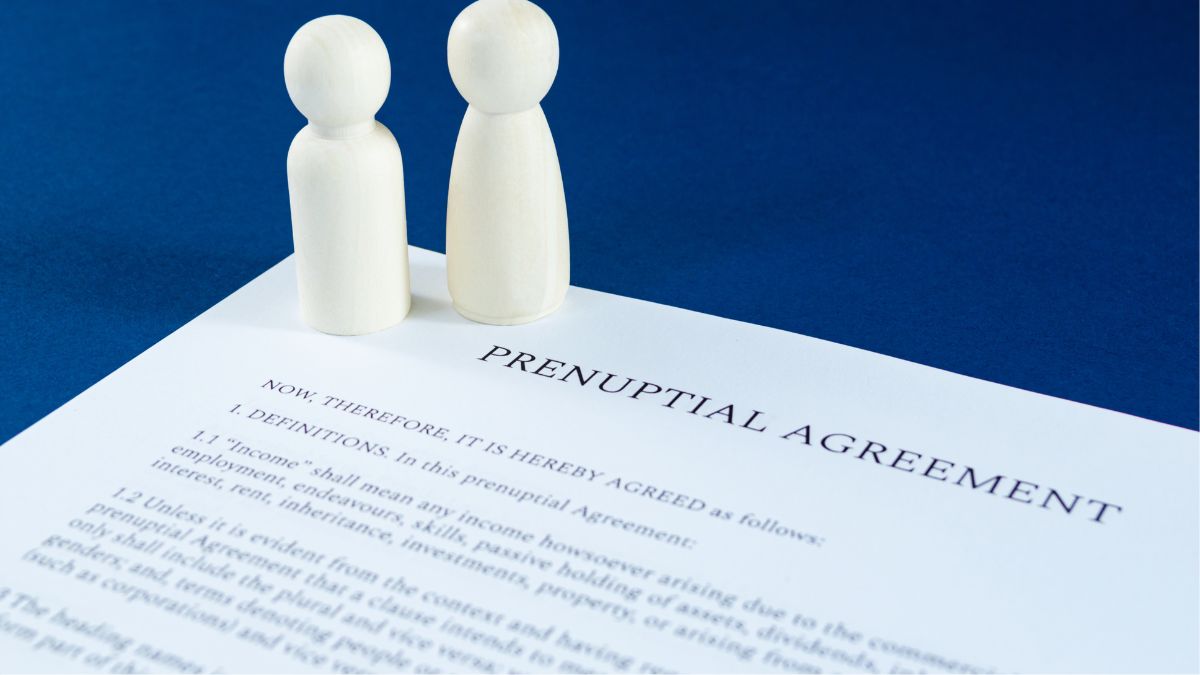
A 38-year-old woman who believed she had fully come to terms with her husband’s strict prenuptial agreement found herself at a crossroads after a single conversation about their future family home forced her to reconsider everything. She shared her dilemma on Reddit, explaining that before marrying her 42-year-old husband in April 2025, she willingly signed a prenuptial agreement because he already held significant business assets and multiple investment properties. At the time, the arrangement felt fair to her. She went into the marriage as a financially independent woman with her own career, retirement savings, and rental properties, some solely in her name and others co-owned with her husband.
The terms of the agreement were straightforward on paper. “Everything purchased before or even during the marriage is separate property, unless jointly titled,” she wrote. She further noted that in cases of shared ownership, each spouse’s portion is determined by their proportional financial contribution. She had no objections to any of it when the ink dried. The contract cleanly separated their assets, and she felt secure in her own financial standing regardless of how the marriage played out.
What shifted her perspective was her husband’s proposal to purchase his parents’ home and place it into a trust as his sole separate property. Under the terms of their existing prenup, she explained, she would have no claim to that house in the event of a divorce. That part, she acknowledged, was consistent with everything they had already agreed upon. The piece that genuinely unsettled her was the question of what would happen if he were to die before her.
AITAH for not wanting to move into a house I’ll never have any legal claim to?
by u/spangleddangle in AITAH
According to the details she shared, their ten-month-old daughter would be entitled to the home upon his death, while his nephew would be named trustee or executor of the estate. In practical terms, this would mean that even if she continued living in the house after losing her husband, she would hold no ownership stake in it and would have no legal control over the property. She would essentially be a guest in what had been her family home, with her late husband’s nephew holding authority over the asset.
“What troubles me is the idea of building a family life in a home where I know in advance, legally speaking, I will have no lasting claim,” she wrote. She was careful to clarify that she was not trying to unravel their prenuptial agreement or challenge the financial structure they had established together. Her concern was narrower than that. She simply wanted some form of security in the home where their child would grow up, particularly in a worst-case scenario. “If he dies before me,” she explained, “I believe I should be the sole beneficiary of the home we are living in at that time.”
The post sparked significant discussion online, with many Reddit users questioning why the proposed arrangement seemed designed to protect the husband’s extended family over his own wife and young child. One commenter was particularly blunt in their assessment. “Unfortunately, what you signed works in his favor, not yours,” they wrote. “You have no protection in this marriage and this is not a good long-term arrangement for you. You really should have hired your own attorney to go through everything with you. It’s possible you’re only now realizing that this home arrangement doesn’t benefit you in any way.”
The woman responded to several comments, making clear that her core concern was not about the prenup itself but about housing security for herself and her daughter. She did not indicate whether she and her husband had begun renegotiating any terms, but her post made evident that what had once felt like a clear-eyed and equitable agreement had taken on an entirely different weight once the reality of long-term family life came into view.
Prenuptial agreements in the United States are governed by state law, and their enforceability can vary significantly depending on how and when they were signed, whether both parties had independent legal counsel, and whether the terms are deemed unconscionable at the time of enforcement. Many legal experts recommend that both spouses retain separate attorneys during the drafting process, precisely to avoid situations where one party later realizes the agreement was written primarily to benefit the other.
Trusts used to hold real estate can be structured in many different ways, and the specific rights of a surviving spouse within a trust depend entirely on how the document is written. In some states, a surviving spouse may have statutory rights to a portion of a deceased partner’s estate regardless of what a will or trust says, a protection known as an elective share. Whether that applies to property held in a separate trust, however, is a more complicated legal question that varies by jurisdiction.
What are your thoughts on this situation? Share them in the comments.