Cable companies rank among the most complained-about service providers in consumer protection databases across the United States and beyond. Billing practices in the industry have been scrutinized by federal regulators for decades yet many of the most problematic tactics remain widespread. The average cable customer pays significantly more than the advertised rate due to a constellation of fees and charges that are deliberately obscured during the sales process. Consumer advocacy groups estimate that households overpay by hundreds of dollars annually without ever realizing the full extent of what they are being charged. Learning to identify these tactics is one of the most effective steps a consumer can take toward protecting their household budget.
Equipment Rental Fees
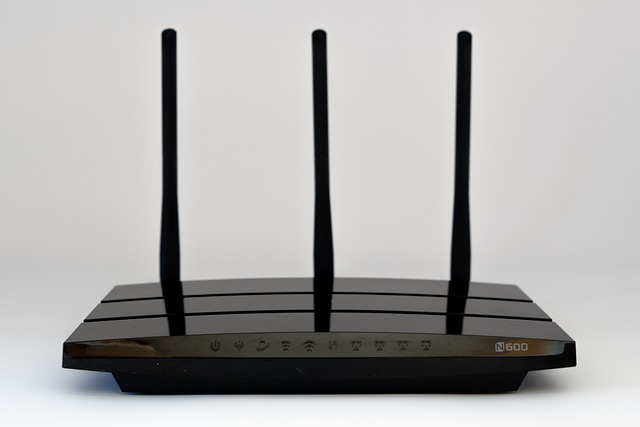
Cable companies charge monthly rental fees for modems and set-top boxes that can accumulate to several times the purchase price of the equipment within a single year. A modem that retails for under a hundred dollars may cost the customer fifteen to twenty dollars per month to rent meaning the company recoups its hardware cost in a matter of months. These fees are rarely highlighted during the sign-up process and are often buried in the fine print of service agreements. Many customers are unaware that they have the legal right to purchase their own compatible equipment and eliminate this charge entirely. The rental fee model generates billions of dollars in passive revenue for cable companies annually with virtually no corresponding service value delivered to the customer.
Broadcast TV Fees

The broadcast TV fee is presented on cable bills as a pass-through cost that the company pays to local television networks for the right to carry their signals. In reality broadcast television has been free over the air since its inception and cable companies have historically been paid by broadcasters for the privilege of wider distribution. Regulators and consumer advocates have described this fee as one of the most misleading charges in the industry because it implies an external cost that does not exist in its stated form. The fee has grown substantially year over year at many major providers increasing faster than inflation without any corresponding improvement in the content it supposedly covers. Customers who question this charge are frequently told it is mandatory and non-negotiable despite the fact that some providers have reduced or waived it for customers who escalate the issue.
Regional Sports Fees

Regional sports fees are charged to every cable subscriber regardless of whether they watch sports or have any interest in the regional sports networks included in their package. These fees have increased dramatically over the past decade as sports broadcasting rights have become more expensive and carriers have passed those costs directly to consumers. The fee is listed separately from the base package price in a format that implies it is an external surcharge rather than a deliberate pricing decision by the cable company. Customers who explicitly request packages without sports content are typically told that removal of the regional sports fee is not an option within standard tier structures. Several class action lawsuits have been filed against major providers over the transparency and legitimacy of how this fee is disclosed and applied.
Promotional Rate Expiry

Cable companies routinely advertise introductory rates that are prominently featured in marketing materials while the post-promotional price is disclosed only in small-print contract language. After a promotional period that typically lasts twelve to twenty-four months the monthly bill increases automatically and often substantially without any proactive notification to the customer. Many customers only discover the price increase when they notice a higher charge on their bank statement weeks after the change has already taken effect. The new rate can be fifty to one hundred dollars higher per month than the promotional price that originally attracted the customer to the service. Retention departments at cable companies are specifically trained to offer new promotional rates to customers who call to cancel but these new deals reset the clock on the same cycle of temporary pricing.
Administrative Fees

Administrative fees appear on cable bills under a variety of names including service fees account maintenance fees and network enhancement fees. These charges are presented as necessary costs of managing the account or maintaining infrastructure but they represent pure margin for the company with no defined service attached. The fee amounts are set unilaterally by the provider and can be increased at any time with minimal advance notice to the customer. Unlike taxes and government-mandated surcharges which are externally imposed administrative fees are entirely discretionary internal revenue mechanisms. Consumer financial protection organizations have flagged this category of charge as a primary example of junk fee practices that pad bills without delivering corresponding value.
Early Termination Fees

Early termination fees lock customers into service agreements by imposing financial penalties for canceling before the contract period expires. These fees can range from one hundred to several hundred dollars depending on how many months remain in the contract at the time of cancellation. The existence of an early termination fee is often not emphasized during the sales process and customers may not realize they have signed a contract rather than a month-to-month agreement. Cable companies use these fees as a retention mechanism that discourages customers from switching to competitors even when service quality or pricing becomes unsatisfactory. Regulatory scrutiny of early termination fees has increased in recent years but they remain a standard feature of many residential and bundled service agreements.
Bill Creep

Bill creep refers to the gradual accumulation of small price increases across multiple line items that together produce a significant increase in the total monthly charge over time. A cable bill that starts at eighty dollars may quietly climb to one hundred and twenty dollars over eighteen months through a series of two and three dollar increases spread across fees taxes and package rates. Each individual increase is small enough that many customers do not scrutinize their bill closely enough to notice it in a given month. Cable companies rely on consumer inertia and the complexity of itemized bills to make this pattern of incremental increases difficult to track without deliberate month-to-month comparison. Financial advisors frequently cite cable and telecom bills as the highest-yield category for identifying and recovering unnecessary household spending through regular auditing.
Service Protection Plans

Cable companies offer optional service protection plans that are frequently added to new accounts during the sign-up process without explicit customer consent. These plans typically cover technician visit fees and certain types of in-home wiring repairs that many customers will never need. The monthly cost of the plan is presented as a small amount but accumulates to a significant sum over the life of an account that never requires a covered repair. Customers who do not read their first bill carefully may pay for a service protection plan for years before realizing they enrolled in it. Removing the plan requires contacting customer service and in many cases navigating a retention pitch designed to discourage cancellation of the add-on.
DVR and Storage Fees

Digital video recorder fees are charged monthly for the ability to record and store television content despite the fact that cloud storage costs have declined dramatically over the same period. Customers are often charged separately for the DVR equipment rental and for the storage service itself effectively double-billing for a single functional capability. Premium storage tiers that allow longer recording retention or more simultaneous recordings are offered as upgrades with additional monthly costs that compound the base DVR fee. Streaming services offered by the same parent companies as many cable providers include cloud DVR functionality at no additional cost creating a stark contrast in how the technology is monetized across platforms. The persistence of high DVR fees on traditional cable bills reflects a deliberate strategy to extract maximum revenue from customers who have not yet migrated to streaming alternatives.
Autopay Discounts

Many cable companies advertise discounts for customers who enroll in autopay billing while simultaneously making the standard non-autopay rate significantly higher than historical pricing. The discount is framed as a benefit the company is providing to the customer when it is more accurately described as a penalty applied to customers who prefer to manage their payments manually. Autopay enrollment benefits the cable company by reducing billing administration costs and ensuring timely payment while the financial benefit to the customer is modest in comparison to the total bill. Customers who enroll in autopay and then forget to audit their monthly statements provide cable companies with an ideal environment for implementing the gradual fee increases described in bill creep. The autopay discount structure is designed to encourage passive billing relationships that reduce the likelihood of customers closely monitoring what they are being charged.
Technician Visit Fees

Cable companies charge customers fees for technician visits even in cases where the service issue requiring the visit is caused by company-owned infrastructure or equipment. A customer experiencing signal degradation due to a faulty cable box or deteriorating line that is the company’s property may still be billed for the technician’s time and travel. These fees are sometimes waived if the customer pushes back but the default billing practice is to charge regardless of fault. Service protection plans are marketed specifically to address this vulnerability which means the company profits twice from the same underlying issue. Customers who troubleshoot issues independently and correctly identify them as infrastructure problems before calling for service are in a stronger position to dispute technician fees when they arise.
Unreturned Equipment Fees

When customers cancel their cable service they are required to return rented equipment within a specific window or face significant unreturned equipment fees. These fees are often disproportionate to the actual value of the equipment and are applied aggressively even in cases where return logistics are complicated by distance or the availability of drop-off locations. Some customers have reported being charged for equipment they returned and having to produce tracking numbers and receipts to dispute the charge after the fact. The burden of proof in equipment return disputes typically falls on the customer rather than the company despite the company having logistical control over the return and processing system. Consumer complaint databases maintained by regulatory agencies document unreturned equipment fee disputes as one of the most common categories of cable company grievances.
Sports Package Upsells

Cable sales representatives are trained to add premium sports packages during sign-up conversations in ways that can result in customers receiving channels they did not explicitly request. A vague expression of interest in sports during a sales call may be interpreted as consent to add a package that carries a significant monthly fee. These packages are sometimes added as free trials without clear disclosure of when the trial ends and billing begins. Customers who do not regularly audit their channel lineup may continue paying for sports packages for months before noticing they are subscribed to content they never watch. The upsell training programs at major cable companies are documented in internal materials that have surfaced in litigation and regulatory proceedings as evidence of systematic practices designed to inflate the average customer bill.
Paper Billing Fees

Cable companies charge customers monthly fees simply for receiving a paper copy of their bill through the mail rather than accessing it through an online account. This fee is presented as a response to environmental and printing costs but amounts to the company charging customers for a basic transparency tool that allows them to review what they are being billed. The paperless billing alternative requires customers to log into an account portal that many find difficult to navigate making bill review a less intuitive process than receiving a physical document. Older customers and those with limited internet access are disproportionately affected by paper billing fees as they are less likely to have enrolled in digital billing alternatives. The practice effectively monetizes a customer’s right to receive documentation of charges levied against them.
Speed Tier Manipulation

Cable companies offer internet service in multiple speed tiers with pricing structured to guide customers toward mid-range and premium options even when lower tiers would meet their actual usage needs. Speed tiers are defined and labeled by the company without external verification making it difficult for customers to confirm whether they are receiving the speeds they are paying for. Independent speed testing conducted by consumer researchers has repeatedly found that actual delivered speeds frequently fall below the advertised rates for purchased tiers particularly during peak usage hours. Customers who complain about speed issues are often upsold to a higher tier rather than offered remediation for the service shortfall they are already experiencing. Regulatory agencies in some jurisdictions have begun requiring more rigorous speed disclosure and verification but enforcement remains inconsistent across markets.
Bundle Unbundling Penalties

Cable companies heavily promote bundled packages of television internet and phone services on the basis that the combined price is lower than purchasing each service separately. When customers attempt to remove a component of the bundle such as a landline phone they no longer use the pricing structure changes in ways that can actually increase the total bill. The removal of one service triggers reclassification of the remaining services out of the bundle discount tier resulting in higher individual rates that offset or exceed the cost of the removed service. This pricing architecture creates a trap in which customers feel compelled to maintain services they do not need in order to preserve the discount on services they do use. Consumer finance experts describe bundle unbundling penalties as one of the most counterintuitive billing structures in the telecommunications industry.
Overage Charges

Some cable internet providers impose data caps on residential accounts and charge overage fees when monthly usage exceeds the allotted threshold. These caps are not driven by infrastructure constraints in most cases but function as an additional revenue mechanism in markets where the provider faces limited competition. The data threshold is often set at a level that can be reached by households with multiple streaming devices or remote workers without extraordinary usage behavior. Notification systems that alert customers when they are approaching their data cap vary significantly in effectiveness and some customers only discover they have exceeded their limit when the overage charge appears on the bill. Regulators in several jurisdictions have investigated data caps and overage fees as potential examples of anti-competitive pricing in markets dominated by a single broadband provider.
Installation Fees

Cable companies charge installation fees that can range from fifty to over one hundred dollars for a service setup that in many cases involves minimal labor from a technician. Customers who self-install using a kit provided by the company are still sometimes charged a reduced installation fee for the processing and shipping of the equipment. Promotional offers that waive installation fees are used as sales incentives but are frequently not applied correctly to the first bill requiring the customer to call and dispute the charge. Installation fees for service upgrades or equipment replacements during an existing subscription add additional cost to interactions that customers reasonably expect to be covered by their ongoing monthly payment. The profitability of installation fees relative to the actual labor and logistics involved has been highlighted in financial analyses of cable company revenue structures.
Retention Pricing Gaps
Cable companies maintain a system of retention pricing that offers significantly lower rates to customers who call to cancel compared to the rates offered to new customers or passive subscribers. This system creates a two-tiered pricing structure in which customers who do not proactively negotiate their bills pay substantially more for identical service. The existence of retention pricing is not disclosed in any standard marketing or billing communication leaving most customers unaware that a lower rate is available simply by requesting it. Customer service representatives who handle retention calls are authorized to offer discounts that front-line billing agents are not permitted to extend creating inconsistent outcomes depending on which department a customer reaches. Financial literacy resources that teach consumers to call and negotiate their cable bill annually document consistent success rates in securing meaningful reductions for customers who follow through.
Third-Party Billing

Cable companies have historically allowed third-party charges to appear on customer bills through a practice known as bill stuffing or third-party billing. These charges originate from external services that have obtained billing access through agreements with the cable provider and they appear as small line items that can be mistaken for legitimate cable company fees. Customers who do not read every line of their bill may pay third-party charges for services they never knowingly subscribed to for extended periods. Regulatory crackdowns on third-party billing in the telephone industry have reduced but not eliminated the practice and its migration to cable billing has been a documented concern for consumer protection agencies. The cable company typically retains a percentage of third-party charges it passes through creating a financial incentive to allow the practice to continue.
Contract Renewal Traps

Cable service contracts sometimes auto-renew at the end of their term under conditions that restart the early termination fee clock without requiring explicit customer consent. Notification of the upcoming renewal is sent through methods such as bill inserts or email that customers frequently overlook or do not associate with a binding contractual action. Once the renewal period begins the customer is locked into another contract cycle and faces penalties for canceling that are equivalent to those on the original agreement. The auto-renewal window during which the customer can opt out without penalty is often narrow and not prominently disclosed in renewal communications. State attorneys general in multiple jurisdictions have taken action against cable providers for auto-renewal practices that failed to meet the minimum disclosure standards required under consumer protection statutes.
Hidden Taxes and Surcharges

Cable bills include a range of government taxes and regulatory fees that are legitimately externally mandated alongside a category of internally generated surcharges that are designed to resemble taxes without being taxes. Items labeled as regulatory recovery fees or infrastructure surcharges are not government-imposed charges but discretionary revenue items that the company has named in a format that implies official status. This labeling strategy takes advantage of the fact that most consumers accept tax and surcharge line items as non-negotiable without investigating their origin. The total of these quasi-tax surcharges can add ten to twenty dollars per month to a cable bill depending on the provider and the specific package. Federal and state consumer protection agencies have issued guidance on the distinction between legitimate pass-through taxes and internally generated surcharges but enforcement of clear labeling requirements remains an ongoing challenge.
Loyalty Penalties

Unlike industries that reward long-term customers with lower prices or enhanced service cable companies frequently apply their best pricing to new customers while long-term subscribers face the highest rates. A customer who has maintained an account with the same provider for ten years may be paying significantly more than a neighbor who signed up six months ago under a current promotional offer. This practice inverts the loyalty reward structure found in most consumer industries and penalizes the customers who have demonstrated the greatest commitment to the brand. The financial gap between new customer rates and long-term subscriber rates widens over time as promotional pricing improves to attract new accounts while existing accounts accumulate annual rate increases. Consumer advocates describe loyalty penalties in the cable industry as one of the clearest examples of a market structure that functions against the interests of engaged and financially reliable customers.
Network Upgrade Fees

Cable companies periodically introduce network upgrade fees or technology transition surcharges that are described as funding infrastructure improvements that will benefit customers. These fees are added to bills without a corresponding service improvement that is visible or measurable from the customer’s perspective in the short term. The timeline and scope of the infrastructure projects being funded are rarely disclosed in the billing communication that introduces the charge. Customers have no mechanism to verify whether the fee is being directed toward genuine network investment or simply absorbed into general company revenue. Financial analysts who cover the cable industry have noted that the introduction of network upgrade fees frequently coincides with earnings pressure rather than with documented capital expenditure increases in company reporting.
If any of these charges have shown up on your cable bill, share your experiences and money-saving discoveries in the comments.