
Reading is rarely understood for what neuroscience and personality psychology increasingly reveal it to be: one of the most consistent and measurable forces shaping the architecture of the self. Most readers think of book choices as passive reflections of existing taste or mood rather than as active inputs that gradually alter cognitive patterns, emotional responses, moral frameworks and interpersonal behavior. The research emerging from fields including cognitive neuroscience, social psychology and narrative theory paints a considerably more dynamic picture in which the accumulated effect of what a person reads over months and years produces detectable and lasting changes in who they are. The following 22 mechanisms represent the most substantiated and fascinating ways in which the books a person chooses are quietly doing far more than entertaining them.
Crime Fiction

Regular consumption of crime and detective fiction produces measurable changes in the way readers process ambiguous social situations in daily life with habitual readers of the genre demonstrating elevated tendencies toward systematic information gathering and hypothesis testing when navigating interpersonal uncertainty. The cognitive training effect of following a detective’s reasoning across hundreds of pages of carefully structured logical progression builds what psychologists describe as a tolerant relationship with incomplete information a capacity to hold multiple possible explanations simultaneously without prematurely collapsing onto a single conclusion. Research in reading cognition identifies this ambiguity tolerance as a transferable skill that crime fiction readers apply outside of reading contexts in professional decision-making and relational problem-solving situations. The moral complexity embedded in the best crime fiction which frequently asks readers to inhabit the perspective of perpetrators victims and morally compromised investigators builds a nuanced understanding of motivation and circumstance that personality research associates with reduced judgmental tendencies in social evaluation. Readers who consume significant volumes of crime fiction over extended periods consistently score higher on measures of analytical thinking style than demographically matched non-readers of the genre.
Literary Fiction

Sustained engagement with literary fiction produces some of the most extensively documented personality effects in the reading research literature with multiple independent studies identifying regular literary fiction readers as demonstrating significantly higher scores on theory of mind measures which assess the capacity to accurately infer the mental states emotions and intentions of other people. The mechanism identified by cognitive scientists involves the specific narrative technique of literary fiction which unlike genre fiction frequently withholds clear access to characters’ internal states requiring the reader to actively construct a model of another mind from indirect behavioral and contextual evidence in a process that exercises the same neural networks activated during real-world social cognition. This repeated exercise of social inference across complex and often morally ambiguous characters has been shown in experimental research to produce effects on real-world empathic accuracy that persist beyond the reading session and accumulate with habitual engagement. Literary fiction readers also demonstrate a characteristic relationship with uncertainty in narrative that transfers to a greater comfort with unresolved situations in personal and professional life reflecting the genre’s preference for open endings and irresolvable tensions over neat conclusions. The personality profile associated with extensive literary fiction reading includes elevated openness to experience reduced dogmatism and a stronger tendency toward nuanced rather than categorical social judgment.
Self-Help Books
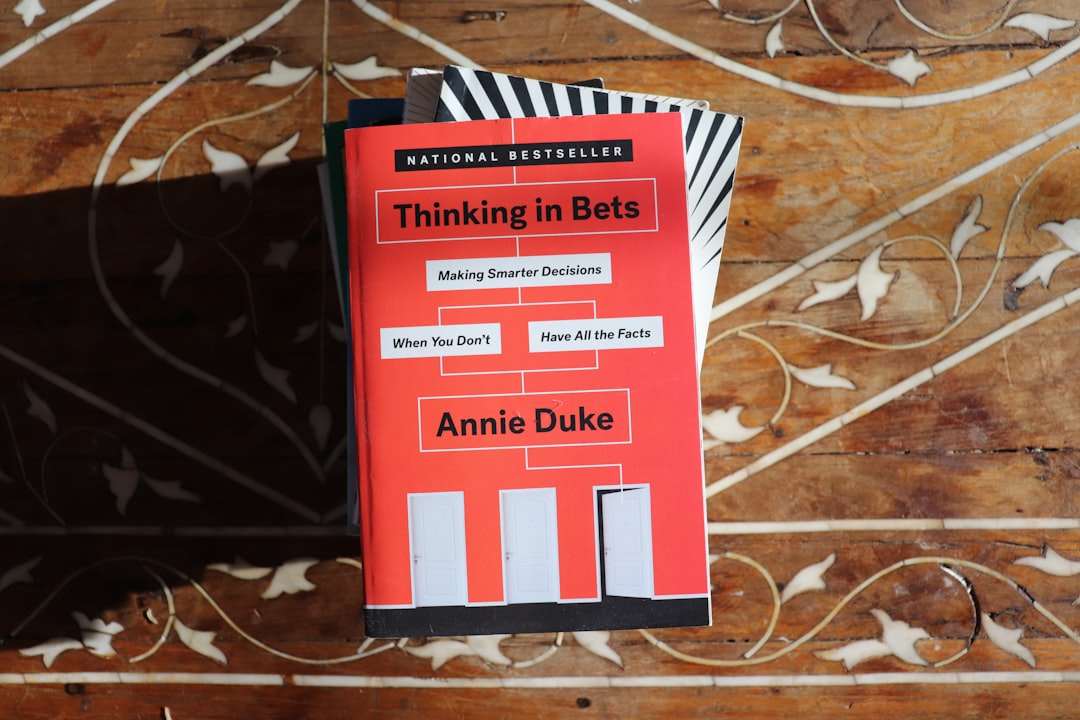
The personality effects of sustained self-help book consumption are among the most contested in the reading research literature with evidence pointing in directions that depend significantly on the specific subgenre the reader engages with and the psychological profile they bring to the reading. Readers who gravitate toward process-oriented self-help texts focused on behavioral skill development show measurable increases in internal locus of control believing themselves capable of influencing their life outcomes through deliberate action in ways that longitudinal personality research associates with improved resilience and goal achievement. Conversely readers who consume primarily motivational and affirmation-based self-help show a more complex pattern in which short-term confidence elevation is not consistently matched by behavioral change and in some cases is associated with a reduced tolerance for the genuine difficulty of personal development. The specific cognitive habit of reading oneself as a project requiring optimization which self-help culture consistently reinforces has been identified by personality psychologists as capable of producing an instrumentalized relationship with experience that reduces spontaneity and elevates performance anxiety in social situations. The net personality effect of self-help reading appears to be most positive for readers who combine it with reflective practice and behavioral experimentation and least positive for those who use it primarily as a substitute for the more uncomfortable experiential work of actual change.
Historical Fiction

Immersion in historical fiction produces a documented expansion of temporal perspective in which readers develop an increasingly sophisticated awareness of the constructed and contingent nature of the social norms values and assumptions they inhabit in the present moment. This perspective-widening effect which historians of reading have described as a form of temporal defamiliarization produces personality changes that include reduced social conformity pressure increased comfort with questioning received wisdom and a stronger tendency to evaluate contemporary moral questions against a longer developmental arc of human ethical evolution. Research in narrative psychology identifies historical fiction readers as demonstrating particularly strong skills in contextual moral reasoning understanding behavior as a product of historical circumstance rather than fixed human nature in ways that reduce punitive judgment and increase explanatory complexity. The specific immersion in historical worlds that differ substantially from the reader’s own present context also builds a form of cultural flexibility that researchers studying cross-cultural competence identify as structurally similar to the effects produced by sustained international living experience. Readers who engage heavily with historical fiction set across multiple distinct periods and geographies demonstrate personality profiles characterized by intellectual humility and a reduced tendency toward presentism in both social and political reasoning.
Science Fiction

The personality-shaping effects of sustained science fiction reading are concentrated most heavily in the domain of futures thinking with habitual readers demonstrating a documented facility for projecting the systemic consequences of present trends and technologies across extended time horizons that non-readers of the genre find cognitively uncomfortable. Research in strategic forecasting has identified science fiction reading as one of the most reliable background variables distinguishing individuals who excel at long-range scenario planning from those who default to near-term linear extrapolation suggesting that the genre’s consistent demand for systemic imagination produces a genuinely transferable cognitive skill. The philosophical dimension of science fiction which frequently explores questions of consciousness identity technology and the nature of humanity exposes readers to perspectives that expand the conceptual boundary of what is imaginable about human nature and social organization producing personality effects that psychologists of creativity associate with elevated divergent thinking capacity. Science fiction readers also demonstrate a characteristic relationship with scientific and technological change characterized by neither naive optimism nor reflexive anxiety but a more nuanced evaluative orientation that considers second and third-order effects before forming judgments. The experience of inhabiting genuinely alien perspectives across thousands of pages of sustained reading produces an expansion of the imaginable self that personality researchers connect to increased identity flexibility and reduced existential anxiety about personal and social change.
Romance Novels

The personality effects of sustained romance novel consumption have been substantially mischaracterized in popular discourse with emerging research presenting a more nuanced picture than the cultural dismissal of the genre as escapist or unrealistic typically suggests. Habitual romance readers demonstrate elevated scores on measures of relationship self-efficacy believing themselves capable of creating and maintaining satisfying intimate partnerships in ways that appear to reflect the genre’s consistent modeling of communication vulnerability and emotional honesty as the mechanisms through which relational satisfaction is achieved. Research in narrative psychology identifies the romance genre’s structural insistence on emotionally truthful communication between protagonists as a consistent modeling of relational behavior that readers internalize and apply with varying degrees of consciousness to their own intimate and near-intimate relationships. The genre’s demographic concentration of readership among women has made its effects politically contentious with feminist literary critics identifying both the potentially limiting effects of idealized partner expectations and the genuine validation effect of narratives centered on female desire agency and emotional experience as equally significant personality influences. Readers who engage with contemporary romance fiction particularly subgenres that explicitly center diverse identities and modern relationship structures show personality profiles that include elevated emotional vocabulary and a more articulated understanding of personal relational needs than demographically matched non-readers.
Philosophy Texts

Regular reading of philosophical texts produces personality changes concentrated most distinctively in the domain of metacognition which is the capacity to observe and evaluate one’s own thought processes rather than simply experiencing them as the unexamined basis of judgment and action. The specific practice demanded by dense philosophical argument of following chains of reasoning while simultaneously evaluating their validity identifying hidden premises and testing conclusions against alternative frameworks builds a critical distance from one’s own beliefs that personality researchers identify as one of the strongest predictors of intellectual humility and reduced ideological rigidity. Philosophy readers demonstrate a characteristic discomfort with unexamined assumptions in conversations and information environments that non-readers sometimes experience as contrarianism but that cognitive psychologists identify as an activated epistemic vigilance a trained tendency to notice when arguments are moving faster than their justifications. The existential philosophical traditions in particular produce documented effects on readers’ relationship with mortality uncertainty and meaning-making with sustained engagement associated with reduced death anxiety and a more deliberate relationship with personal value prioritization. Readers with extended engagement across multiple philosophical traditions rather than a single school demonstrate the most pronounced personality effects particularly in the domains of perspective-taking and tolerance for foundational uncertainty.
Poetry Collections

The personality effects of habitual poetry reading are concentrated in domains that are less frequently studied than those associated with prose fiction but that emerging research in cognitive poetics is beginning to document with increasing precision. The specific cognitive demand of poetry which requires readers to hold multiple simultaneous layers of meaning including semantic phonological rhythmic and imagistic dimensions within a single act of reading attention produces a form of perceptual training in layered awareness that readers report applying to sensory and relational experience outside of reading contexts. Research in aesthetic psychology identifies poetry readers as demonstrating elevated sensitivity to non-literal communication including metaphor irony and tonal nuance in interpersonal interactions a skill set that is associated with both greater social perceptiveness and a heightened appreciation of the indirectness and ambiguity inherent in genuine human feeling. The compression of poetry which demands that readers extract maximum meaning from minimum language builds a tolerance for and appreciation of economy of expression that poetry readers frequently manifest as a preference for precision and resonance over volume in their own communication. Personality research comparing poetry readers with fiction readers of equivalent reading volume finds the poetry group demonstrating distinctively higher scores on measures of comfort with ambiguity and what researchers describe as aesthetic openness an orientation toward experience that prioritizes richness and complexity over clarity and resolution.
Biographies

Sustained engagement with biographical literature produces a characteristic personality effect that researchers in narrative identity psychology have described as an expansion of the possible life script in which readers develop an increasingly diverse internal library of models for how a human life can be meaningfully constructed and navigated. The specific mechanism involves the sustained inhabitation of another person’s actual life trajectory including their failures reversals reconceptions and adaptations across time in a way that builds a pragmatic and empirically grounded understanding of personal development as nonlinear and context-dependent rather than following the idealized arc of fictional protagonists. Biography readers demonstrate elevated scores on measures of biographical resilience the capacity to integrate difficult life experiences into a coherent self-narrative without requiring the experience to conform to a simple meaning structure a characteristic that longitudinal personality research associates with psychological adjustment following major life disruption. The pattern recognition that develops across extensive biography reading in which readers begin to identify recurring structural features in the lives of effective and fulfilled people across different domains and historical periods produces a transferable practical wisdom that is distinct from the abstract principles offered by self-help literature. Readers who engage with biographies across diverse domains rather than concentrating within a single field or type of subject demonstrate the broadest personality effects particularly in the domain of adaptive expertise the capacity to transfer principles from one context to a structurally similar but superficially different situation.
Horror Fiction
The personality effects of sustained horror reading represent one of the most counterintuitive findings in reading psychology research with evidence suggesting that regular engagement with horror fiction is associated with improved real-world anxiety management rather than the sensitization to fear that naive intuition might predict. Research in terror management theory proposes that horror fiction provides a controlled laboratory for rehearsing the emotional processing of threat mortality and the uncanny in a context that guarantees survival allowing readers to develop and refine anxiety regulation strategies that generalize to lower-stakes real-world stress situations. Horror readers demonstrate a specific emotional profile characterized by higher distress tolerance and a more rapid recovery curve from fear activation compared to non-readers of the genre suggesting that the repeated experience of navigating fear within the safe frame of fiction builds a functional resilience that transfers to physiological anxiety responses in real contexts. The worldview effects of sustained horror reading are more complex than the genre’s reputation suggests with research identifying horror readers as demonstrating neither a uniformly darker outlook nor a naive dismissal of genuine threat but rather a more calibrated relationship with uncertainty and danger that acknowledges their reality without being paralyzed by it. The specific horror subgenre appears to matter substantially with psychological and existential horror producing the strongest theory of mind and uncertainty tolerance effects while supernatural horror demonstrates the greatest impact on imagination flexibility and the expansion of the conceptually possible.
Travel Writing

Regular consumption of travel literature produces personality effects that overlap substantially with those produced by actual international travel experience but through a mechanism that is entirely imaginative and that personality researchers find interesting precisely because it demonstrates the capacity of sustained narrative immersion to alter dispositional orientations without requiring physical displacement. Habitual travel writing readers demonstrate elevated scores on cross-cultural empathy measures and a reduced tendency toward cultural essentialism the assumption that members of a cultural group share uniform characteristics compared to demographically matched non-readers with the effect size correlating with the volume and geographic diversity of travel writing consumed. The specific personality shift associated with travel writing consumption involves what cross-cultural psychologists describe as a loosening of the invisible cultural curriculum the unexamined assumption that one’s own culture’s ways of organizing time relationships work and meaning represent natural human defaults rather than one possible configuration among many. Travel writing readers also demonstrate a characteristic relationship with novelty and mild discomfort in unfamiliar situations that researchers associate with approach rather than avoidance motivation reflecting the genre’s consistent framing of the unfamiliar as inherently valuable and the uncertain as inherently generative. The cumulative effect of sustained travel writing consumption across diverse geographic and cultural contexts has been shown to produce measurable changes in implicit cultural attitudes that persist well beyond individual reading sessions.
Mythology and Folklore
Sustained engagement with mythology and folklore across cultural traditions produces personality effects concentrated in the domain of symbolic thinking which is the capacity to perceive everyday events relationships and personal experiences through the lens of recurring archetypal patterns that carry meaning beyond their immediate literal content. Research in Jungian and narrative psychology identifies mythology readers as demonstrating a distinctive tendency to locate personal experience within larger narrative frameworks reducing the isolating sense that individual struggles are unprecedented and building a form of transpersonal meaning-making that clinical psychologists associate with resilience and reduced existential anxiety. The cross-cultural mythology reader in particular who engages with traditions from multiple distinct cultural origins develops an increasingly sophisticated awareness of the deep structural similarities in how human beings across all documented cultures have organized their understanding of transformation loss power and the relationship between the individual and the cosmos. Folklore reading produces a specific effect on the reader’s relationship with coincidence pattern and meaningful connection in experience with habitual readers demonstrating a higher tendency toward what psychologists call narrative thinking a preference for understanding events as embedded in meaningful stories rather than as isolated causal sequences. The personality profile of extensive mythology readers includes a distinctive comfort with paradox symbol and multiple simultaneous truths that researchers in developmental psychology associate with what they term post-conventional meaning-making the capacity to hold complexity without requiring reduction to a single coherent framework.
Economics and Finance Books

Regular reading in economics and finance produces measurable personality changes in the domain of systemic thinking with habitual readers demonstrating an elevated tendency to search for structural and incentive-based explanations for human behavior rather than defaulting to character-based or moralistic attributions. The fundamental reorientation of explanatory framework that economic thinking demands in which behavior is understood as the rational response to incentive structures rather than as the expression of fixed personal qualities produces a specific form of dispositional generosity in social judgment that personality researchers associate with reduced interpersonal conflict and more effective organizational leadership. Economics readers demonstrate a characteristic relationship with unintended consequences maintaining an active expectation that interventions in complex systems will produce effects that were not anticipated and that these unanticipated effects may be larger and more significant than the intended outcomes. The probabilistic thinking demanded by financial literature in particular produces a documented improvement in risk assessment calibration the alignment between confidence in a prediction and its actual accuracy that extends well beyond financial decision-making into personal and professional judgment contexts. Research on the personality effects of economic thinking training consistently identifies both its strengths in systemic analysis and its risks with heavy consumers of pure economic literature occasionally demonstrating a reduced sensitivity to non-quantifiable human values that researchers describe as the disciplinary blind spot of the economizing personality.
Spiritual and Religious Texts

Sustained engagement with spiritual and religious literature across traditions produces personality effects that are among the most variable in the reading research literature reflecting both the extraordinary diversity of texts that fall within this category and the strong moderating effect of the reader’s pre-existing belief orientation on how the content is processed and integrated. Readers who engage with spiritual texts from their own tradition demonstrate reinforcement of existing value frameworks and community identification effects while readers who engage cross-traditionally show personality effects that more closely resemble those associated with philosophical reading including elevated comfort with paradox and a loosening of dogmatic certainty around metaphysical questions. The contemplative practices embedded in certain spiritual literature traditions particularly those of Buddhist Sufi and Christian mystical origin that include practices of slowing and deepening attention have been identified by mindfulness researchers as producing measurable effects on attentional regulation and emotional reactivity when the textual instruction is actually practiced rather than merely read. Research on the personality effects of regular sacred text engagement identifies a consistent association with prosocial motivation the orientation toward other-benefiting behavior across multiple religious traditions that researchers attribute to the shared structural emphasis most spiritual literature places on the development of compassion and the transcendence of narrow self-interest. The specific relationship between spiritual reading and mortality salience which refers to the awareness of one’s own death has been studied extensively in terror management research with findings indicating that readers of spiritual texts develop a more integrated and less defensive relationship with mortality awareness than demographically matched secular readers.
Graphic Novels

The personality effects of sustained graphic novel reading have emerged as a distinct research area as the medium has gained both cultural legitimacy and scholarly attention with findings that challenge simple assumptions about the relationship between text density and cognitive depth in reading experience. The specific cognitive demand of graphic novel reading which requires readers to construct narrative continuity across the gutter between panels inferring what has happened in the visual gap between explicitly depicted moments builds what comics scholars call closure a form of active imaginative participation in narrative construction that prose reading does not require in the same way. Research in visual literacy identifies graphic novel readers as demonstrating enhanced integration of visual and verbal information in all processing contexts not merely during reading reflecting the trained simultaneity of image-word synthesis that the medium demands. The expanded range of page layout temporal representation and visual metaphor available to graphic storytellers produces in regular readers a heightened sensitivity to how the formal presentation of information shapes its meaning a meta-communicative awareness that transfers to critical evaluation of visual media in journalism advertising and political communication. Personality research on dedicated graphic novel readers finds elevated scores on visual-spatial reasoning measures and a distinctive tendency toward multimodal thinking preferring to understand complex information through multiple simultaneous representational systems rather than through sequential verbal argument alone.
Nature Writing

The personality effects of sustained nature writing consumption represent an emerging area in reading psychology that has gained particular research attention in the context of what environmental psychologists describe as nature deficit disorder the documented costs of reduced human engagement with natural environments on attention regulation stress response and sense of belonging. Nature writing readers demonstrate a measurable attenuation of what researchers call the attention fatigue associated with urban and screen-dominated environments with the restorative imagery and rhythmic prose characteristic of the genre producing parasympathetic nervous system activation that improves attentional capacity and reduces cortisol in ways that parallel the effects of actual nature exposure. The specific personality effects of sustained nature writing engagement include an enhanced perceptual attunement to natural phenomena in everyday environments with readers reporting and demonstrating an increased noticing of weather light seasonal change and ecological relationships that were previously below the threshold of conscious attention. Research on the values profile of nature writing readers finds consistent associations with what environmental psychologists call biophilic orientation an affective bond with living systems that predicts both personal wellbeing and environmentally responsible behavior across multiple lifestyle domains. The prose rhythms of the best nature writing which mirror the observational pace of sustained attention to the natural world also produce measurable effects on readers’ general cognitive tempo with habitual nature writing readers demonstrating a reduced tendency toward the rapid attentional switching that digital media environments reinforce and a greater capacity for sustained single-focus attention.
War Memoirs and Narratives

Sustained engagement with war memoirs and first-person combat narratives produces personality effects that are concentrated in the domain of moral complexity with readers developing an increasingly sophisticated understanding of how ordinary human beings behave under conditions of extreme stress moral inversion and institutional pressure that removes individual ethical agency. Research in moral psychology identifies war narrative readers as demonstrating reduced susceptibility to what social psychologists call the fundamental attribution error the tendency to attribute behavior to stable character dispositions rather than situational forces because the genre’s systematic demonstration of situational moral transformation challenges the assumption that character is fixed and context-independent. The specific empathic demand of inhabiting the perspective of combatants across multiple sides of historical conflicts through sustained memoir reading builds a form of adversarial empathy that is distinct from conventional empathy in its capacity to generate genuine understanding of perspectives that are morally opposed to the reader’s own values without requiring agreement or approval. War narrative readers demonstrate a characteristic sobriety in their relationship with political and military discourse showing elevated skepticism toward abstractions that distance the consequences of violence from their human specificity and a stronger tendency to translate policy discussions into their concrete human cost implications. The personality effect most consistently associated with extensive war memoir reading is what researchers describe as earned pessimism about human institutional behavior combined with an intensified appreciation for the conditions of ordinary peaceful life that the genre’s relentless documentation of their loss consistently foregrounds.
Short Story Collections

The personality effects of sustained short story reading are distinct from those produced by novel reading and have been underresearched relative to their significance with emerging work in narrative psychology identifying the short form as producing specific cognitive and dispositional changes that the novel’s longer immersive arc does not replicate. The structural demand of the short story which must establish character situation and emotional truth within a severely compressed space while leaving sufficient resonant ambiguity to justify the form trains in habitual readers a particular sensitivity to implication and the unsaid developing what linguists call pragmatic competence the ability to derive meaning from what is absent as well as what is present in communication. Research on the reading experience specific to short fiction identifies the form’s characteristic open ending which resolves into resonance rather than conclusion as producing a distinctive relationship with narrative incompleteness in readers who find this frustrating initially but who with sustained engagement develop an appreciation for the truth value of irresolution that transfers to greater comfort with open-ended real-world situations. The practice of shifting completely into a new world of characters relationships and premises with each new story rather than deepening within a single fictional universe across hundreds of pages builds an imaginative flexibility and rapid perspective-shifting capacity that personality researchers associate with cognitive adaptability and creative thinking outside of reading contexts. Short story readers demonstrate a characteristic economy in their own expressive communication preferring precision and implication over exhaustive explanation in ways that reflect the form’s training in the communicative power of strategic restraint.
Psychology Books

Regular reading of psychology literature produces one of the most directly self-referential personality effects in the reading research literature with readers developing an increasingly elaborate internal explanatory vocabulary for their own and others’ behavior that fundamentally alters the experience of both self-observation and interpersonal interaction. The acquisition of psychological constructs through sustained reading creates what researchers describe as conceptual lenses that structure perception in ways that make previously unnoticed patterns in behavior thought and relationship dynamics newly visible leading to an experience of increased insight that habitual psychology readers consistently report as one of the most significant effects of their reading on their daily experience. Research on the personality effects of psychology reading identifies a complex dynamic in which increased self-awareness produced by the knowledge is associated with both adaptive outcomes including improved emotional regulation and maladaptive ones including the tendency toward excessive self-pathologizing and the professional deformation of applying clinical frameworks to casual social observation. The specific effect of developmental psychology reading on parenting behavior and intergenerational relationship patterns has been extensively documented with research showing that parents who read regularly in developmental psychology demonstrate measurably different behavioral responses to children’s emotional states than non-reading parents in ways that affect measured attachment security outcomes. Psychology readers also demonstrate what researchers call attribution sophistication a more complex and multi-causal understanding of behavioral determinism that reduces both self-blame and other-blame in favor of systemic and developmental explanations for the difficulties human beings characteristically experience.
Dystopian Fiction

The personality effects of sustained dystopian fiction reading have attracted increasing research attention given the genre’s extraordinary commercial expansion in the past two decades and the political and social conditions that appear to drive both its production and its consumption. Habitual dystopian readers demonstrate elevated scores on what political psychologists call institutional skepticism a general orientation of questioning scrutiny toward the claimed purposes and actual effects of large-scale social institutions including governments corporations media organizations and educational systems. Research in political psychology identifies this orientation as producing both adaptive outcomes including more sophisticated civic reasoning and more active democratic participation and potential maladaptive ones including a reduced capacity for the baseline institutional trust that effective collective action requires making the overall personality effect of dystopian reading strongly dependent on the reader’s pre-existing political context and the specific texts engaged with. The dystopian genre’s consistent structural technique of making the reader complicit in the protagonist’s initial acceptance of the dystopian normal before gradually revealing its horror produces a specific critical awareness of normalization as a social process that readers apply to contemporary social and political developments in ways that researchers studying political radicalization in both directions have found significant. Dystopian fiction readers demonstrate a characteristic alertness to the gap between official narratives and lived experience and a trained sensitivity to the linguistic mechanisms of political euphemism and bureaucratic abstraction through which harmful social arrangements maintain their appearance of legitimacy.
Humor and Comedy Writing

The personality effects of sustained comedy and humor writing consumption represent an underresearched area in reading psychology whose preliminary findings suggest a more cognitively and emotionally significant set of effects than the genre’s cultural status as lightweight entertainment typically implies. The specific cognitive demand of effective comedy which requires the simultaneous holding of two or more incompatible interpretive frames until their collision produces the incongruity that generates laughter trains in habitual readers a form of conceptual flexibility that cognitive psychologists associate with creative problem-solving and lateral thinking capacity. Research on the relationship between humor appreciation and personality finds that individuals who read broadly in humor and comedy demonstrate elevated scores on the openness to experience dimension of the Big Five personality model particularly on the facets related to intellectual curiosity and aesthetic sensitivity suggesting that humor reading both reflects and reinforces a particular relationship with the playful dimensions of reality. The social personality effects of extensive comedy reading include an enhanced capacity for the deployment of humor as a relational tool with readers demonstrating more sophisticated timing context-sensitivity and audience awareness in their own attempts at humor than non-readers of comparable intelligence. The specific effect of reading across comedy traditions from different cultures and historical periods is the most pronounced with cross-cultural humor readers developing an accelerated appreciation for the cultural specificity of what different groups find funny in ways that build a nuanced cultural literacy that extends well beyond the aesthetic domain of comedy itself.
Ancient Literature

Sustained engagement with ancient literature spanning the classical traditions of Greece Rome China India and the pre-Columbian Americas produces a personality effect that contemporary psychologists have begun to describe as deep temporal anchoring which is the experiential sense of being embedded in a human story of very long duration that extends far back before and will extend far forward after the individual biographical span. Research in meaning-making psychology identifies this sense of temporal embedding as a significant predictor of what researchers call narrative identity coherence the experience of one’s personal life as part of a larger meaningful story rather than an isolated episode without context or consequence. The specific effect of engaging with texts that have survived thousands of years of cultural selection is a heightened awareness of what has remained recognizably human across the full span of recorded civilization with ancient literature readers demonstrating a particular sensitivity to the continuities of human emotional experience across radical cultural difference that produces both a reduced parochialism about the present moment and a deepened appreciation for the perennial themes of love loss power justice and the search for meaning. Ancient literature readers demonstrate a characteristic relationship with contemporary cultural production that includes both a more calibrated sense of historical proportion and a more demanding aesthetic standard reflecting the sustained exposure to works that have been refined by millennia of reading and transmission. The personality profile associated with extensive ancient literature engagement includes what developmental psychologists describe as a more spacious relationship with personal mortality reflecting the daily imaginative contact with the vast majority of human beings who have already lived and died and whose concerns despite their distance in time remain movingly familiar.
Which of these effects resonates most with what you have noticed in your own reading life? Share your thoughts in the comments.