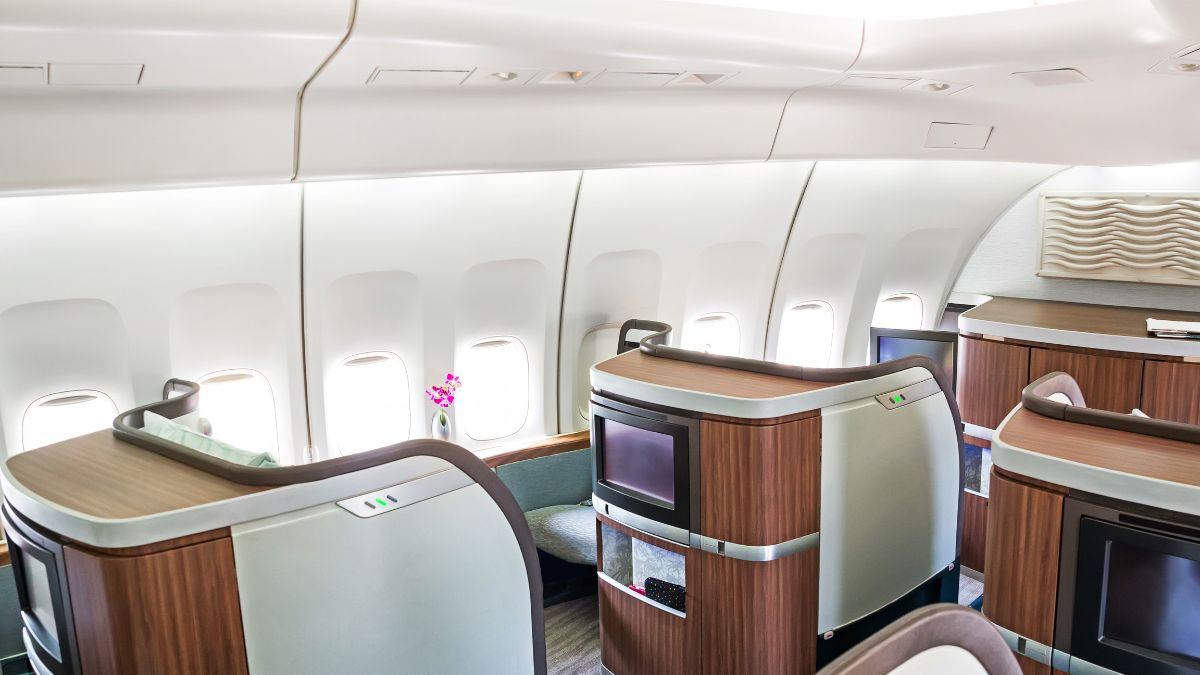
First class cabins exist at the intersection of luxury hospitality and unspoken social protocol, a world governed less by posted rules than by a finely calibrated set of behavioral expectations that frequent travelers absorb over years of exposure. The gap between purchasing a first class ticket and knowing how to occupy a first class seat is wider than most occasional upgraders anticipate. Airlines invest extraordinary resources in creating an atmosphere of calm, privacy, and understated elegance, and a single passenger behaving without awareness of the social contract can disrupt that atmosphere for an entire cabin. These are the behaviors that experienced first class travelers recognize instantly as markers of someone encountering the environment for the first time.
Pajama Photography

Changing into the complimentary pajamas provided by premium long-haul carriers is entirely appropriate and expected behavior in first class, but treating the moment as a photo opportunity to document and broadcast on social media is a reliable signal of first-time exposure to the experience. The first class cabin operates on an implicit agreement of mutual privacy and discretion that extends to refraining from photographing fellow passengers, the crew, and the intimate details of neighboring suites. Seasoned travelers understand that the pajamas, the amenity kit, the menu, and the flat bed are standard features of the product rather than remarkable novelties worthy of public documentation. The urge to photograph everything in a premium cabin is a natural response to an unfamiliar luxury environment but it is consistently read by cabin crew and experienced co-passengers as social inexperience. Discretion with a camera is one of the clearest non-verbal signals that a first class passenger understands the culture of the space they are occupying.
Overhead Bin Racing
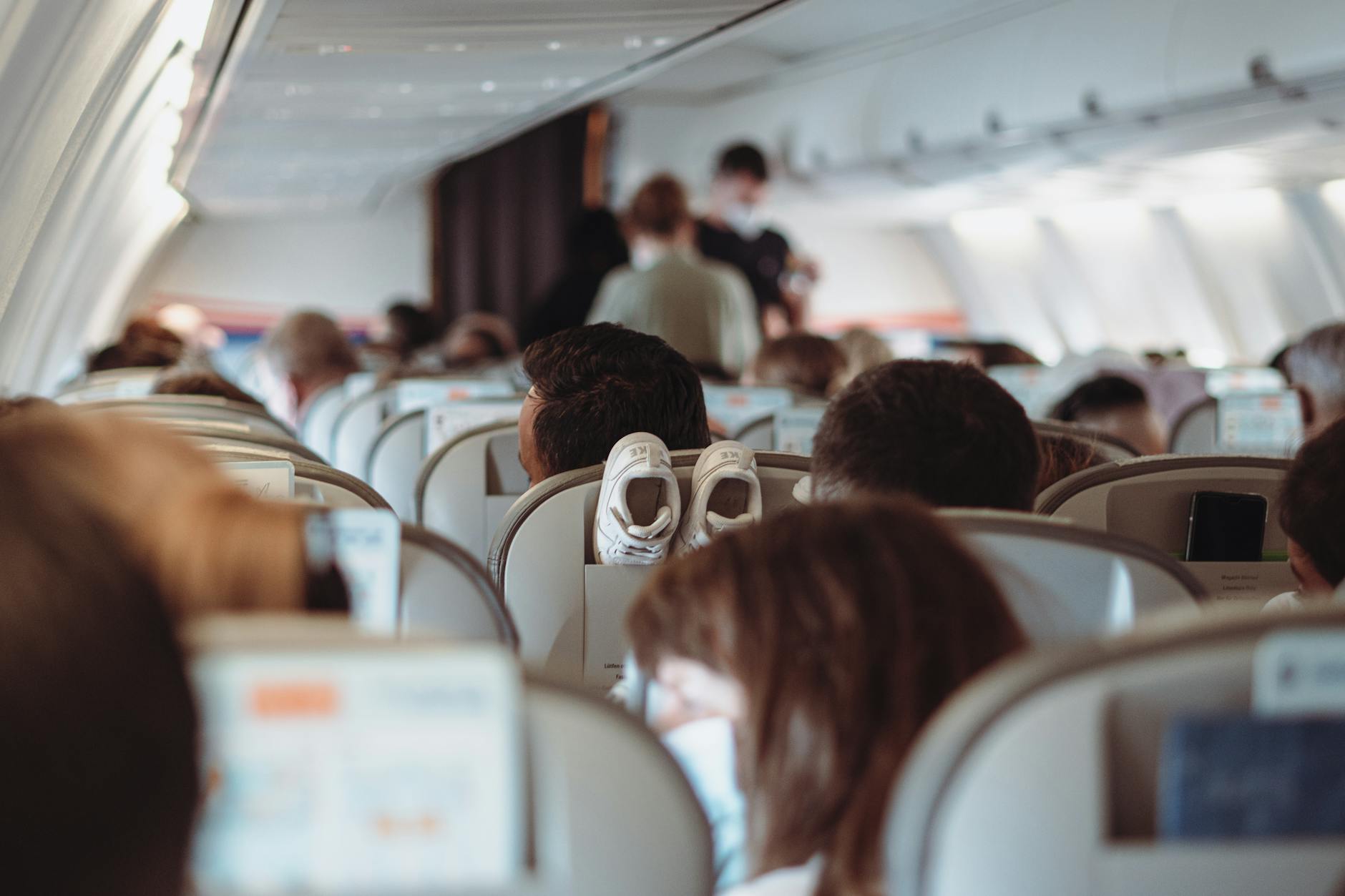
Sprinting to the overhead bin the moment boarding opens in order to secure maximum storage space is a behavioral pattern imported from economy class where bin space is genuinely scarce and competitive. In first class cabins the storage situation is the inverse of economy, with generous dedicated compartments, under-seat space, and crew assistance available to ensure that every passenger’s belongings are accommodated without any competition whatsoever. The urgency and physical assertiveness of the economy-class bin race is conspicuous in a first class environment precisely because its motivating anxiety is entirely absent and therefore entirely unnecessary. Crew in premium cabins are trained to manage luggage placement and will proactively offer to stow bags the moment a passenger boards. Arriving at a first class seat at a calm and deliberate pace signals an understanding that the environment has been designed to eliminate the scarcity dynamics that drive anxious boarding behavior in other parts of the aircraft.
Excessive Drinking
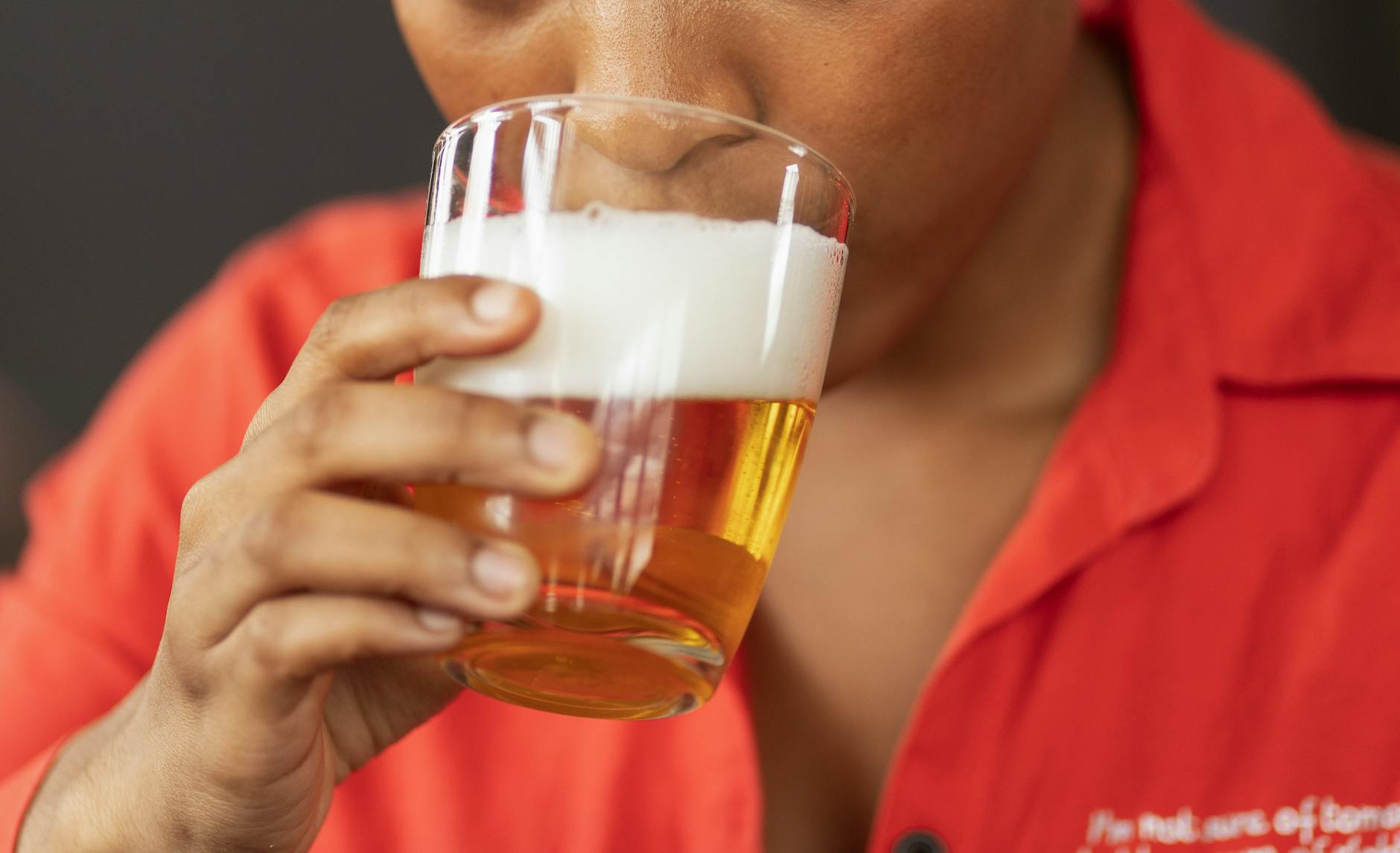
First class alcohol service is genuinely premium, frequently featuring vintage Champagne, well-aged spirits, and carefully curated wine lists, and it is entirely appropriate to enjoy these offerings thoughtfully throughout a flight. The tacky version of engaging with first class drinks service involves treating the complimentary alcohol as an opportunity for unlimited consumption purely on the basis of its inclusion in the ticket price rather than personal preference or enjoyment. Passengers who become visibly intoxicated in first class create an atmosphere of unpredictability and social discomfort that is particularly jarring against the backdrop of a cabin designed entirely around calm and composed elegance. Experienced first class travelers calibrate their alcohol consumption to the length and purpose of the flight and to their own comfort and arrival condition rather than to the zero marginal cost of each glass. Cabin crew in premium cabins are trained to manage escalating alcohol situations with discretion but the situation itself is universally recognized as a first-timer marker.
Suite Door Confusion
Many modern first class products on carriers including Emirates, Etihad, and Singapore Airlines feature fully enclosed private suites with closing doors, and the existence of these doors creates a specific etiquette challenge for passengers unfamiliar with the product. The tacky response to a closing suite door is to open and close it repeatedly throughout the flight for its novelty value, to leave it open in configurations that impinge on neighboring passengers, or to treat the door as an invitation to create a fully enclosed antisocial bubble while simultaneously demanding frequent crew attention. The door exists to provide privacy when desired and its operation carries an implicit communication to the crew and neighboring passengers about the occupant’s wish for solitude or engagement. Experienced travelers use suite doors purposefully and quietly, aligning their use with the natural rhythm of the service rather than as a source of mechanical entertainment. Crew recognize door misuse as a reliable indicator of a passenger for whom the enclosed suite is a novel rather than familiar environment.
Reclining Debates
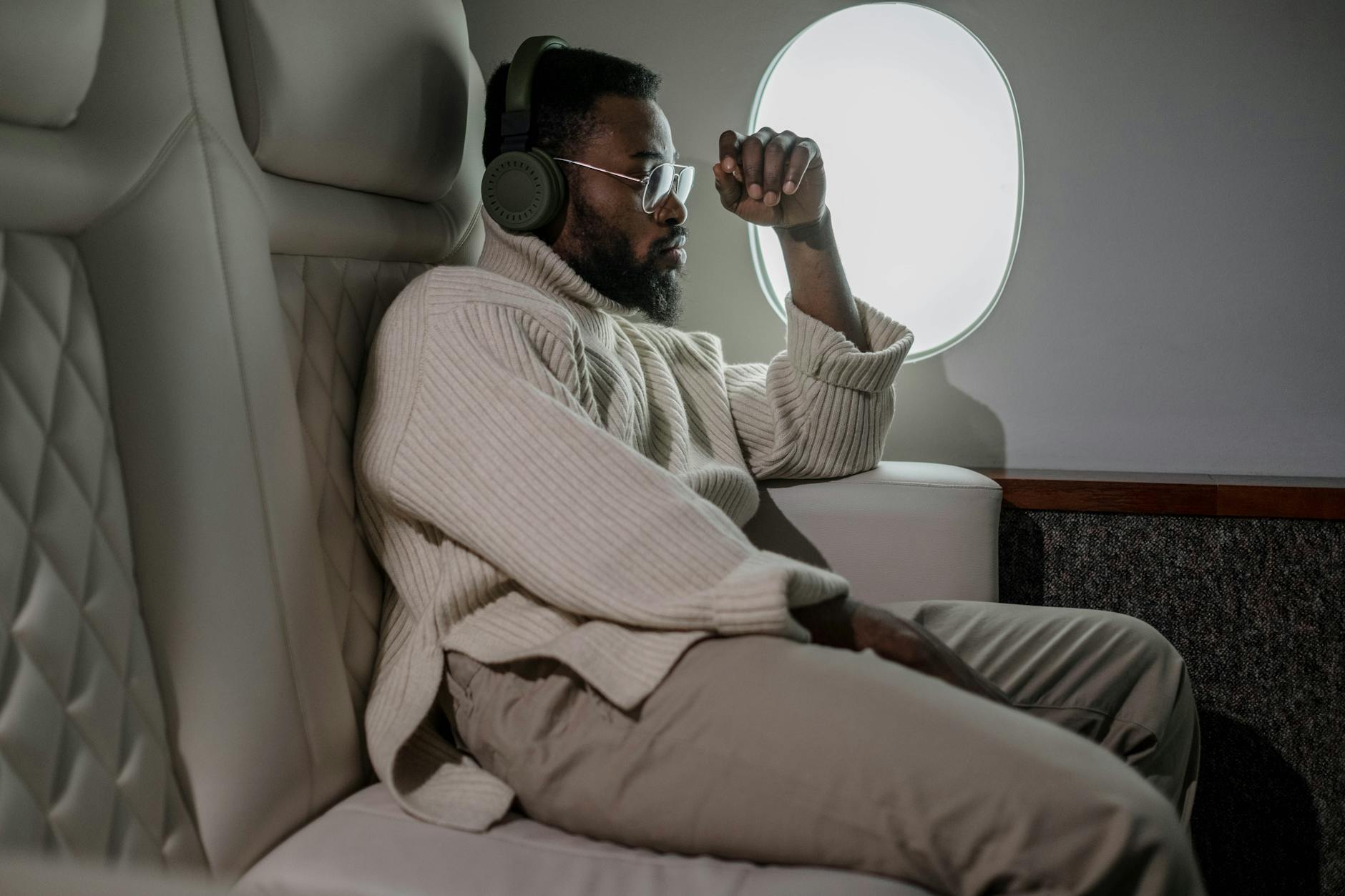
Asking a fellow first class passenger whether they mind if you recline your seat is a behavior that originates in economy class etiquette where seat recline genuinely impinges on the person behind in a meaningful and sometimes uncomfortable way. In first class cabins the seat pitch and design is specifically engineered to ensure that full recline of one seat does not compromise the space or comfort of any other passenger in any measurable way. Importing the economy-class recline negotiation into a first class environment signals an unfamiliarity with the spatial dynamics of the product and can create an awkward social interaction in a cabin where most passengers are specifically seeking to avoid interpersonal engagement. Every seat in a first class cabin is purchased with the explicit understanding that its full range of mechanical adjustment is available to its occupant without social permission-seeking from neighbors. The recline conversation is one of the clearest possible signals that a passenger’s prior aircraft experience has been primarily in economy or premium economy.
Call Button Overuse
The call button in first class exists for genuine needs arising between natural service intervals but experienced first class travelers use it sparingly because they understand that premium cabin crews operate on an anticipatory service model designed to address passenger needs before they require active signaling. Pressing the call button repeatedly within short intervals, using it for requests that could be made during the next natural crew interaction, or activating it immediately upon boarding before the service rhythm has been established are all behaviors that signal unfamiliarity with how premium cabin service operates. Crew in first class are assigned to a very small number of passengers precisely so that continuous proactive service makes the call button largely redundant for any need that is not urgent or unexpected. The frequent call button user is distinguishable from the experienced first class traveler not by their demands, which are often entirely reasonable, but by their unfamiliarity with the service model that would have delivered those same things without any button being pressed. This misalignment between passenger expectation and service design is one of the most reliable crew-side indicators of a first-time first class occupant.
Loud Phone Calls
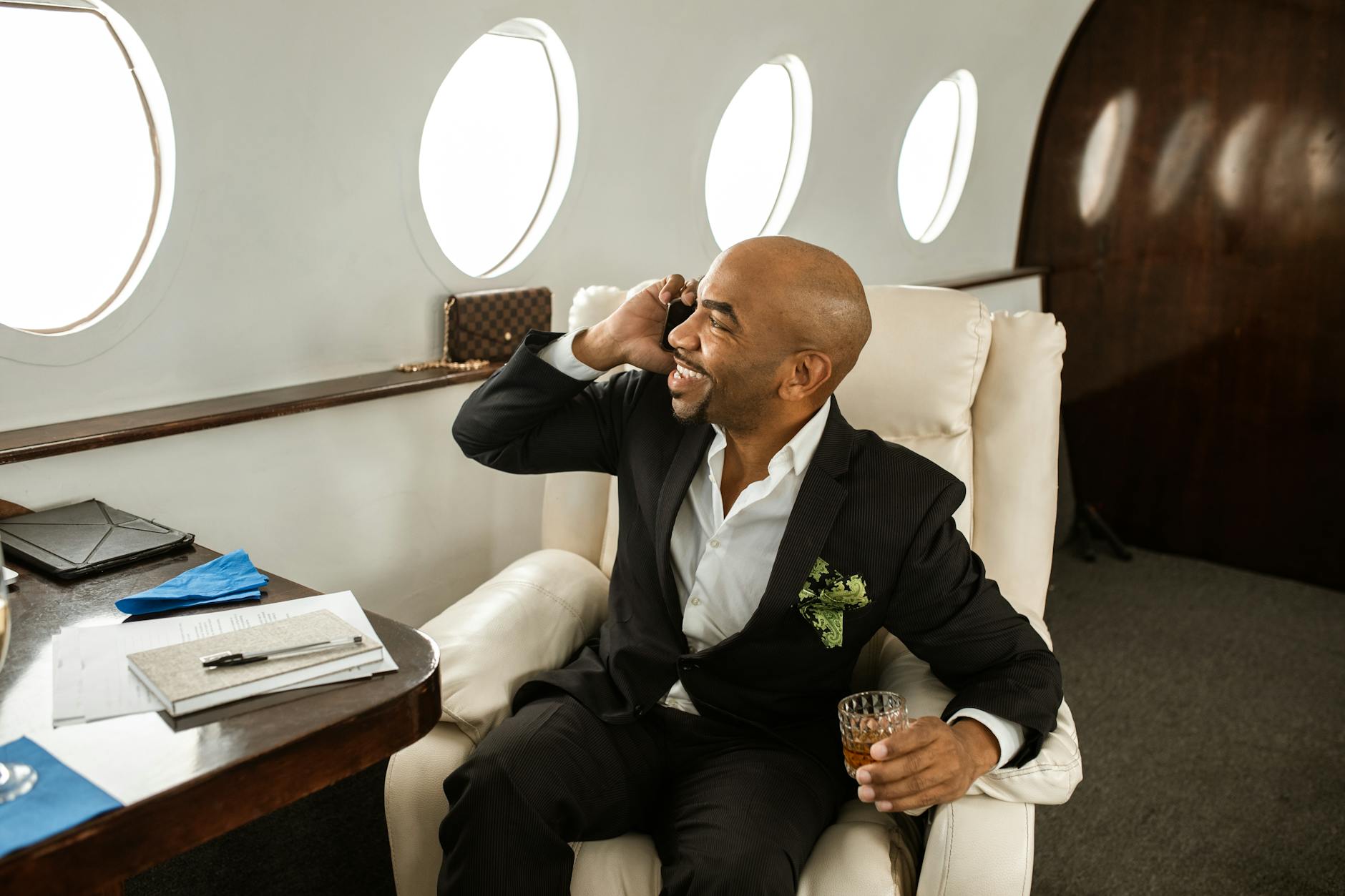
Conducting extended, audible, personal, or business phone calls in the first class cabin before the aircraft door closes or during any period when other passengers are present is a behavioral import from environments where acoustic privacy is considered an individual rather than a collective responsibility. The first class cabin’s atmospheric contract includes acoustic consideration as a foundational element, with most experienced travelers naturally moderating their voice and minimizing phone use in recognition that neighboring passengers are in close proximity within a shared premium space. A loud and detailed personal phone call conducted in a first class seat is particularly conspicuous because the cabin’s generally low ambient noise level ensures it reaches every nearby passenger with complete clarity. Business calls that involve specific financial, legal, or personnel information conducted at audible volume represent a compound breach of both social etiquette and basic professional discretion. Cabin crew note this behavior as consistently associated with passengers for whom the social norms of premium cabin occupancy are unfamiliar territory.
Amenity Kit Hoarding
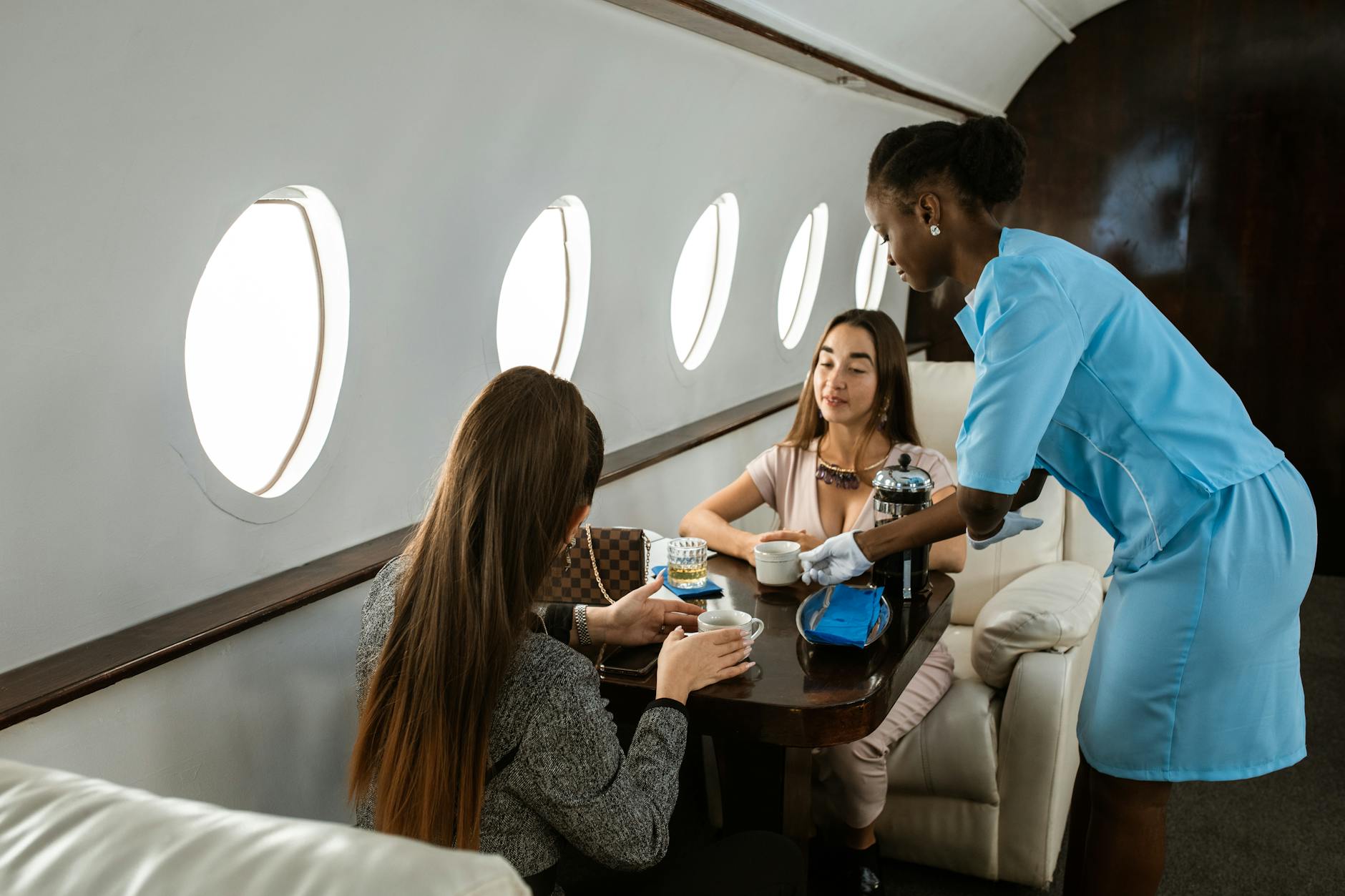
Requesting multiple amenity kits, asking crew for spare items from kits in unoccupied seats, or openly inventorying and displaying the contents of an amenity kit as a collection of desirable acquisitions are behaviors rooted in a relationship with complimentary items that experienced first class travelers do not share. Premium amenity kits on carriers such as British Airways, Cathay Pacific, and Qatar Airways are thoughtfully curated and genuinely high-quality products, but their function within the first class experience is practical provision rather than retail opportunity. The passenger who treats amenity kit contents as collectible novelties to be maximized and inventoried signals a relationship with complimentary luxury goods that is characteristic of infrequent exposure to the environment. Crew are trained to fulfill reasonable individual requests but are entirely familiar with the pattern of amenity kit interest that distinguishes the occasional upgrader from the habitual first class traveler. Accepting what is offered graciously and using what is needed is the unmarked norm that experienced passengers default to without conscious deliberation.
Barefoot Wandering
Walking through the first class cabin, to the galley, or to the lavatory in bare feet without the provided cabin slippers is a hygiene and social propriety breach that is universally recognized by crew and fellow passengers as incompatible with the behavioral standards of a premium cabin environment. Aircraft cabin floors carry a microbiological load that makes bare-foot contact inadvisable on purely practical health grounds regardless of any social dimension. The provision of high-quality cabin slippers in first class amenity kits or as a separately distributed item is a direct signal from the airline that foot coverings are the expected standard of cabin ambulation. Barefoot movement is a behavioral pattern associated with maximum physical relaxation in private domestic environments and its importation into a shared premium public space reflects a misreading of the social register of the first class cabin. Crew in premium cabins consistently cite barefoot wandering as among the most jarring behavioral imports from passengers more accustomed to treating aircraft as extensions of their living room.
Menu Negotiation
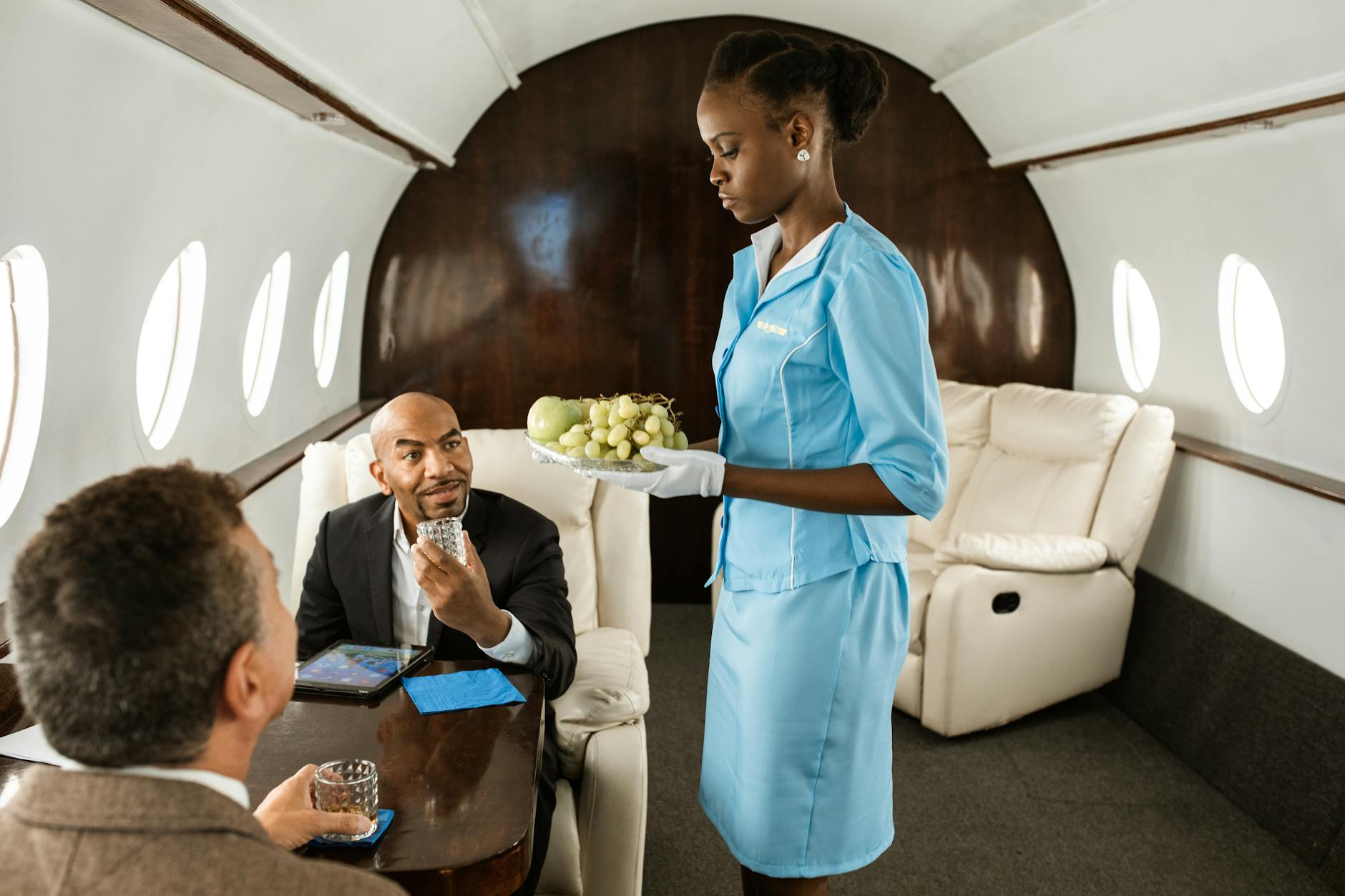
Attempting to negotiate the first class menu beyond its offered alternatives, requesting dishes that are not listed, asking crew to combine elements from different menu sections into custom preparations, or engaging in extended negotiations about ingredient modifications are behaviors that misunderstand the structure of premium airline catering. First class menus represent the maximum complexity of food preparation achievable within the physical and logistical constraints of aircraft catering and have already been designed to offer meaningful choice within those constraints. The culinary negotiation behavior is a misapplication of the latitude available in high-end restaurant settings to an environment with fundamentally different production parameters that experienced first class travelers understand implicitly. Crew are trained to accommodate genuine dietary requirements and medically necessary modifications with professionalism and without judgment. The distinction between a legitimate dietary need and a preference-driven menu negotiation is immediately apparent to experienced cabin crew and is consistently associated with passengers for whom first class dining feels like an unexplored entitlement rather than a curated service.
Seat Exploration
Spending extended time in the early boarding period pressing every button, exploring every mechanical function, testing every seat position, and investigating every storage compartment is a behavior that communicates immediate and clearly legible unfamiliarity with the product being occupied. Experienced first class travelers have typically encountered the seat configuration before, either on a previous flight, through pre-flight research, or through accumulated familiarity with premium cabin products across multiple carriers. The button-pressing exploratory phase is entirely understandable as a first response to a complex and unfamiliar luxury environment but it is highly visible to crew and fellow passengers and creates an impression of someone encountering the experience as a novel consumer product rather than a familiar travel environment. The most experienced first class travelers settle into their seat, adjust it to sleeping or comfortable upright position with minimal investigation, and focus on the journey ahead rather than the mechanics of the seat itself. Crew universally recognize the extended seat exploration phase as one of the clearest behavioral markers available to them during the boarding period.
Food Photographing
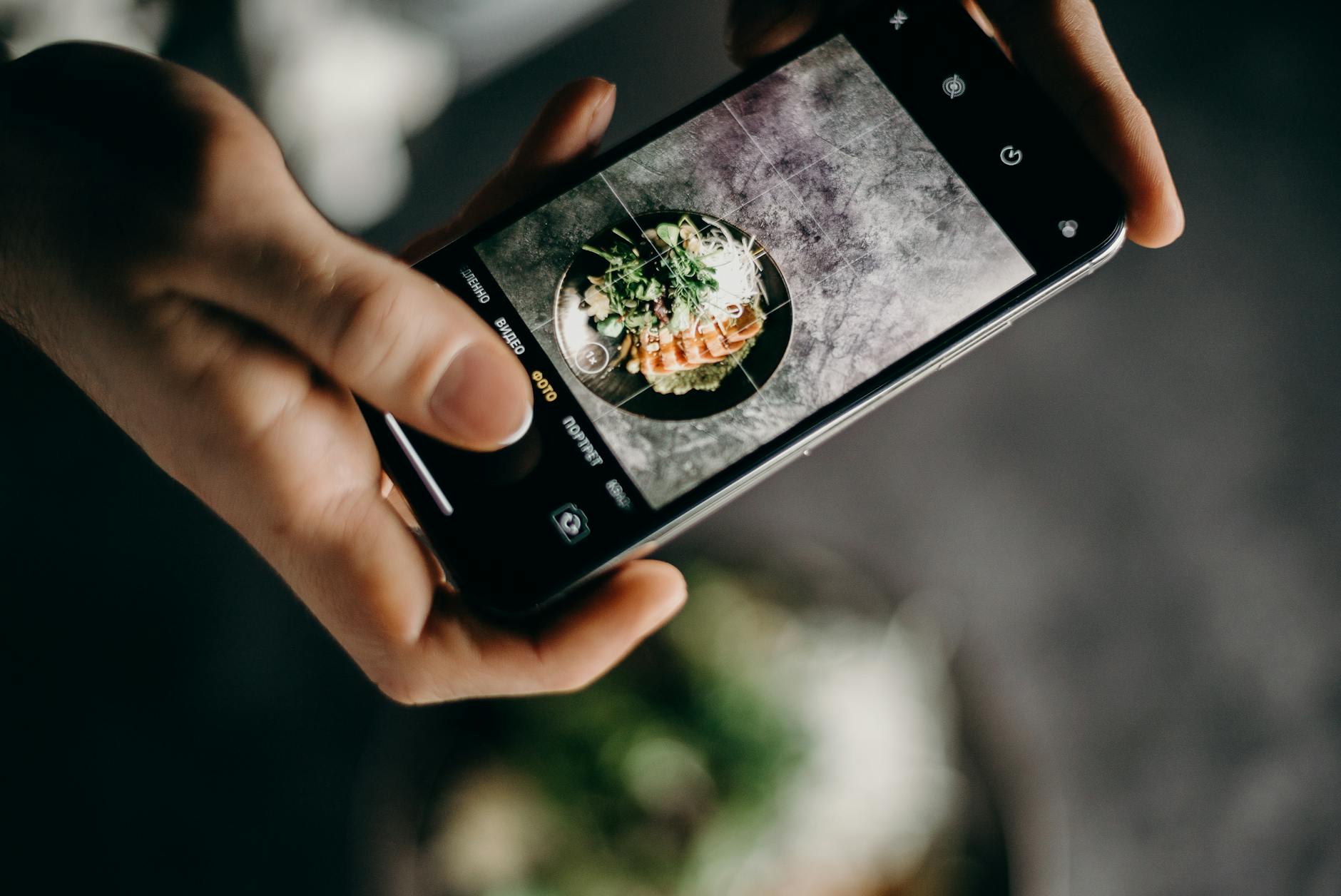
Photographing the first class meal service for social media before eating is a behavior that intersects with the photography etiquette issue in a specific way because the meal itself is stationary, well-lit, and unambiguously the occupant’s own property, making the social trespass less clear-cut than photographing fellow passengers or the cabin environment. The issue is less about the photography itself and more about its duration, its intrusiveness into the service rhythm, and the implicit framing of the meal as social media content rather than a dining experience to be engaged with directly. Extended phone positioning over a carefully presented first class meal course, multiple attempts to optimize framing and lighting, and commentary to travel companions about the social media potential of the presentation all signal a relationship with the experience that is mediated through documentation rather than direct engagement. Experienced first class travelers who wish to photograph their meal do so quickly, discreetly, and without disrupting the service flow. The extended food photography session is a specific marker of a passenger for whom the first class meal represents a rare and documentable luxury rather than a familiar standard of travel.
Lavatory Monopolizing
Occupying the first class lavatory for extended periods beyond the time required for practical hygiene needs, using it as a changing room for multiple outfit changes, or treating it as a private grooming salon for elaborate beauty routines creates a resource availability problem that is unusual in a first class cabin but not unknown. First class lavatories are considerably larger and better appointed than those elsewhere on the aircraft and this spatial generosity can create a misimpression of unlimited private access that is incompatible with the shared nature of the facility. Experienced first class travelers understand that the generous lavatory appointment is a quality-of-experience provision rather than an invitation to extended private occupation during periods when other passengers may require access. The social contract of the lavatory queue, even the informal one that operates in premium cabins, is sensitive to occupation duration in a way that experienced travelers navigate instinctively. Crew are occasionally required to address extended lavatory occupation and the situations that necessitate this intervention are uniformly associated with passengers unfamiliar with premium cabin behavioral norms.
Aggressive Recline Timing
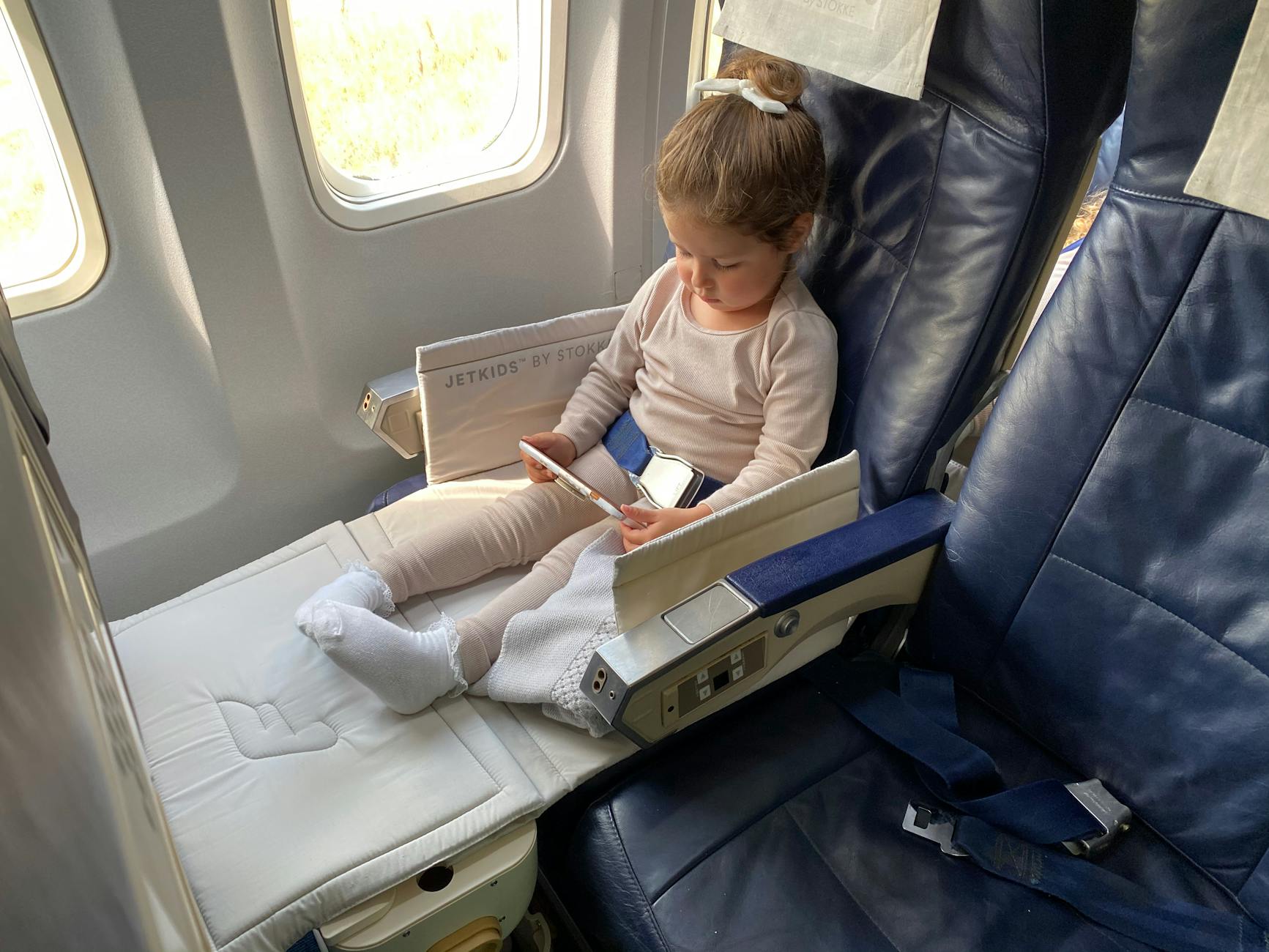
Reclining a seat to its full flat bed position immediately upon reaching cruising altitude regardless of whether a meal service is active, whether fellow passengers are eating, or whether the cabin lights have been dimmed for the sleeping period is an aggressive interpretation of seat entitlement that ignores the shared temporal rhythm of the premium cabin service. First class cabins operate on a broadly understood service sequence that experienced travelers synchronize their personal activity with, including deferring full bed recline until the meal service has concluded and the cabin has transitioned into its sleeping phase. Reclining fully during an active meal service creates logistical complications for crew attempting to deliver full meal service to a passenger in a fully horizontal position and signals indifference to the service structure that has been designed around the collective experience. The timing of recline is a subtle but reliable indicator of whether a passenger understands the cabin’s social and service rhythm or is treating their seat as a purely private facility with no temporal relationship to the surrounding service environment. Experienced travelers recline progressively and in alignment with the natural stages of the flight rather than as an immediate assertion of maximum seat entitlement.
Name-Dropping Upgrades
Mentioning to fellow passengers or crew how the seat was obtained, whether through a points redemption, an upgrade certificate, a last-minute discounted fare, or a corporate travel policy exception, is a form of social self-consciousness that experienced first class travelers do not exhibit because they have no anxiety about their right to occupy the space they are in. The implicit purpose of the upgrade explanation is a pre-emptive defense against a perceived judgment that is in practice entirely absent from the minds of the crew and fellow passengers to whom the explanation is offered. Crew in first class cabins are entirely indifferent to the commercial mechanism by which any seat has been filled and experienced travelers know this intuitively. The upgrade narrative is a specific form of social anxiety that manifests as oversharing in response to an imagined scrutiny and it is most reliably observed in passengers for whom first class represents a significant departure from their normal travel experience. Occupying a first class seat without explanation or justification is the behavioral standard of someone for whom the environment requires neither.
Sock Removal

Removing socks during flight to sit or recline in bare feet within the enclosed suite or open cabin space is a hygiene and social consideration that operates differently from barefoot ambulation but remains a recognizable marker of domestic comfort-seeking behavior imported inappropriately into a shared premium environment. The olfactory implications of unshod feet in a recirculated-air cabin environment are a practical consideration that experienced travelers account for regardless of their own perception of the issue. First class suites on modern aircraft are exceptionally private relative to any other commercial aviation environment but they are not fully sealed from neighboring passengers and crew who move through the cabin space continuously. The provision of high-quality closed slippers alongside the pajama service is a direct signal that foot enclosure is the expected norm even during the sleeping portion of a long-haul flight. Crew and neighboring passengers both register visible bare feet in first class as a social comfort miscalibration that is characteristic of a passenger treating the cabin as a private rather than shared environment.
Galley Loitering
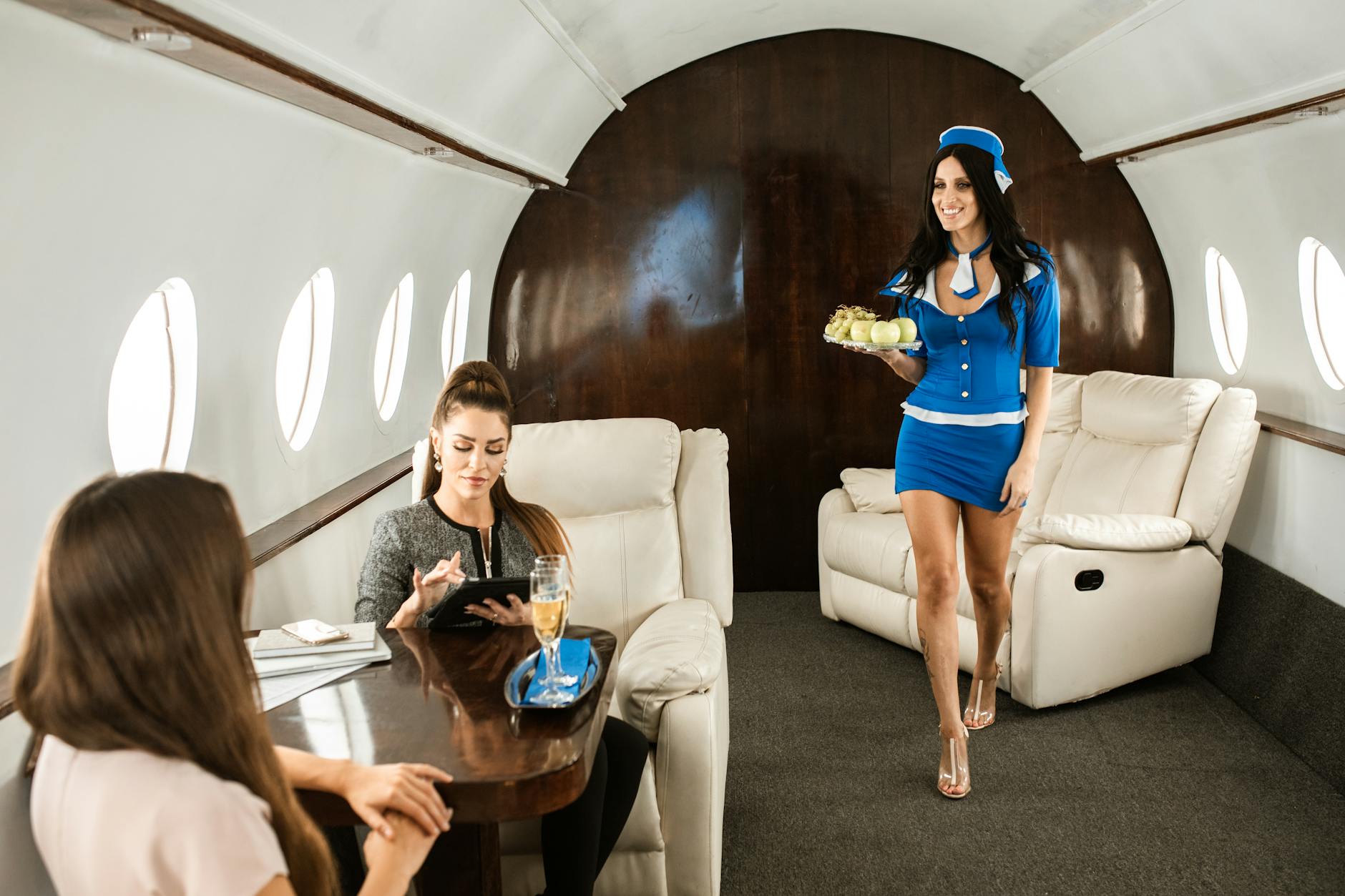
Wandering to the first class galley and remaining there for extended conversation with crew, snacking directly from galley provisions, or treating the galley as a social gathering point that the passenger visits repeatedly throughout the flight is a misreading of both the crew’s working environment and the spatial design intent of the premium cabin. The galley is the crew’s operational workspace and their presence there during service periods reflects active preparation rather than social availability, a distinction that passengers unfamiliar with the service model do not always recognize. Some long-haul first class products include dedicated social areas or bars intended precisely for passenger use and trained crew interaction in a hospitality context, and the appropriate version of this instinct is to use those designated spaces when they are provided. Experienced first class travelers maintain a clear and respectful distinction between the crew’s operational space and the areas designated for passenger interaction and movement. Galley loitering is consistently noted by premium cabin crew as a behavior pattern associated with passengers who are either unaware of the operational nature of the space or are seeking social connection in a cabin where the prevailing norm is respectful solitude.
Volume Creep
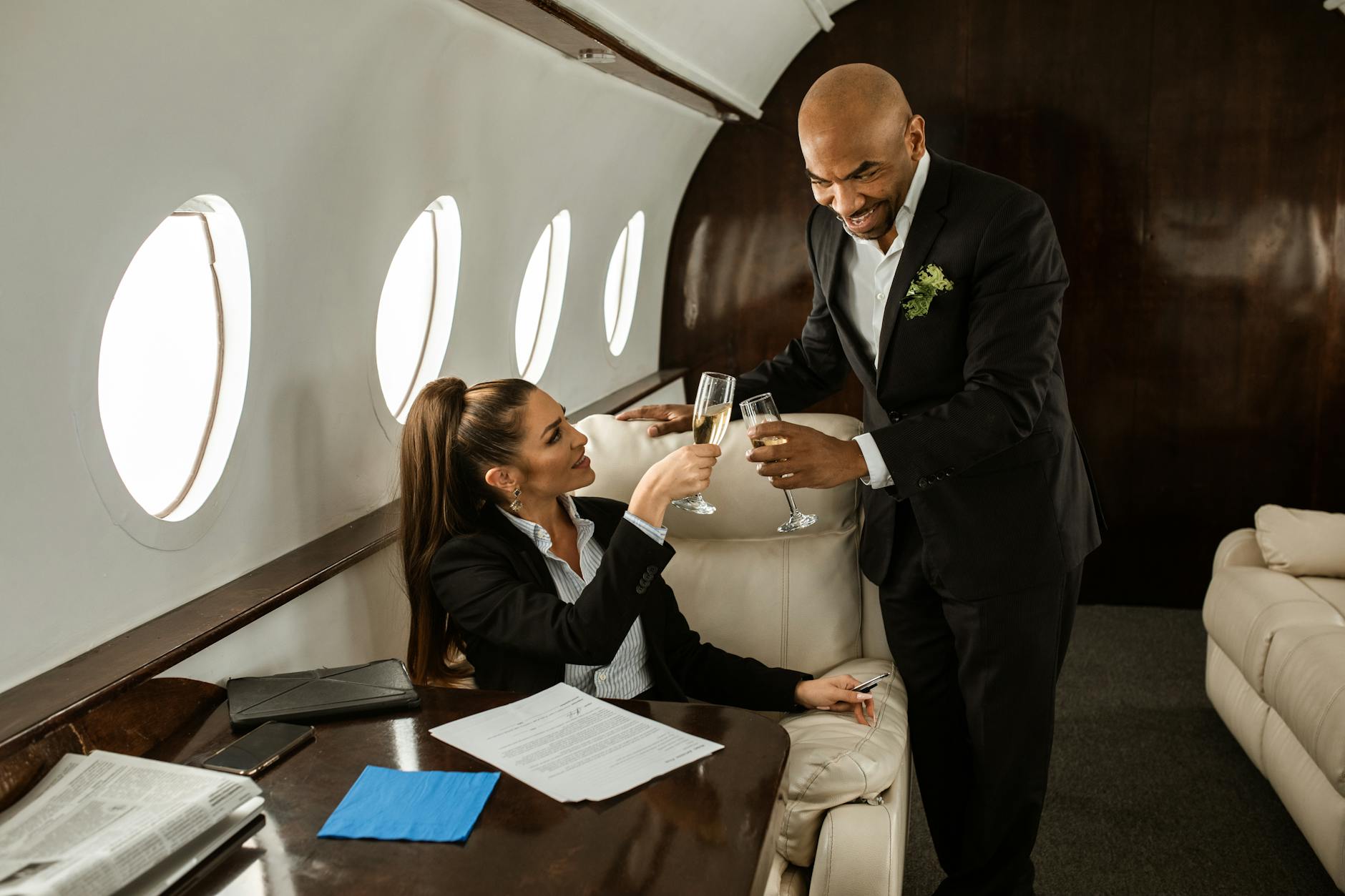
Allowing the volume of entertainment content to increase progressively throughout a flight to the point where it becomes audible beyond the boundaries of the individual seat or suite is a behavioral pattern rooted in the natural auditory habituation that occurs during extended listening and which requires deliberate monitoring to prevent. First class cabins use active noise cancellation headphones of sufficient quality to deliver a fully immersive audio experience at low to moderate volume settings, making any volume level that bleeds into the surrounding cabin entirely unnecessary for the listener’s enjoyment. The awareness of audio bleed requires a degree of environmental consciousness that experienced first class travelers maintain as a default condition of occupying a shared premium space. Volume creep is particularly disruptive during the cabin’s sleeping phase when the ambient sound level drops to near silence and any audio bleed from a neighboring seat becomes immediately and widely perceptible. Crew occasionally address volume situations during the sleeping period and the situations that require this intervention are reliably associated with passengers whose monitoring of their environmental impact on others is insufficiently calibrated for a premium shared cabin.
Hoarding Blankets
Accumulating multiple cabin blankets, requesting the blankets from unoccupied neighboring seats, or treating the premium bedding provisions as a quantity-maximization opportunity reflects the same scarcity-response psychology as the overhead bin racing behavior and is equally unnecessary in a first class environment. Premium long-haul first class products provide bedding specifically designed and tested to maintain comfortable sleeping temperature across the range of cabin thermal conditions experienced during a long flight, meaning that the comfort problem the extra blanket is solving does not in practice exist. Crew will unfailingly provide an additional blanket to any passenger who requests one and who has a genuine thermal comfort need, distinguishing this from the hoarding of resources on the basis of availability rather than need. The resource accumulation instinct that drives extra blanket requests is entirely familiar to crew as a behavioral pattern and is consistently associated with passengers whose prior travel experience has trained them to secure resources actively because abundance was not the reliable default. Accepting what is offered and requesting more if genuinely needed is the experienced traveler’s default and it is immediately distinguishable from the blanket accumulation of the first-timer.
Packing Mid-Flight
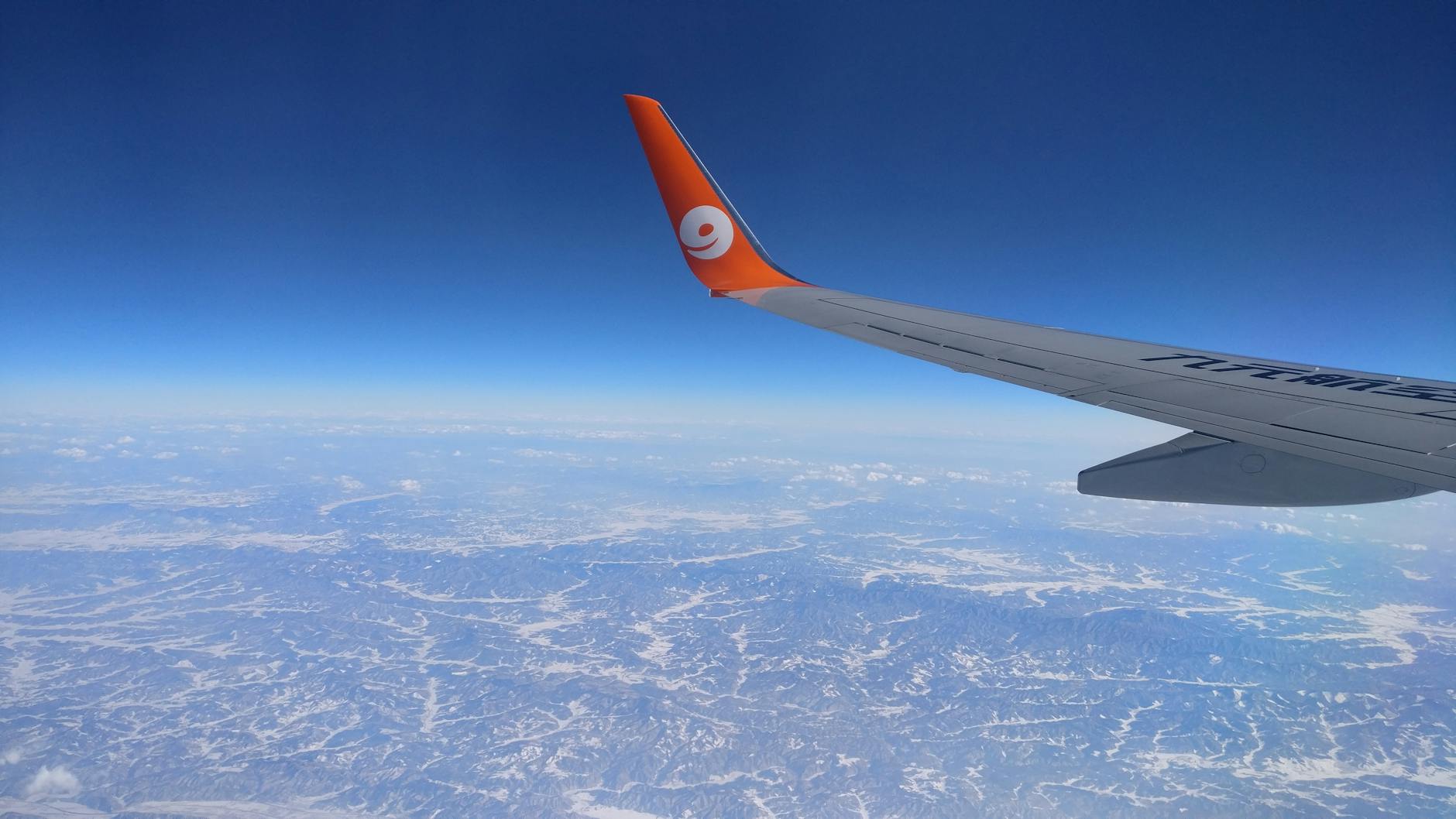
Beginning to repack carry-on luggage, reorganize personal belongings, extract and stow items repeatedly from overhead or personal storage, or lay out items across available surfaces in a way that creates a cluttered and visually disordered personal space communicates an anxiety about the logistics of arrival that is incompatible with the calm and composed atmosphere of a first class cabin. Experienced first class travelers on long-haul flights manage their personal belongings with a minimal and organized approach developed through repeated travel that keeps their immediate environment clean and their logistical preparations contained within the final approach phase of the flight. The mid-flight repacking behavior is most commonly observed in the hours before landing when its logistical purpose is understandable but its visibility and spatial impact remain a social consideration. Crew note the territorial expansion of personal belongings beyond the occupant’s immediate seat area as a spatial awareness issue that correlates reliably with infrequent first class experience. The most experienced travelers arrive at their destination looking precisely as composed as they did at boarding regardless of the flight duration.
Complaining About Champagne
Receiving a genuine vintage Champagne service from a premium carrier’s curated wine selection and responding with commentary about personal brand preference, requests for a specific label not featured on the list, or unfavorable comparisons to terrestrial restaurant offerings reflects a misapplication of restaurant consumer behavior to an airline service context. Premium carrier Champagne selections represent genuinely considered curation by specialist sommeliers and the wines offered are invariably of high quality relative to the constraints of the service environment. The first class cabin wine service is a curated hospitality offering rather than a retail transaction and the appropriate response to its contents is engagement with what has been provided rather than negotiation toward a personally preferred alternative. Experienced first class travelers with specific wine preferences understand how to express them through the pre-ordering mechanisms that most premium carriers make available well in advance of the flight. Expressing dissatisfaction with genuine vintage Champagne in a first class cabin is a reliable indicator of a passenger whose consumer expectations have outrun their understanding of the service environment they are in.
Seat Neighbor Chatting
Initiating extended unsolicited conversation with a fellow first class passenger who has given no social signals of interest in interaction is an imposition particularly jarring in a cabin environment where privacy and solitude are among the primary products being delivered. The first class cabin is one of the few commercial environments where the default social expectation is explicitly non-interactive and where the standard signals of openness to conversation including eye contact, physical orientation, and removal of headphones have a specific and widely understood meaning. Experienced first class travelers read these signals accurately and understand that the absence of any of them constitutes a clear and legitimate preference for privacy that does not require verbal reinforcement. The impulse toward conversation in a premium cabin typically comes from social discomfort with the unfamiliar norms of the environment or from the excitement of the experience creating a desire to share it with a proximate other. Crew in first class cabins sometimes serve a gentle conversational management function on behalf of passengers who are reluctant to explicitly decline social interaction they did not invite.
Filming Crew
Recording video of cabin crew during service, asking crew to pose for photographs, or capturing the service interaction itself as content for social media documentation is a privacy and professional respect breach that is treated with particular seriousness in premium cabin environments where discretion is a foundational service value. Cabin crew are professionals performing a skilled hospitality role in a regulated workplace environment and their consent to being filmed or photographed is a professional and personal matter that cannot be assumed on the basis of the passenger’s access to the space. Experienced first class travelers understand that the crew’s composure, elegance, and service quality are attributes of a professional performance rather than entertainment content available for capture and broadcast. Airlines have specific policies about filming crew and fellow passengers and premium cabin crew are familiar with the filming behavior as a pattern associated with first-time exposure to the environment rather than with regular premium travelers. The camera’s appearance in a first class cabin directed at crew or fellow passengers is one of the most immediate and unambiguous behavioral signals available in the premium cabin environment.
Share your own first class etiquette observations and travel stories in the comments.