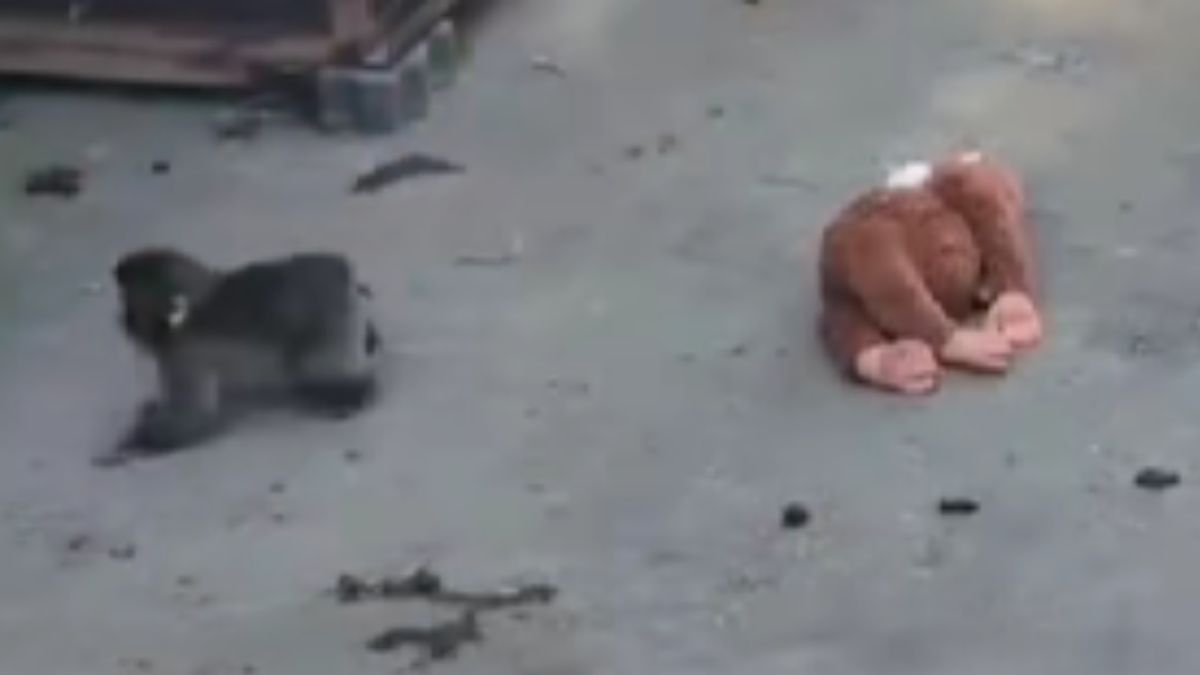
A heartwarming yet controversial story has captured attention online involving a young Japanese macaque named Punch at the Ichikawa Zoo in Japan. After his mother rejected him shortly after birth and other macaques in the group bullied him in viral videos, the little monkey found himself isolated and in need of support. Keepers stepped in to hand-rear him, gradually helping him adjust to life with the troop. To provide comfort during this challenging transition, they gave him a plush orangutan toy along with a towel to hold onto.
Critics, including some animal welfare advocates and organizations like PETA, questioned whether a stuffed toy truly serves as meaningful consolation for such a young primate experiencing loss and social rejection. Videos showed Punch clinging tightly to the toy amid his struggles, sparking debates about whether this approach adequately addresses his emotional needs or if it falls short of proper care. Many felt the images highlighted deeper issues of isolation rather than simple cuteness.
The zoo responded thoughtfully through an official statement shared on social media platform X. They explained that Punch’s hand-rearing process prioritizes eventual full reintegration into the macaque group without excessive dependence on humans. The plush toy and towel simulate maternal contact while deliberately preventing him from forming overly strong bonds with his keepers. This method draws from the zoo’s experience with other hand-reared primates, not limited to Japanese macaques, ensuring the young animal develops appropriate social behaviors.
改めてご説明させていただきます。
— 市川市動植物園(公式) (@ichikawa_zoo) February 27, 2026
パンチの人工哺育とこれまでの経緯について
Regarding Punch's hand-rearing and the process up to now:
文中に出てくる2009年「オトメ」の群れ入れレポートはこちらhttps://t.co/QJArFurFXk#市川市動植物園#がんばれパンチ pic.twitter.com/x0Zno8XTYh
Keepers introduced Punch to the Monkey Mountain enclosure starting around three months old, allowing visual and auditory contact with the group through barriers at first. After four months, he began spending supervised time inside the habitat alongside staff for security and proper development. Before his official return to the group on January 19, he interacted positively with a young female macaque, giving the team confidence in his readiness to live independently. Even now, he reaches for the toy during moments of insecurity, but continues receiving milk and feeding assistance from humans.
The zoo pointed to a successful past case from 2009 involving a hand-reared female macaque named Otome. She naturally outgrew her reliance on a similar plush toy as she matured, went on to give birth to four offspring, raised them successfully, and saw her lineage thrive with independent parenting. Staff emphasized their commitment to Punch’s long-term well-being, vowing maximum effort so he can lead a healthy, fulfilling life as a fully integrated group member and a typical Japanese macaque.
@officialomar222 The story of #PUNCH feels bigger than a zoo story, it mirrors real life in a quiet way. A small monkey holding a plush toy PUNCH to replace the warmth it lost shows how every heart searches for comfort, connection, safety We all carry our own version, something that keeps us moving when life feels heavy CT needs this reminder right now…stay united, learn a little every day, keep trying even when it feels slow Growth is never loud at the start, one day the same little soul everyone overlooked becomes the star people look up to 🐒🥰♥️ @Pumpfun #punchi #zoo #japan #monkey ♬ Papaoutai – Afro Soul – mikeeysmind & Chill77 & Unjaps
This balanced approach combines emotional support with practical steps toward natural group living. It reflects careful consideration of primate psychology in captive settings where maternal rejection occurs.
What do you think about using plush toys as part of hand-rearing young primates, share your thoughts in the comments.