Most people who travel extensively collect stories about delayed flights, lost luggage, and the occasional food poisoning. Drew Binsky collects something else entirely. The YouTuber who has visited all 197 countries in the world has seen war zones, disease-prone regions, and every conceivable kind of logistical nightmare that international travel can produce. And yet when asked to identify the three moments that genuinely made him fear for his life, the answers turned out to be both surprising and deeply human — because the most dangerous situations he has ever encountered were not necessarily the ones that looked dangerous from the outside.
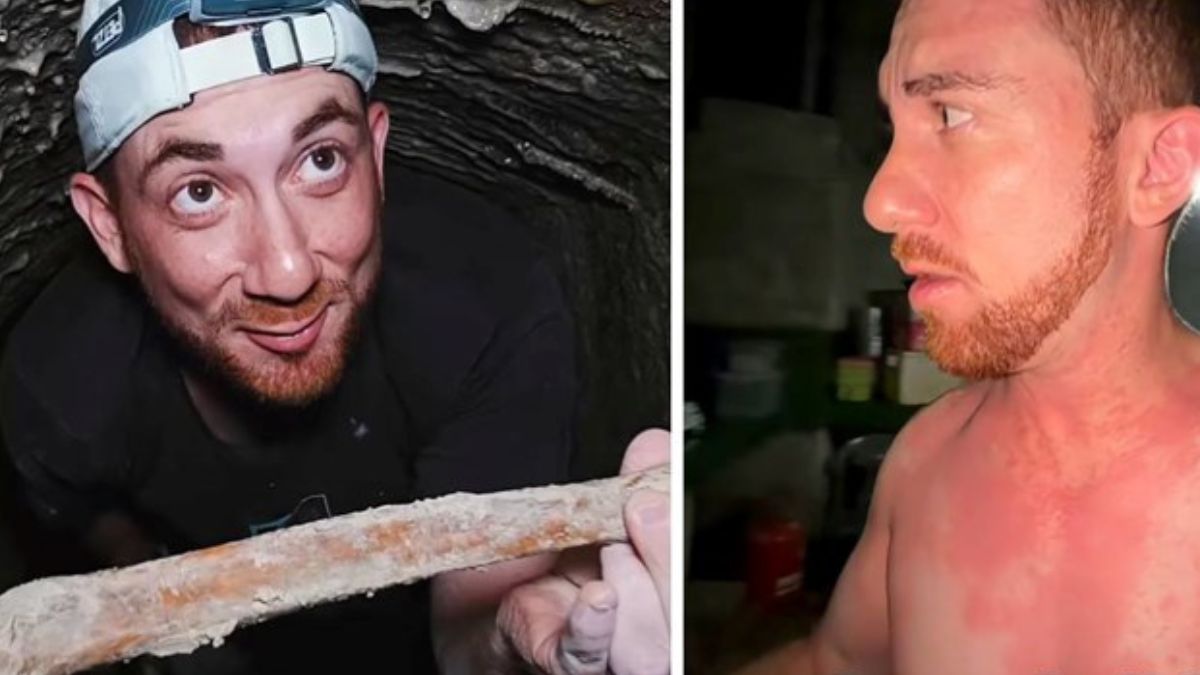
The first incident took place in the Philippines, a country Binsky has previously described as one of the most beautiful he has ever visited. He was out fishing with locals on a remote island when things went wrong in a way he had no way to anticipate. “I visited every country in the world and here are three situations where I really thought I was going to die,” he explained. “The first was an allergic reaction on a remote island in the Philippines. I went fishing with the locals. When I got out of the water, a bright red rash covered me.” What followed escalated quickly and quietly. “My lips went numb and I could barely feel my feet,” he continued. “Luckily, the reaction didn’t reach my throat, because otherwise I would have had only a few more minutes.” He added, with the kind of calm that only comes in retrospect, that he still has no idea what stung him in the ocean that day. You can watch YouTube video here.
The second situation came not from wildlife or illness but from the ground itself. In 2015, Binsky was in Delhi, India, sitting on a runway and preparing to fly to Kathmandu, Nepal. At that moment, Nepal was struck by a magnitude 7.8 earthquake — the worst the country had experienced in more than eighty years. “The second situation was that devastating earthquake in Nepal in 2015,” he recounted. “I was in Delhi, on the runway, ready to fly to Kathmandu. The earthquake hit Nepal then.” He was on the ground in India when it happened, which meant he was safe, but the emotional weight of the moment was not lost on him. “Later I felt terrible about all the lives lost and the destruction it caused in Kathmandu and the surrounding area,” he said. The earthquake killed nearly 9,000 people and left hundreds of thousands homeless, and Binsky’s proximity to it — separated only by the timing of a scheduled flight — clearly left a lasting impression.
The third story is the one that surprises people most, not because of where it happened but because of how an adventure in one of the world’s most visited cities could spiral into something genuinely frightening. Binsky found himself in serious trouble not in a conflict zone or a remote wilderness but underground in Paris, inside the city’s famous catacombs. “The third time was in the Paris catacombs, an underground labyrinth of tunnels stretching more than 186 miles,” he explained. He was there with fellow YouTubers Sam and Colby, accompanied by a single local guide. “Trapped underground without GPS, without signal, and nearly without food. Fortunately, we managed to get out safely,” he concluded.
What connects these three stories is something that experienced travelers often note: the situations that come closest to killing you are rarely the ones that appear on any standard list of dangers to avoid. Binsky had presumably accounted for the risks of visiting conflict zones and regions with active disease outbreaks. He had not accounted for an invisible marine organism in a tropical sea, for being minutes away from boarding a flight into a natural disaster, or for the particular claustrophobic vulnerability of navigating hundreds of miles of underground tunnels without any technology to locate himself. Each situation stripped away the sense of control that frequent travel tends to build, and replaced it with something much more elemental.
The Philippines story is also a reminder of how quickly an allergic reaction can escalate without medical intervention nearby. Anaphylaxis, the severe end of the allergic spectrum, can progress from a rash and numbness to life-threatening throat swelling within minutes, and on a remote island with no access to an EpiPen or emergency services, the outcome depends entirely on luck. Binsky was lucky. The fact that he still cannot identify what caused the reaction makes the story more unsettling rather than less, because it means the risk has never been fully understood or eliminated.
The Paris catacombs stretch for approximately 186 miles beneath the city and contain the remains of around six million people relocated from overflowing cemeteries in the 18th century — which is a fact that hits differently once you know someone actually got lost in there. The 2015 Nepal earthquake was so powerful it shifted the position of Mount Everest by about an inch and was felt as far away as Bangladesh and Pakistan, giving some sense of the scale of energy that Binsky was sitting on a runway blissfully unaware of. And the Philippines is made up of over 7,600 islands, which means “a remote island” there really does mean somewhere that medical help could be a very long boat ride away.
What is the scariest travel experience you have ever had, and did it change the way you travel afterward? Share your thoughts in the comments.