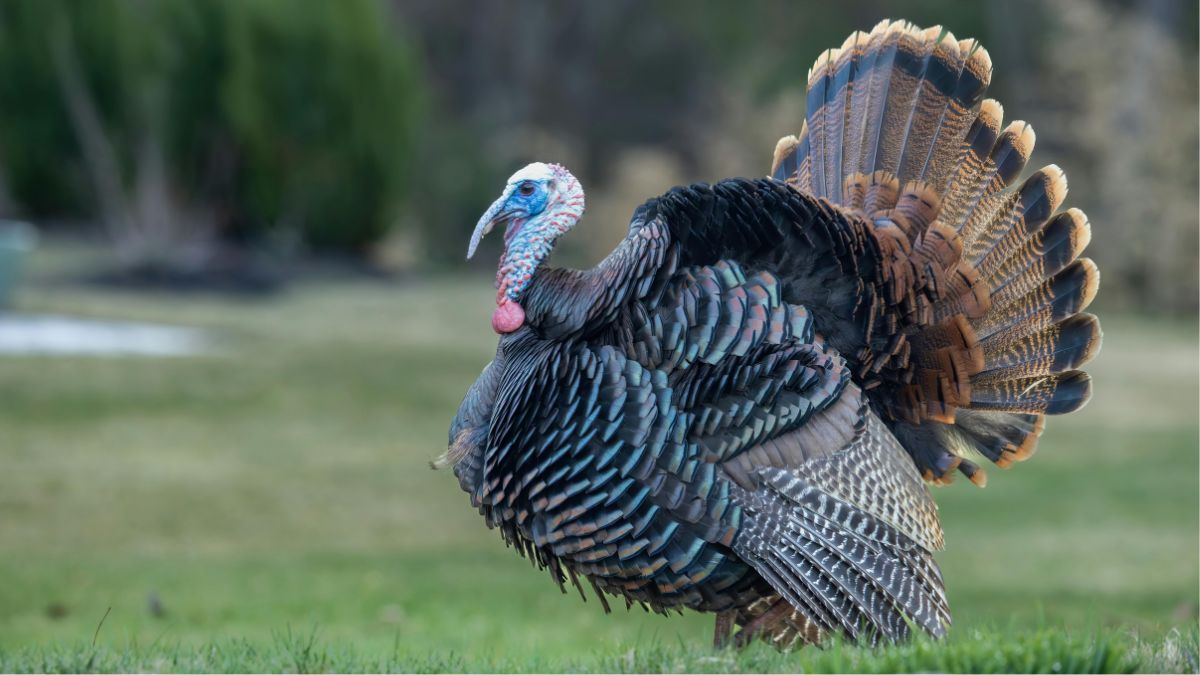
Turkey is one of the most beloved centerpieces of the American dinner table, yet its eggs are practically nowhere to be found in grocery stores. While chicken eggs and even duck eggs have become familiar staples, turkey eggs remain a genuine rarity, and the explanation has less to do with taste than with the cold logic of farming economics. Experts have weighed in on why this gap exists, and the answer is more layered than most people expect.
The core of the issue comes down to production costs. Turkeys take considerably longer to reach sexual maturity than chickens do, which means farmers have to invest more time before a single egg is even possible. On top of that, turkeys lay far less frequently than their chicken counterparts, making the output per bird much lower. Add in the fact that turkeys require more food and more space to raise properly, and the cost of each individual egg climbs steeply before it ever reaches a consumer.
The math simply does not work in favor of turkey egg production at a commercial scale. American experts have calculated that in order to turn any kind of profit, producers would need to sell a dozen turkey eggs for around $36, which works out to roughly $3 per egg. That price point puts turkey eggs firmly in the luxury or novelty category, far removed from the everyday affordability that chicken eggs have long enjoyed. For most farmers, it makes far more financial sense to redirect their resources elsewhere.
Kimmon Williams of the National Turkey Federation explained the timeline clearly, telling MailOnline that “the life cycle of a turkey is longer, so it takes about seven months before they become capable of laying eggs.” That seven-month wait, compared to roughly five months for a hen, represents a significant additional investment with a much smaller return. When the numbers are laid out side by side, the decision most farmers make becomes obvious.
Interestingly, turkey eggs were not always this obscure. Before industrial egg production took over and optimized the chicken egg supply chain, turkey eggs were eaten with some regularity. From a nutritional standpoint, they are actually richer than chicken eggs, containing nearly twice the calories and fat. However, that richness also comes with roughly three times the cholesterol, which makes them a less straightforward swap for people watching their diet.
@secretshaver Why don’t we eat turkey eggs? #food #turkey #foodtiktok #farming #farms #greenscreen ♬ original sound – Secret Shaver
Today, there is still a small but real demand for turkey eggs, though it exists primarily in the gourmet and specialty food space rather than as an everyday staple. Food enthusiasts and curious cooks occasionally seek them out as a novelty ingredient, and some small farms do produce them in limited quantities. They are more of a delicacy than a dietary fixture, appreciated for their richness rather than their convenience or cost.
While egg production proves economically impractical, raising turkeys for meat is an entirely different calculation. Anyone who has ever prepared a whole turkey knows just how much the bird delivers in terms of volume. Compared to chickens, turkeys carry significantly more of the white breast meat that American consumers prize most. A single turkey yields a far greater quantity of desirable cuts, which is precisely why the poultry industry has invested so heavily in turkey farming for meat rather than eggs.
The economics of the farm have essentially made the choice for us, funneling turkeys into the meat aisle and keeping their eggs off the shelves entirely. It is one of those quirks of modern food production where biology, business, and consumer demand all converge to produce a seemingly strange outcome that, once explained, makes complete sense.
A single turkey egg takes up to twice as long to incubate as a chicken egg, sitting in the nest for around 28 days before hatching. Wild turkeys, unlike their domestic counterparts, are also notoriously protective of their nests, and some hens have been documented walking miles a day while still brooding. The shells of turkey eggs are notably thicker and speckled, which once made them easier to identify and collect in the wild long before modern farming changed the game entirely.
Have you ever tried a turkey egg or come across one for sale? Share your experience in the comments.