A Threads user from the United States has stirred up intense conversation by openly criticizing individuals who appear overly dedicated to their corporate lives on LinkedIn. Austin Jackson, posting under the handle @austinjackson1995, shared a blunt statement on January 22 that quickly caught fire across the platform. He wrote that people who regularly post on LinkedIn and seem to truly love their corporate careers horrify him. The remark resonated with thousands, earning over 13,000 likes and sparking hundreds of comments in agreement.
Jackson elaborated on his discomfort, explaining how most social media sites foster genuine connections through shared hobbies, creativity, and honest ideas. He pointed out that LinkedIn stands apart by focusing almost entirely on professional accomplishments and personal branding. The platform tends to celebrate productivity advice and career successes while limiting the kind of open expression that helps form real bonds. In his view, what LinkedIn labels as networking often comes across as an extension of workplace monitoring into personal online spaces.
Many responders echoed Jackson’s sentiments, turning the thread into a space for venting frustrations with corporate social media culture. One person admitted they would not mind if LinkedIn simply ceased to exist, a comment that drew more than 460 likes on its own. Others poked fun at common LinkedIn content, imagining posts like one claiming a chicken burrito offered valuable sales lessons. Several users described being pressured at work to share company updates, highlighting the forced nature of much of the activity.
The discussion also featured sharp observations about the performative side of the platform. One commenter described typical enthusiastic posts as resembling hostages forced to smile under duress. Another shared their attempt to call out toxic competition on LinkedIn, only to receive no engagement, joking that a post framing a personal breakup as a client retention lesson would have performed better. A reply summed it up neatly by calling the whole environment corporate acting.
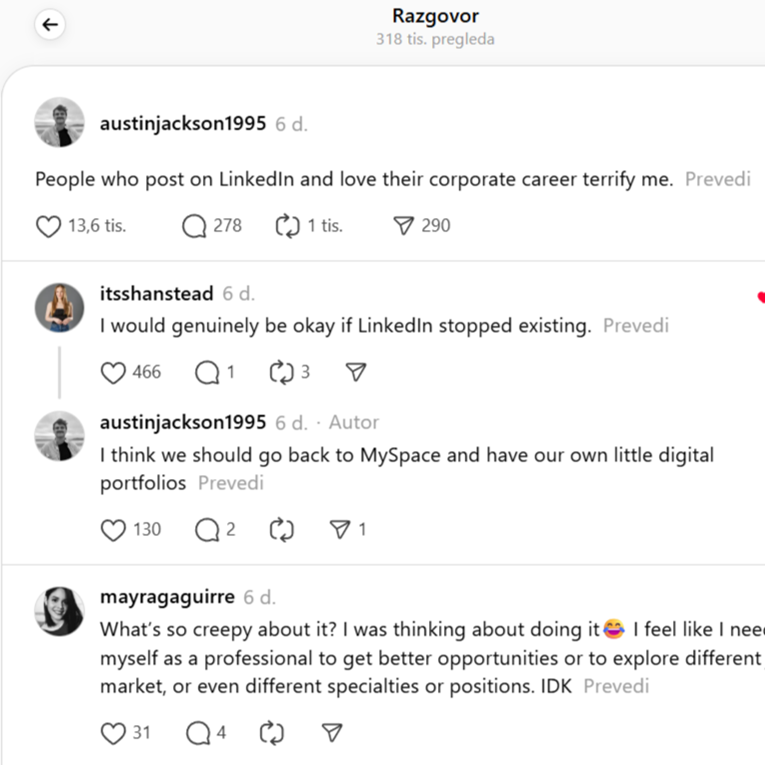
Not everyone sided with the criticism, as a smaller group pushed back in defense of the site. Some argued it feels good to witness others appearing content in their jobs, especially since true workplace satisfaction remains uncommon. Others explained the need to maintain a polished professional image to unlock better opportunities and navigate job markets. A few even noted they play along with the ambition display simply to advance, despite prioritizing personal life choices like marriage for love over financial gain.
The exchange underscores ongoing tensions around how professionals present themselves online in an era dominated by career-focused platforms. Jackson’s original complaint and the flood of supportive reactions reveal widespread fatigue with inauthentic positivity. At the same time, defenders highlight the practical benefits of using the site strategically for advancement. The debate continues to unfold, reflecting broader questions about authenticity versus necessity in digital professional spaces.
LinkedIn itself launched in 2003 as a dedicated space for career networking and has grown steadily ever since. It now boasts over 1.2 billion users worldwide and stands out as one of the few online environments where professional ambition is openly encouraged and rewarded. Unlike more casual social networks, it emphasizes resumes, job listings, endorsements, and thought leadership articles. The platform remains a key tool for recruiters and job seekers alike, maintaining its serious tone amid evolving social media trends.
What are your own experiences with LinkedIn’s culture, and do posts like Jackson’s resonate with you? Share your thoughts in the comments.