Influencer Vanessa Etheridge is on a mission to change the way people think about body measurements, and she is doing it one photo at a time. Rather than letting numbers speak for themselves out of context, she has been posting a series of images on social media that put real faces and real bodies behind the statistics most people associate with health and appearance. Her approach is refreshingly direct, using her own body as the canvas for a broader conversation about how misleading raw data can be when it comes to how we look and feel.
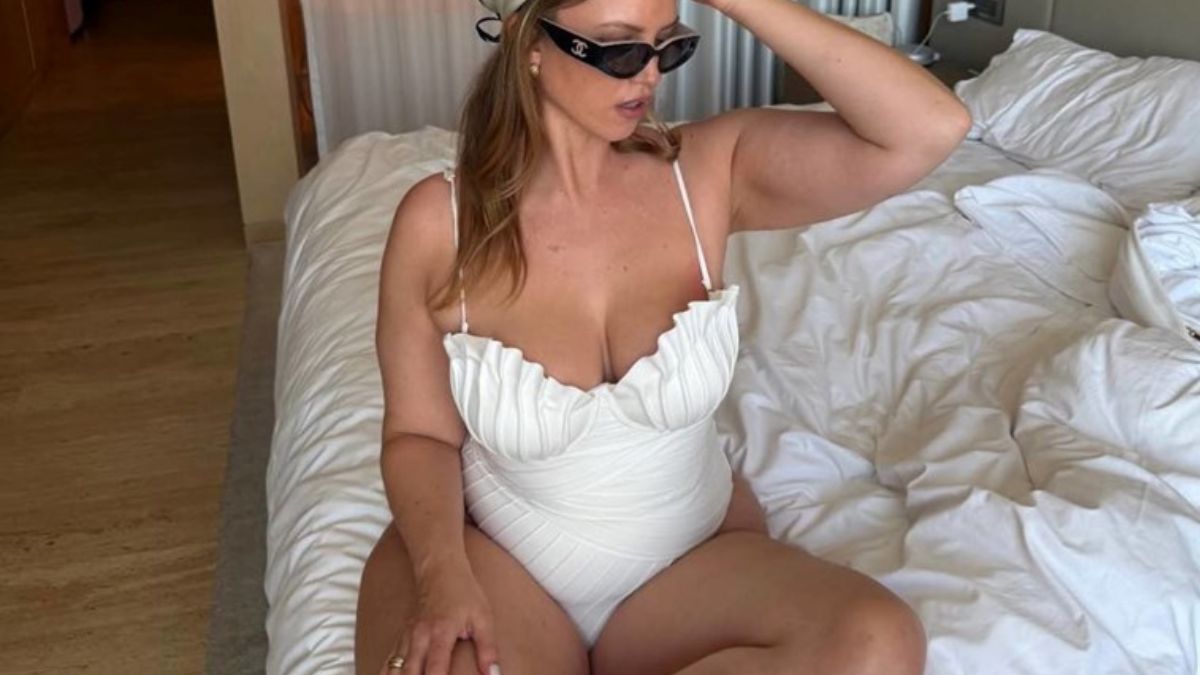
In one photo, Etheridge poses in a swimsuit with a caption making clear that the image represents what 172 pounds looks like on her frame. In another, she appears dressed in a glittering gown to illustrate what a size 14 to 16 looks like on a woman standing 5 feet 7 inches tall. Each image in the series targets a specific number that society has long treated as a shorthand for fitness, health, or attractiveness, and each one challenges that assumption head-on.
The series goes further than just weight and clothing size. One photo from a restaurant outing was captioned to show what a bra size of 34E looks like on a real person, while a beach photo addressed hip measurements of approximately 45 inches. Etheridge also shared her BMI, which sits at 27.3, a figure that would place her in the “overweight” category according to standard medical charts despite the fact that her photos tell a far more nuanced story.
The posts quickly attracted attention from body positivity communities online, who amplified her message with their own commentary. One page shared her images alongside the reminder that “pounds don’t tell the whole story. Numbers are just data, they don’t define who you are or how much you’re worth. Your body is strong, capable, and constantly changing. So the next time the scale tries to ruin your day, remember this post.” The sentiment resonated widely, with many followers saying the series helped them see their own bodies in a different light.
Etheridge’s content fits into a growing movement on social media where creators are actively working to pull back the curtain on body metrics. More and more influencers are posting side-by-side comparisons or plainly labeled photos to show just how differently the same weight or clothing size can appear from one person to the next. Muscle mass, bone density, height, and body composition all play a role in how a number translates to an actual silhouette, yet those factors rarely come up in casual conversations about weight or size.
The broader point being made is that numbers stripped of context can do real harm. When a person sees a weight on a scale or a BMI on a health chart, the tendency is to compare it against an imagined ideal, one that is often shaped by fashion imagery, filtered photos, or outdated medical standards that were never designed to capture individual variation. Etheridge is effectively arguing that seeing is believing in a way that numbers alone never can be.
The timing of her posts reflects a cultural moment in which conversations about body image are more visible than they have been in decades. Wellness culture, once dominated by strict metrics and before-and-after transformations, is increasingly making room for a more expansive view of what health looks like. Etheridge is one of many voices pushing that shift forward, though her willingness to attach real measurements to her own images gives her approach a particular kind of candor that tends to land differently than more abstract messaging.
BMI was actually invented in the 1830s by a Belgian mathematician named Adolphe Quetelet, who created it as a tool for studying population statistics, not individual health, and yet it somehow became a cornerstone of medical assessments worldwide. The average American woman weighs around 170 pounds, which means Etheridge’s starting point in her photo series is, statistically speaking, far closer to the norm than most people would guess from the reactions her images generate. Clothing sizes in the United States have no standardized system behind them, which is why the same person can be a size 10 in one brand and a size 14 in another, a fact that makes the whole enterprise of using size as a measure of anything particularly absurd.
What do you think about the way numbers like weight and BMI shape how we see our bodies? Share your thoughts in the comments.