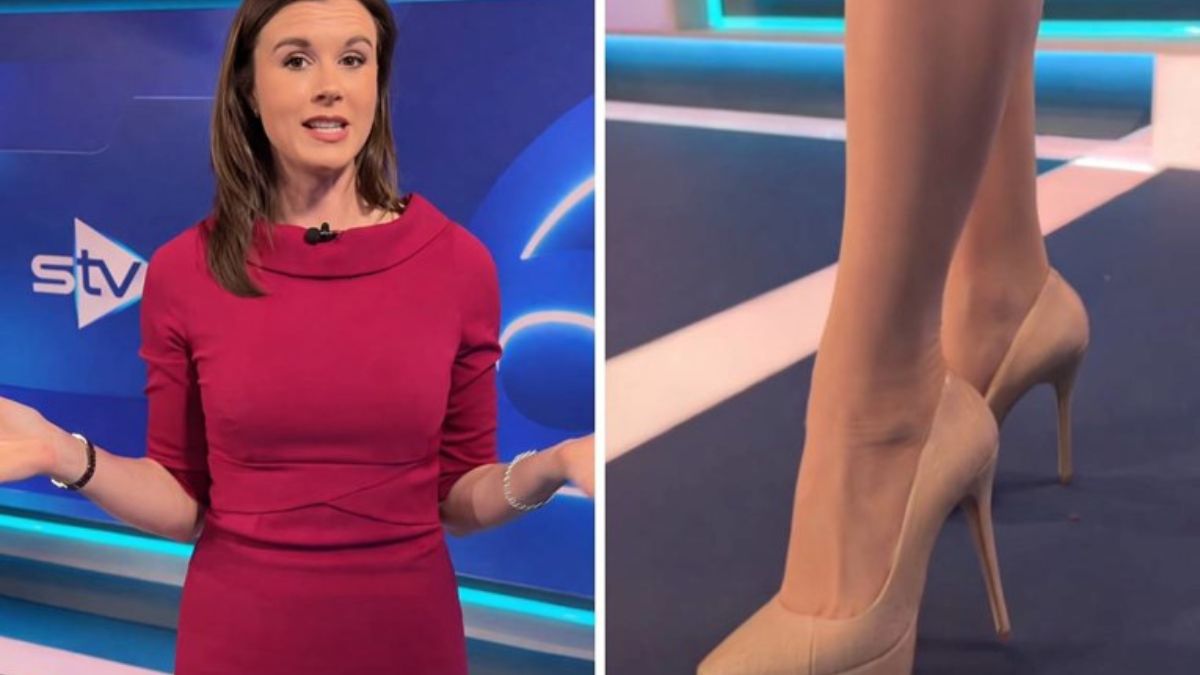
If you have spent any time watching the news, you have probably noticed that female anchors and presenters almost universally appear on screen in heels. It seems like such a constant that most viewers have stopped questioning it entirely, treating it as simply part of the visual grammar of broadcast television. But the reason behind this near-universal wardrobe choice is more interesting than you might expect, and it goes well beyond a strict dress code or a network’s aesthetic preferences. A journalist and presenter named Haley Bouma, who works for STV in Aberdeen, Scotland, recently shed light on the real explanation in a TikTok video that quickly gained widespread attention online.
According to Bouma, the primary reason female TV presenters wear heels in the studio is not about looking taller or more glamorous. It comes down to posture. The structure of a heeled shoe naturally forces the body into a more upright position, pulling the shoulders back and straightening the spine without any conscious effort from the person wearing them. For a presenter standing in front of a camera where every micro-movement is magnified and broadcast to potentially millions of viewers, that automatic postural correction is genuinely valuable. It means that even after hours of early morning call times and back-to-back segments, the body is still projecting stability and confidence without the wearer having to think about it.
Bouma pointed out that she had first heard a version of this logic from a hairdresser, who recommended heels for weddings precisely because of the effect they have on posture in photographs. The same principle applies in a TV studio, but with even higher stakes. On camera, a person who is standing slightly slumped or tentatively planted looks different to a viewer than one whose posture communicates authority and groundedness. News anchors are expected to project credibility and calm, and something as seemingly minor as the angle of the spine contributes meaningfully to whether that impression lands.
@haley_bouma_tv Why do presenters wear high heels in the studio? In short they force you to stand up properly, and are a part of our news uniform! Granted they don’t have to be as high as mine, I just like heels! Shout out to the lovely @Courtney Cameron who has a great presenting shoe collection! #behindthescenes #tvreporter #shoecollection #wardrobestylist #scottishtiktok ♬ original sound – Haley_Bouma
The posture argument also intersects with the way television cameras and lighting work. A camera positioned at a set angle will render a presenter differently depending on how they are holding their body. Broadcasters spend considerable resources on lighting setups, camera heights, and framing choices precisely to make their presenters look polished and authoritative, and the way a presenter physically holds themselves within that frame is one more variable in the equation. Heels help lock in the right physical geometry automatically, reducing one more thing a presenter needs to actively manage while simultaneously tracking an autocue, listening to a producer through an earpiece, and maintaining composure on live television.
Beyond the postural benefits, Bouma acknowledged that heels also serve a straightforward fashion function in the studio environment. Presenters typically wear structured dresses, blazers, or tailored outfits that call for a more formal shoe to complete the look. A pair of heels elevates even a simple dress into something that reads as polished and intentional on screen, whereas flat shoes can visually undercut the formality of an otherwise well-composed outfit. In this sense, heels function as part of an unofficial uniform, a visual signal to the viewer that the person delivering the news has prepared and dressed for the role with care and professionalism.
The broader context here is worth noting, because the unwritten expectation that female presenters wear heels is not without its critics. Many women in broadcasting have spoken over the years about the physical toll of spending long shifts on their feet in heels, and the conversation around whether these expectations are placed equally on male and female presenters has grown more prominent. Some broadcasters have quietly relaxed these standards in recent years, particularly as remote and hybrid production formats have shifted what viewers can actually see below the waist in a given broadcast. The debate reflects wider questions about professional dress codes and gender expectations in the workplace.
Still, for the women who do choose heels on set, Bouma’s explanation offers a practical logic that sits alongside the fashion reasoning. It is not purely about how the shoe looks but about what wearing it does to the body wearing it. That combination of functional posture support and elevated visual polish has made heels a fixture of broadcast studios for decades, and for many presenters, the choice feels like a genuinely useful tool rather than an imposed constraint.
Research in psychology has actually found that posture significantly affects not just how others perceive us but how we perceive ourselves, with upright stances linked to greater feelings of confidence and authority even before anyone else enters the room. Early television broadcast standards in the United States, developed in the 1940s and 1950s, included detailed guidance on how female presenters should appear on screen, with clothing and footwear recommendations specifically designed around how the cameras of that era rendered the human figure. The heeled shoe has outlasted the technology that first made it a broadcast staple, sustained now more by tradition, habit, and genuine utility than by any formal written rule.
Do you think TV networks should care about what presenters wear on their feet, or is it time to leave those expectations behind? Share your thoughts in the comments.