Reptiles, birds and fish frequently dazzle with striking hues ranging from neon pink to deep purple, yet most mammals stick to more subdued shades of brown, black and white. This difference stems from several evolutionary and biological constraints that have shaped mammal fur over millions of years. While other animal groups use a wide array of pigments and structural features to create vivid displays, mammals remain largely limited in their color palette. Scientists continue to explore how ancient survival strategies still influence the appearance of creatures like deer, bears and rodents today.
Animals produce color through pigments in their skin or outer layers and through structural arrangements that bend light at tiny scales. Mammals rely almost exclusively on one pigment called melanin, which generates all the tones visible in their coats. Evolutionary biologist Matthew Shawkey from Ghent University explains that the presence of melanin creates the familiar earthy colors while its absence leads to white patches, as seen in zebras or pandas. In contrast, birds, fish and insects can draw on additional pigments such as carotenoids that produce bright reds, yellows and oranges. The simple structure of mammal hair further prevents the nanoscale patterns needed for iridescent or shimmering effects that feathers and scales achieve so easily.
During the age of dinosaurs, early mammals lived mostly as small nocturnal prey to avoid larger predators. This lifestyle, which lasted more than 100 million years, favored dark or dull coats that blended into nighttime shadows rather than bold patterns that might attract attention. A 2025 study published in the journal Science, with Shawkey as coauthor, examined pigment structures in fossils from the Jurassic and Cretaceous periods and found that ancient mammals were consistently shades of brown or gray. Natural selection worked against any bright coloration that could have made them easier targets in the dark. Even after dinosaurs disappeared around 66 million years ago and mammals diversified into more than 6,000 species, most retained these muted tones.
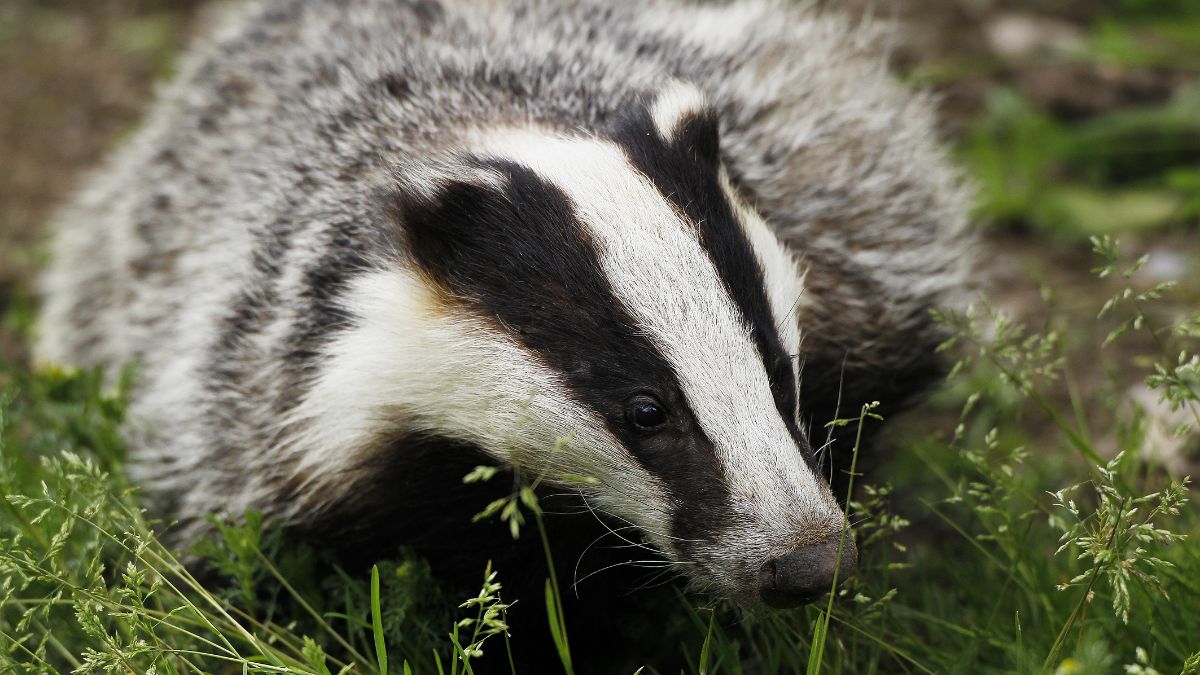
Limited color vision plays a major role as well. Most mammals possess dichromatic eyesight with only two types of cone cells in their eyes, meaning they cannot perceive reds, oranges or purples with the same richness that humans or many birds experience. Evolutionary ecologist Ted Stankowich from California State University notes that early mammals likely traded some color perception for sharper night vision to navigate in low light. As a result, vibrant displays would offer little advantage in mating or communication because potential partners or rivals might not notice them clearly. Instead, many mammals rely on high-contrast black and white patterns for signaling, such as the bold stripes on skunks that warn predators of their defensive spray or the white tail of the African wild dog that helps coordinate hunts.
Exceptions prove the rule and often occur in areas without fur. Mandrills display vivid red and blue faces on bare skin rather than through their coats, while sloths sometimes appear greenish from algae growing on their fur rather than any inherent pigment. Recent research has uncovered subtle surprises like iridescent effects on the fur of certain tropical rats when sunlight hits at the right angle, as observed by evolutionary biologist Jessica Dobson at Ghent University during museum specimen studies. Some mammals also show fluorescence under ultraviolet light that other animals might detect even if humans cannot. Dobson described the discovery as an eye-opening moment and suggested that mammals may hold more hidden color secrets than previously thought.
Overall, the combination of a restricted pigment set, fur that resists structural coloration, ancient nocturnal habits and poorer color vision has kept most mammals looking understated compared to their more flamboyant relatives in the animal kingdom. These traits helped them survive tough prehistoric conditions and continue to serve practical purposes like camouflage today.
What surprising color detail about your favorite mammal has caught your eye in the comments.