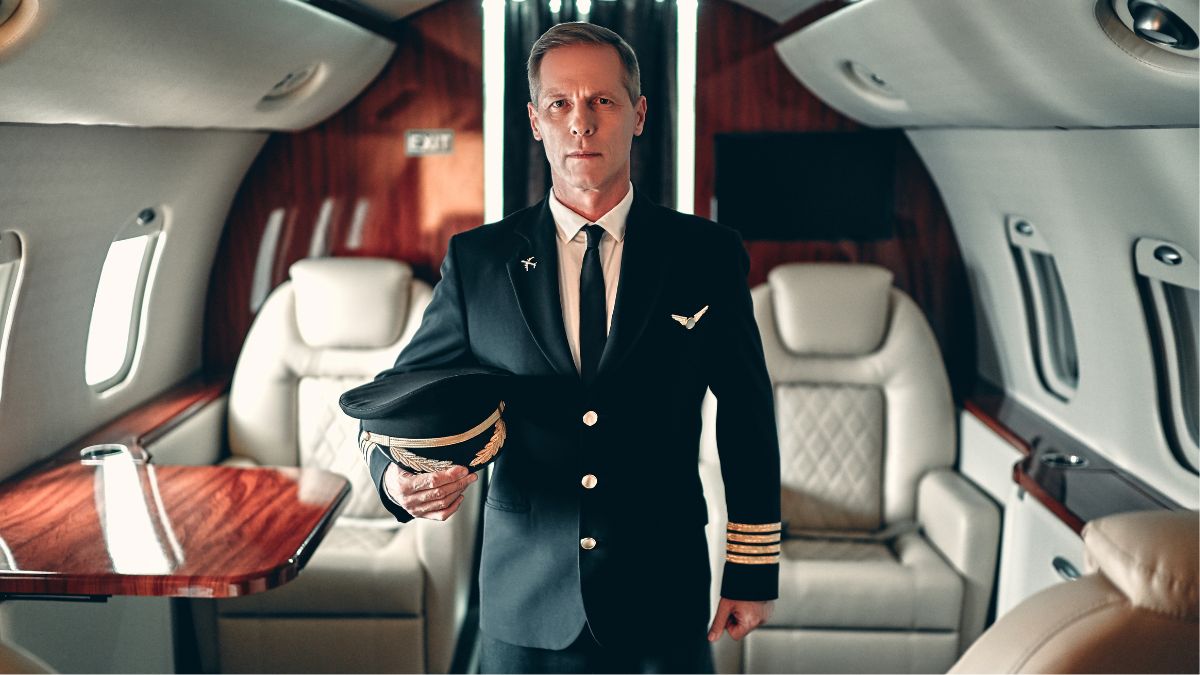
Most passengers are too busy wrestling with overhead bins or scanning the in-flight entertainment menu to give much thought to what the pilots up front are eating. But tucked behind the cockpit door, a strict and quietly fascinating safety protocol governs every meal served to the flight crew, and a former flight attendant has shed some light on exactly how it works.
Mandy Smith, who spent 12 years working as a flight attendant for Virgin Atlantic, shared the details in a conversation with LADbible Stories. The rule is straightforward but non-negotiable: the two pilots on any given flight are never allowed to eat the same dish. “If one pilot orders chicken, the other will get fish,” Smith explained. The coordination happens before the crew even places their orders with the cabin staff. “They always agree between themselves before telling us what they want,” she added.
The reasoning behind this protocol comes down to one very practical concern: food poisoning. If both pilots consumed the same contaminated meal and fell ill simultaneously, the consequences could be catastrophic. As Smith put it plainly, “Of course you don’t want both of them feeling unwell at the same time.” The rule exists to ensure that no matter what happens, at least one pilot remains fully fit to fly the aircraft. It is a precaution so logical that, once explained, it seems almost obvious, yet the vast majority of travelers have never heard of it.
Smith was quick to add a touch of humor to the explanation, noting: “It’s not that the food we serve is bad!” In fact, she emphasized that the meal-separation rule is simply standard procedure, not a reflection of any particular concern about airline catering quality. Airlines take the protocol seriously across the board, and it applies regardless of the route, the carrier, or the menu on offer that day.
Beyond the mechanics of who eats what, Smith also took the opportunity to address another long-running mystery of air travel: why does food taste different at 35,000 feet? The answer, she explained, has nothing to do with the quality of the ingredients or the skill of the chefs who prepare the meals on the ground. The real culprit is the cabin environment itself. “The problem isn’t the food, it’s that your taste buds don’t work the same way in the air as they do on the ground,” she said.
The pressurized cabin affects the entire body, and the sense of taste is no exception. At cruising altitude, the combination of lower cabin pressure and reduced humidity dulls the sensitivity of taste receptors, making flavors seem flatter and less pronounced than they would be at sea level. “Cabin pressure affects the whole body, so food in a plane often seems milder than it really is,” Smith noted. This phenomenon is well-documented and has been a known challenge for airline catering teams for decades.
To compensate for this sensory shift, chefs who design airline menus are required to heavily season and intensify the flavors of every dish. What lands on your tray at 35,000 feet has been deliberately made saltier, spicier, and more robust than you might expect. “If you tasted that same food on the ground, which chefs do when they’re putting together the menu, you’d probably find it’s quite salty and very intense in flavor,” Smith explained. The aggressive seasoning that might seem odd in a restaurant makes perfect sense once you understand the environment it was created for.
It turns out the skies are full of small, carefully engineered details that most passengers never think twice about. From the divided meal trays in the cockpit to the supercharged seasoning on your pasta, commercial aviation is a world where even the most mundane decisions have been shaped by safety, science, and decades of accumulated experience.
Taste buds can lose up to 30 percent of their sensitivity during a flight, which is part of why tomato juice, a drink many people would never choose on the ground, has historically been one of the most popular beverages ordered at altitude. Some airlines actually employ perfumers and sensory scientists to help develop their in-flight menus, approaching the challenge of high-altitude flavor with the same rigor applied to the cockpit itself.
If you have ever wondered about the hidden rules governing life in the skies, share your thoughts in the comments.