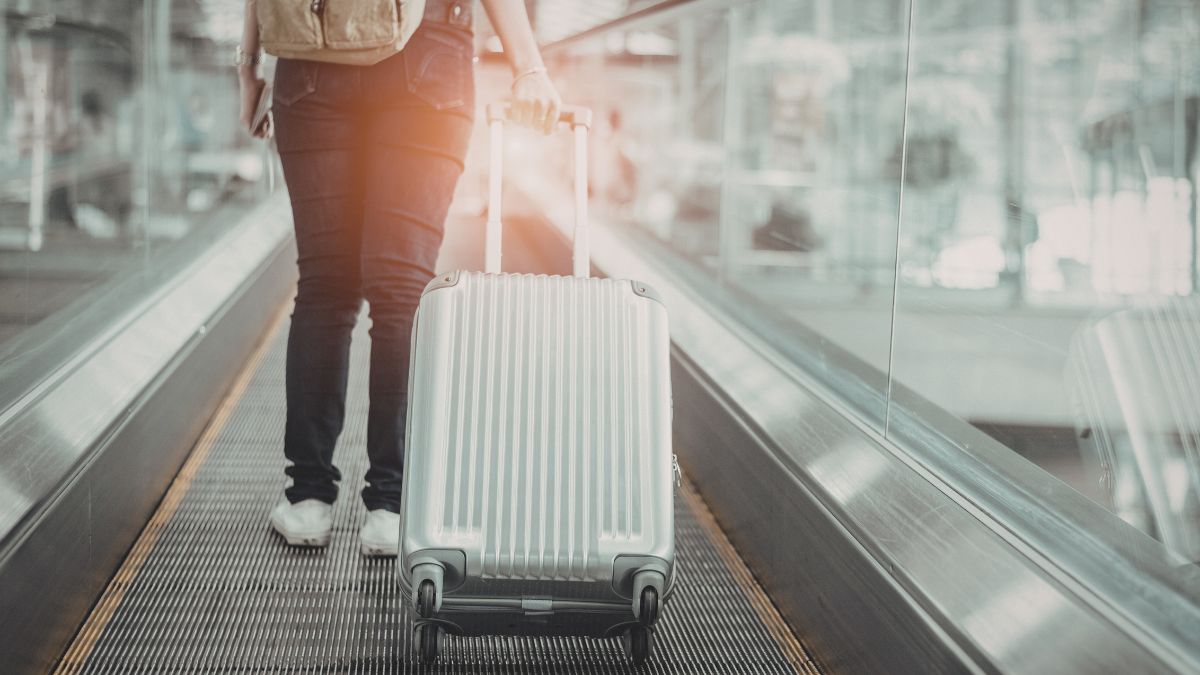
Keeping your belongings safe while traveling is essential to making sure a hard-earned vacation doesn’t turn into a nightmare. Seasoned travelers rely on all sorts of tricks to protect their luggage, from security padlocks to GPS trackers, and plastic wrap has long been one of the most popular methods. The service is even offered at many airports around the world, giving it an air of legitimacy. But according to a security expert, this particular habit might actually be doing you more harm than good.
Ed Burnett, a former U.S. Army military police officer and security consultant, warns that plastic-wrapping your luggage creates nothing more than the illusion of protection. In his view, the practice can actually draw the attention of thieves rather than discourage them. “Although the wrap protects against scratches and can prevent someone from planting drugs in your bag, it essentially signals: ‘There’s something valuable in here,’” Burnett told the Independent. He also points out that wrapping makes it impossible to quickly check your bag’s contents if you suspect something is off.
According to Burnett, the single most important habit a traveler can adopt is keeping everything truly valuable in carry-on luggage that never leaves your side. That means your phone, travel documents, cash, jewelry, and any medication should all be within arm’s reach at all times. “Keep everything important in your personal bag and never let it out of your sight,” he advises. If you absolutely must pack something of value in checked luggage, he recommends concealing it inside completely ordinary objects, suggesting things like an empty sunscreen bottle or a laundry bag. He also singles out electric toothbrushes and expensive charging cables as items thieves frequently target because they are easy to resell and travelers often don’t notice them missing until much later.
The type of suitcase you travel with can also send the wrong signals. Burnett points out that high-end designer luggage is a prime target, noting that luxury brands like Louis Vuitton suggest the contents inside are just as valuable as the bag itself. Soft-sided suitcases and fabric duffel bags are the easiest marks since they can simply be slashed open. A hard-shell suitcase without any prominent branding is a significantly safer choice for anyone concerned about theft at airports or hotels.
Classic security measures like padlocks still have their place, but Burnett urges travelers to understand their limits. Many soft-sided bags feature coil zippers that can be popped open in seconds using nothing more than a ballpoint pen, rendering the lock completely useless. Plastic zip ties, on the other hand, won’t stop a determined thief, but they do serve a purpose as tamper indicators since a thief cannot re-close a cut zip tie, meaning you will immediately notice if your bag has been opened. GPS trackers like Apple’s AirTag won’t prevent theft outright, but they can help you locate missing items after the fact. Burnett strongly recommends concealing them well, such as sewing them into the lining or tucking them inside a sock, because a thief who spots one will simply discard it. He also cautions against sticking labels like “GPS Tracked,” “Fragile,” or “Camera Equipment” on your bags, explaining that such markings are either ignored entirely or treated as a challenge.
Luggage theft at airports is far more common than many travelers realize, and it tends to occur most frequently during the baggage handling process, when bags pass through areas that are out of sight of their owners. The International Air Transport Association (IATA) has noted that mishandled baggage remains a persistent issue globally, with millions of bags delayed, damaged, or reported stolen every year. Opportunistic theft, where someone simply grabs an unlocked or easy-to-open bag on a carousel or in a baggage claim hall, is among the most frequent types reported. Travelers flying through busy international hubs are statistically at higher risk, particularly when connecting through airports in high-traffic regions. Hard-shell polycarbonate suitcases with TSA-approved combination locks are widely considered among the most theft-resistant options available on the market today, though no bag is entirely thief-proof if a determined criminal is involved.
If you have your own tips or experiences with keeping your luggage safe while traveling, share them in the comments.