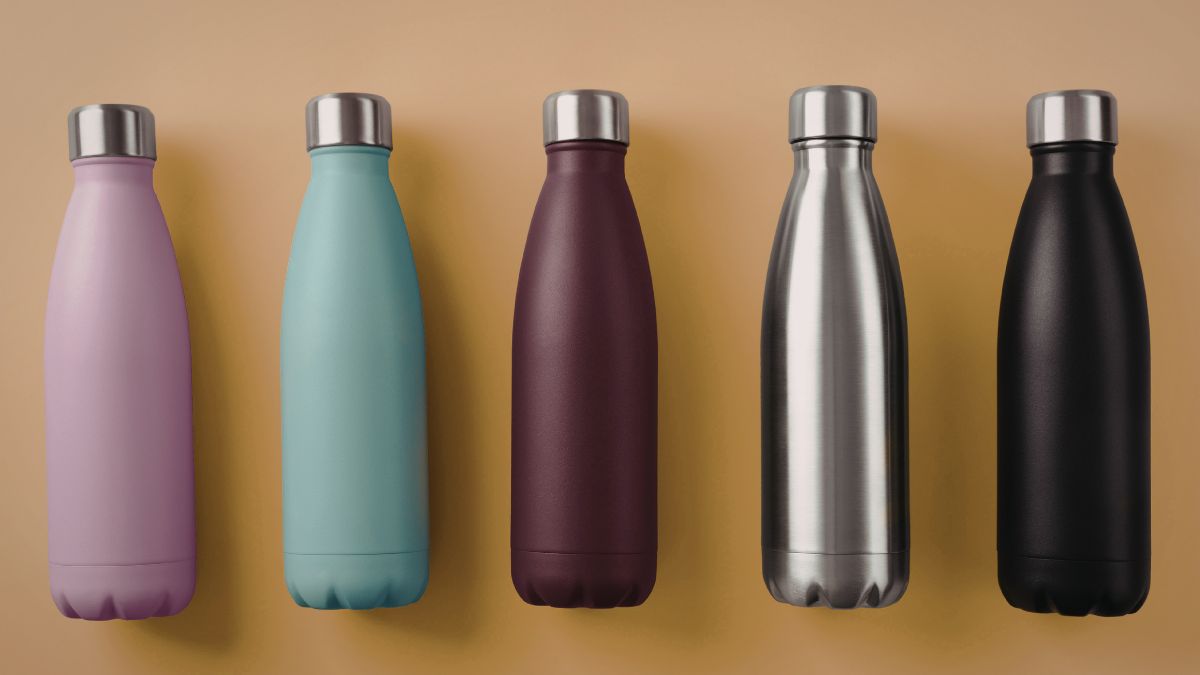
That reusable water bottle you carry everywhere may be doing your hydration habits a favor, but it is almost certainly not doing your health any favors. Whether it sits on your desk all day or travels with you to the gym, the inside of that bottle is quietly accumulating colonies of bacteria and mold. According to Jessica Ek, a spokesperson for the American Cleaning Institute, the interior of a water bottle creates the perfect damp environment for germs and mold to thrive and multiply. “Over time, this can actually make you sick,” she warned, as reported by Simply Recipes.
The numbers behind this are genuinely alarming. Researchers at Treadmill Reviews swabbed the surfaces of around a dozen water bottles that athletes had used for a week without washing them, testing four different lid types: screw-top, slide-top, squeeze, and straw. What they found was an average of more than 300,000 colony-forming units of bacteria per square centimeter. To put that in perspective, that figure is roughly six times higher than what you would typically find in your dog’s water bowl, and only slightly less than what accumulates on a toothbrush holder in the bathroom.
Not all bottle designs were equally problematic. Slide-top lids, the kind that simply flip open and shut, harbored by far the most bacteria of any type tested. Straw lids, on the other hand, came out surprisingly well. The researchers theorized that this is because “water flows down to the bottom of the straw rather than pooling at the top and attracting moisture-loving germs.” The design of the cap, it turns out, matters a great deal more than most people realize when it comes to how quickly bacteria can take hold.
So how often should you actually be washing your bottle? Experts are unambiguous on this point: every single day, at minimum. If you refill the bottle multiple times throughout the day, it should be thoroughly washed by the time you go to bed. Ek put it bluntly, noting that “after just one week, a water bottle contains more bacteria than a pet’s bowl.” Most people treat a quick rinse under the tap as sufficient, but that barely scratches the surface of what is needed to keep bacterial growth in check.
The first step before washing is to check the manufacturer’s instructions, either on the label or the brand’s website, since many reusable bottles are dishwasher-safe. Smaller components such as lids and straws typically go in the top rack. Even if the dishwasher handles the heavy lifting, the key rule remains the same: wash after every use. For those who prefer hand-washing, Ek recommends filling the bottle with warm water and a few drops of dish soap, then soaking the cap and any detachable parts separately in a bowl with the same solution. A bottle brush is invaluable here, allowing you to scrub the interior walls and any hard-to-reach crevices around the lid thoroughly.
Once scrubbed, every component should be rinsed completely under running water and then left to air dry in full. Turning the bottle upside down helps any remaining water drain out rather than pool at the bottom. Reassembling the bottle before everything is completely dry is one of the most common mistakes people make, and it is exactly the kind of condition that leads to that musty, stale smell developing inside the bottle over time. A fully dry bottle before reassembly is the single most effective way to prevent that from happening.
Bacteria can form a biofilm on the inner walls of water bottles within as little as 48 hours of use, which is a slimy protective layer that makes the colonies significantly harder to dislodge with a simple rinse. The mouth of the bottle is actually the single most contaminated part of the entire vessel, since it comes into direct contact with skin, lips, and the surrounding air every time you take a sip. Stainless steel bottles, while excellent at keeping drinks cold, can develop rust in microscopic scratches if not dried properly, giving bacteria an even more hospitable surface to colonize.
What type of water bottle do you use and how often do you wash it? Share your habits in the comments!